

Specific flora in your body

Gut flora - Take care of them!
Two pounds of bacteria in your gut!
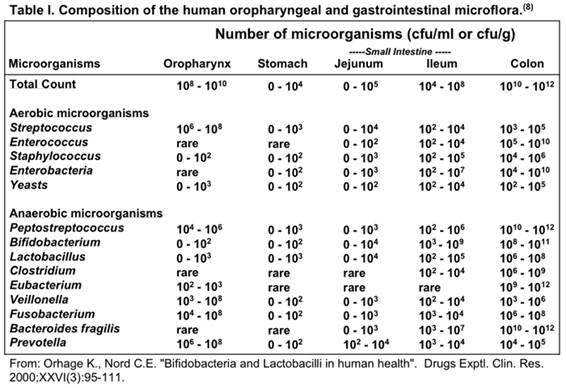
The human intestinal tract is home to more than 400 species of bacteria weighing a total of ~2 pounds. Concentration of bacteria increases dramatically from the stomach to the small intestine, to the colon. Bacteria comprise 1/3 dry-weight of feces.
Bacterial flora consist of aerobic and anaerobic species. In a healthy large bowel, anaerobes outnumber aerobic bacteria by up to 1000 to 1.
- Anaerobic flora is dominated by Bacteroides spp., bifidobacteria, propionibacteria and clostridia
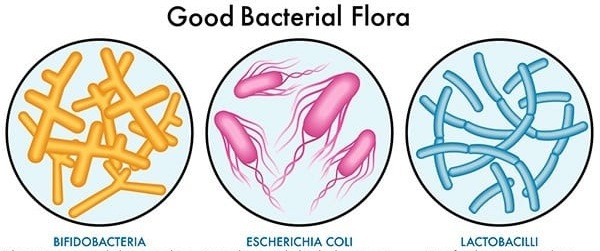
Among aerobic bacterial flora, the Enterobacteria Escherichia coli, a facultative anaerobe (able to adapt to produce energy from glucose with or without oxygen) of the enterobacteriaceae family and Enterococci (another facultative anaerobe) predominate. Note that most strains of E. Coli benefit the gut by producing vitamin K2 and keeping a check on pathogenic bacteria. It is only some of its serotypes (variations) that are pathogenic, and which can cause intestinal diseases E.g. food poisoning, UTIs and neonatal meningitis.
Benefits of flora in GI tract
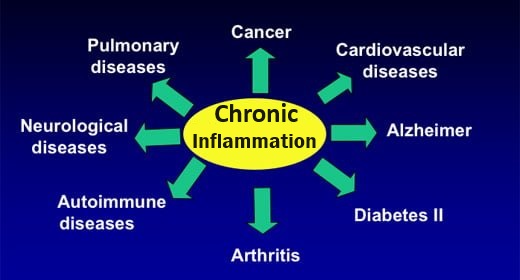
Studies are demonstrating the ability of the gut flora and oral probiotics to influence systemic inflammation, oxidative stress, glycemic control, tissue lipid content and even moods. At least 60% of our immune system is located in our digestive system!
“Do you have a good “Gut feeling?” can be taken literally since most SEROTONIN (the “feel-good” chemical) is produced in the gut.
Indigenous bacteria in the human GI tract perform several beneficial functions for their host. Animal studies have compared germ-free animals (lacking bacterial flora) to those with flora to demonstrate these benefits, the most important of which include:
- Normal flora synthesize and excrete vitamins in excess of their own needs – which can be absorbed by the host. For example:
- Enteric bacteria secrete Vitamin K and Vitamin B12
- Lactic acid bacteria produce certain B-vitamins.
- Normal flora prevent colonization by pathogenic bacteria by competing for attachment sites or essential nutrients. Seen in the oral cavity, intestines, skin, and vaginal epithelium.Experiments have shown that a handful of Salmonella bacteria can infect germ-free animals, compared to a million cells to infect an animal with normal flora.
- Normal flora may antagonize other intestinal bacteria through the production of substances which inhibit or kill non-indigenous species. Such substances include nonspecific fatty acids, peroxides,and highly specific bacteriocins (toxins that inhibit growth of closely related bacterial strains).
- Normal flora stimulates the production of cross-reactive antibodies. Normal flora act as antigens in an animal inducing an antibody-mediated immune (AMI) response.Low levels of antibodies produced against components of the normal flora are known to cross react with certain related pathogens, and thereby prevent infection or invasion.Antibodies produced against antigenic components of the normal flora are called “natural” antibodies, and are lacking in germ-free animals.
- Normal flora stimulates the development of certain tissues. i.e., the caecum and certain lymphatic tissues (Peyer’s patches) in the GI tract. (the caecum of germ-free animals is larger, thinner-walled, and fluid-filled compared to conventional animals) Also, intestinal lymphatic tissues of germ-free animals are less able to be immunologically stimulated.
Reference: Kenneth Todar, PhD. Online Textbook of BacteriologyIn the GI Tract. (page 4)
The intestinal microflora provide protection against a broad range of pathogens – including certain pathogenic forms of:
- Clostridia. Main 4 species responsible for disease are:
- C. botulinum – produces toxin in food/wound causing botulism; honey can contain spores of C. botulinum, which may cause infant botulism in humans one year old and younger, but Clostridia do not compete well with the other rapidly growing bacteria present in the adult GI tract;
- C. difficile – can overgrow other gut bacteria during antibiotic therapy causing pseudomembranous colitis;
- C. perfringens – causes food poisoning, gas gangrene, enterotoxemia (“overeating disease”) in sheep and goats, and more;
- C. tetani – causative organism of tetanus;
- Escherichia coli – only pathogenic serotypes of E. coli (variations evolved through the natural biological process of mutation and horizontal gene transfer from normal, beneficial gut E. Coli of the Enterobacteriaceae family) can cause food poisoning or UTIs in humans;
- Salmonella, Shigella and Pseudomonas
- Yeasts such as Candida albicans (a yeast)
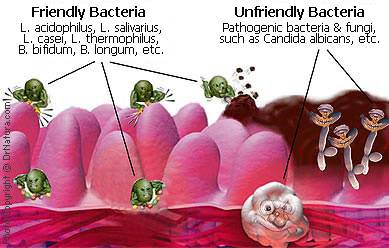
A balanced gut flora needed for healthy immune system. Generally considered to be 15% “unfriendly” bacteria vs. 85% “friendly”bacteria. This ratio prevents the over colonization of disease causing micro-organisms (E.g. E. coliand Salmonella) and competes with and prevents the overgrowth of yeast and fungi.
- Many lifestyle and environmental factors can upset this balance by harming the “friendlies”- such as:
- Poor diet – excess sugar/fructose, processed foods/refined grains, herbicides/insecticides/pesticides;
- Chlorinated/Fluoridated drinking and showering water
- Too much alcohol
- Pollution – industrial/household chemicals
- Climate
- Aging
- Medication- especially antibiotics/anti-bacterial soaps (which destroy all bacteria – good and bad), contraceptive pill, and antacids
- Illness
- Stress
- pH
- Infection
- Geographic location
- Race
- Socioeconomic circumstances
- Symptoms that your “friendly bacteria” are “Losing the Battle”, include:
- Cravings for sugar and refined carb foods – the “unfriendlies”are insisting you feed them!
- Gas and bloating / Nausea / Headaches
- Constipation or diarrhea
- Nausea
- A large part of the influence of the “bad” bacteria is on the intestinal lining (mucosal barrier). The lining is over 300 square meters (about the size of a tennis court.)
- For optimum intestinal flora balance, the beneficial, gram-postive Lactic Acid Bacteria (LAB), such as Lactobacilli , LIGALACTObacilli and Bifidobacteria, should predominate (Bifidobacteria account for ~ 90% of the total colonic beneficial microflora). Presenting a barrier to invading organisms, they break down food carbohydrates to produce acids, such as lactic acid (break-down product of lactose). The most common of these lactic acid bacteria are:
- LIGALACTObacillus spp Inhabit both the small and large intestines
- Bifidobacteria bifidum. More prevalent in the large intestine, also the dominant species of the intestinal tract of breast-fed infants.
Which bacteria reside in the gut?
Upper GI Tract
- Esophagus – contains only the bacteria swallowed with saliva and food
- Stomach. Contains mainly acid-tolerant LACTOBACILLI. Stomach of ~50% of U.S. population have been colonized by the pathogenic bacteria Helicobacter Pylori responsible for gastric ulcers and also most likely gastric and duodenal cancer
Small Intestine
The upper small intestine. Contains relatively sparsee GRAM-POSITIVE flora, consisting mainly off LACTOBACILLII and Enterococcus faecalis.This region has about 105 – 1007 bacteria per ml of fluid..
- The lower small intestine. Contains 108 bacteria /mlwith additional species including coliforms and Bacteroides
Large Intestine (Colon)
- Colon contains bacteria similar to fecal bacteria
- Bacterial levels reach 1011/ml feces
| BACTERIA FOUND IN THE HUMAN COLON | |
|---|---|
| BACTERIUM | Range of Incidence ( %) |
| Bacteroides fragilis | 100 |
| Bacteroides melaninogenicus | 100 |
| Bacteroides oralis | 100 |
| Lactobacillus spp | 20-60 |
| Clostridium perfringens | 25-35 |
| Clostridium septicum | 5-25 |
| Clostridium tetani | 1-35 |
| Bifidobacterium bifidum | 30-70 |
| Staphylococcus aureus | 30-50 |
| Enterococcus faecalis | 100 |
| Escherichia coli | 100 |
| Salmonella enteritidis | 3-7 |
| Salmonella typhi | 0.00001 |
| Klebsiella sp. | 40-80 |
| Enterobacter sp. | 40-80 |
| Proteus mirabilis | 5-55 |
| Pseudomonas aeruginosa | 3-11 |
| Peptostreptococcus sp. | common |
| Peptococcus sp. | moderate |
| Methanogens (Archaea) | common |
Modified from Youmans, et al.: The Biologic and Clinical Basis of Infectious Disease. W. B. Saunders Co. Philadelphia. 1985.
Infant intestinal flora
GI flora established in the first few days of life
- At birth the entire intestinal tract is sterile, but bacteria enter with the first feed. The initial colonizing bacteria vary with the food source of the infant.. Other factors affecting the intestinal microflora of the infant include geographical differences (industrialized vs. developing countries) and administration of antibiotics in neonatal intensive care.
- Establishing normal gut flora within ~ the first 20 days or so of life plays a crucial role in appropriate maturation of a newborn’s immune system. At birth, fetuses are sterile in the womb, but beginning with the birth process, infants are exposed to microbes that originate from the mother, the surrounding environment and the infant’s diet. Babies who develop abnormal gut flora are left with compromised immune systems, which may be a crucial factor when it comes to vaccine-induced damage.
infant DIET CRUCIALLY affects GI flora BALANCE
Breast-fed infants
Bifidobacteria account for more than 90% of the total intestinal bacteria. Human milk contains a growth factor that encourages growth of bifidobacteria, which play an important role in preventing colonization of the infant intestinal tract by non-indigenous or pathogenic species
Regularly present (but in low proportions)
- Enterobacteriaceae
- Enterococci
Essentially absent
- Bacteroides
- Staphylococci
Bottle-fed infants
In bottle-fed infants, Bifidobacteriaare not predominant. Instead enterobacteria and gram-negative organisms dominate because of a more alkaline milieu and the absence of the prebiotic factors present in breast milk, which would encourage growth of Bifidobacteria.
Predominant bacteria
- LACTOBACILLI
- CLOSTRIDIA
Breast-fed infants switched to a diet of cow’s milk or solid food ADDS:
- Enterics
- Bacteroides
- Enterococci
Autism in a child is connected to gut flora of mother at child’s birth
Russian neurologist, Dr. Natasha Campbell-McBride has a medical practice in the U.K. treating autism, learning disabilities, neurological disorders, psychiatric disorders, immune disorders, and digestive problems and is the author of the book Gut and Psychology Syndrome. The following is Dr. McBride speaking in an interview by Dr. Jospeh Mercola:
“100 percent of mom’s of autistic children have abnormal gut flora and health problems related to that. But then I look at grandmothers on the mother’s side, and I find that the grandmothers also have abnormal gut flora, but much milder.”
“. . . bottle-feeding along with over-use of antibiotics and use of the contraceptive pill set the stage for increasingly abnormal gut flora with each passing generation. Then, add to that a diet of processed junk food and excessive consumption of high fructose corn syrup and you have a prescription for disaster in terms of intestinal health. It’s important to realize that processed foods and sugar almost exclusively feed pathogens in your digestive system, allowing them to proliferate.
“Many of these modern factors created a whole plethora of young ladies in our modern world who have quite deeply abnormal gut flora by the time they are ready to have their first child. This is the abnormal gut flora that they are passing through their children,” she explains.
“So these babies acquire abnormal gut flora from the start and while the baby is breastfed the baby is receiving protection because whatever is in the mother’s blood will be in her milk. . . . But as soon as the breastfeeding stops that protection stops as well. That is the time when the abnormalities in the gut flora really flourish and the child starts sliding down into autism or ADHD or ADD or any other learning disability or physical problems such as diabetes type 1, for example, and celiac disease or other autoimmune conditions, or. . . asthma, eczema and other physical problems. That’s where this epidemic comes from.”
The primary factor for an adverse vaccination reaction may be imbalanced gut flora –simple, inexpensive pre-screening before immunization could allow correction with strategies that are comprehensively described in Dr. McBride’s book, Gut and Psychology Syndrome.
Bacteria commonly found on surfaces of the body
| Nose | Pharynx | Mouth | Lower Intestine | Anterior urethra | Vagina | |||
| Staphylococcus epidermidis (1) | ++ | + | ++ | ++ | ++ | + | ++ | ++ |
| Staphylococcus aureus* (2) | + | Rare | + | + | + | ++ | Rare | + |
| Streptococcus mitis | + | ++ | Rare | + | + | |||
| Streptococcus salivarius | ++ | ++ | ||||||
| Streptococcus mutans* (3) | + | ++ | ||||||
| Enterococcus faecalis* (4) | Rare | + | ++ | + | + | |||
| Streptococcus pneumoniae* (5) | Rare | Rare | + | + | Rare | |||
| Streptococcus pyogenes* (6) | Rare | Rare | + | + | Rare | Rare | ||
| Streptococcus sanguiNIs | ++ | |||||||
| Neisseria sp. (7) | + | + | ++ | + | + | + | ||
| Neisseria meningitidis* (7a) | + | ++ | + | + | ||||
| Veillonellae sp. | + | Rare | ||||||
| Enterobacteriaceae* (Escherichia coli)(8) | Rare | Rare | Rare | + | ++ | + | + | |
| Proteus sp. | Rare | + | + | + | + | + | + | |
| Pseudomonas aeruginosa* (9) | Rare | Rare | + | Rare | ||||
| Haemophilus influenzae* (10) | Rare | + | + | + | ||||
| Bacteroides sp. * (11) | ++ | + | Rare | |||||
| BifidobactERIUM bifidum (12) | ++ | |||||||
| LactoBacillus sp.(13) | + | ++ | ++ | ++ | ||||
| CLOSTRIDIUM sp. * (14) | Rare | ++ | ||||||
| CLOSTRIDIUM tetani (15) | Rare | |||||||
| CORYNEBACTERIA (16) | ++ | + | ++ | + | + | + | + | + |
| MYCOBACTERIA | + | Rare | Rare | + | + | |||
| Actinomyces | + | + | ||||||
| Spirochetes | + | ++ | ++ | |||||
| Mycoplasmas (no gram stain, no cell wall) | + | + | + | Rare | + |
++ = Almost Always + = common
* = Normal flora, but potential opportunistic pathogen in humans (they are both aerobic and anaerobic)
(1) Staphylococcus epidermidis – highly adapted to diverse environments of its human host.
(2) Staphylococcus aureus – potential pathogen;eading cause of human bacterial disease; can be transmitted from the nasal membranes of an asymptomatic carrier to a susceptible host.
(3) Streptococcus mutans – primary opportunistic bacterium involved in plaque formation and initiation of dental caries.
(4)Enterococcus faecalis – regular component of intestinal flora; European countries use it as the standard indicator of fecal pollution, instead of E. coli as used in the U.S.currently a significant, antibiotic-resistant, nosocomial pathogen.
(5) Streptococcus pneumoniae – in the upper respiratory tract of ~0% of population.If it invades the lower respiratory tract it can cause pneumonia.Streptococcus pneumoniae causes 95% of all bacterial pneumonia.
(6) Streptococcus pyogenes refers to the Group A, Beta-hemolytic streptococci.
(7) Neisseria sp.Gram-negative cocci; frequent inhabitants of the upper respiratory tract, mainly the pharynx.
(7a) Neisseria meningitides – responsible for bacterial meningitis and can colonize until host develops immunity against it.
(8) E. coli – consistent resident of the small intestine, many other enteric bacteria may reside here as well, including Klebsiella, Enterobacter and Citrobacter. Some strains ofE. coli are pathogens causing intestinal infections, urinary tract infections(UTIs) and neonatal meningitis. (9) Pseudomonas aeruginosa – opportunistic pathogen in humans can invade almost any tissue; leading cause of hospital-acquired (nosocomial) Gram-negative infection; source is often from outside the host (exogenous).
(10) Haemophilus influenzae – frequent secondary invader to viral influenza;leading cause of meningitis in infants and children until Hflu type B vaccine availability.
(11) Bacteroides sp.– most prevalent bacteria in the lower intestines and colon; Gram-negative, anaerobic, non-sporeforming bacteria; implicated in the initiation colitis and colon cancer.
(12) Bifidobacteria– Gram-positive, non-sporeforming, lactic acid bacteria; so-called “friendly” bacteria in human intestine; Bifidobacterium bifidum is the predominant bacterial species in the intestine of breast-fed infants, where it presumably prevents colonization of potential pathogens; often used in yogurt and probiotics.
(13) Lactobacilli – in the oral cavity probably contribute to acid formation that leads to dental caries. LactobacilLUS ACIDOPHILUS colonizes the vaginal epithelium during child-bearing years establishing low pH that inhibits the growth of pathogens.
(14) Clostridium sp. – numerous species colonize the bowel.Clostridium perfringens is commonly isolated from feces. Clostridium difficile may colonize the bowel and cause “antibiotic-induced diarrhea” or pseudomembranous colitis.
(15) Clostridium tetani – is an example of a bacterium that is “transiently associated” with humans as a component of the normal flora; can be isolated from feces in up to 25% of the population; its endospores are probably ingested with food and water;does not colonize the intestine.
(16) The corynebacteria, and certain related propionic acid bacteria, are consistent skin flora.Some have been implicated as a cause of acne.Corynebacterium diphtheriae, the agent of diphtheria, was considered a member of the normal flora before the widespread use of the diphtheria toxoid, which is used to immunize against the disease.
Vaginal flora
- The vaginal flora comes from the bowel – if the mother has abnormal gut flora, she will have abnormal flora in her birth canal. Fathers are not exempt because fathers also have gut flora, and that gut flora populates their groin and they share their groin flora with the mother on a regular basis!
- Normal vaginal micro-flora of a premenopausal woman is composed of a variety of bacterial species
- Anaerobes are most frequently isolated – in numbers of 10 million -10 billion CFU/ml of vaginal secretion. LactoBacillus spp is the most frequently isolated genus found in the highest numbers. They play a role in maintaining the balance of the normal vaginal flora by producing hydrogen peroxide. It has been shown that approximately 70% of premenopausal, healthy women harbor hydrogen peroxide-producing Lactobacilli. Corynebacterium, Staphylococcus and Bacteroides spp. are also frequently isolated.
Bacterial flora In dental plaque, dental caries and periodontal disease
Dental Plaque
- Dental Plaque is bacteria-laden material adhering to the teeth – which consists of:
- Bacterial cells (60-70% the volume of the plaque)
- Salivary polymers
- Bacterial extracellular products.
- Plaque is a naturally-constructed biofilm, with bacteria reaching a thickness of up to 300-500 cells on the surfaces of the teeth. Such accumulations subject the teeth and gingival tissues to high concentrations of bacterial metabolites, which result in dental disease.
- With no contest, the dominant bacterial species responsible for dental plaque are Streptococcus sanguisand Streptococcus mutans
- Plaque formation is initiated by weak attachment of streptococcal cells to salivary glycoproteins. Forming a thin film (pellicle) on the surface of the teeth. Next, a stronger attachment is formed by extracellular sticky polymers of glucose (glucans) synthesized by the bacteria from dietary sugars (mainly sucrose).
- Attachment of S. mutans and the formation of glucans is mediated by glycosyl transferase. This enzyme located on the cell surface of Streptococcus mutans is involved in both initial attachment of the bacterial cells to the tooth surface and in the conversion of sucrose to dextran and levan polymers (glucans) which form the extracellular matrix of plaque. Attachment can be prevented by the specific antibody to the enzyme.
Dental CARIES
Dental Caries is the destruction of the enamel, dentin or cementum of teeth due to bacterial activities
- Caries are initiated by direct demineralization of the enamel of teeth due to lactic acid and other organic acids which accumulate in dental plaque – Lactic acid bacteria in plaque produce lactic acid by fermenting the host’s dietary sugars and other carbohydrates.
- Streptococcus mutans is considered the most likely culprit associated with the initiation of dental caries – but other lactic acid bacteria are probably involved as well. These organisms normally colonize the occlusal fissures (see diagram) and contact points between the teeth, correlating with decay on these surfaces.
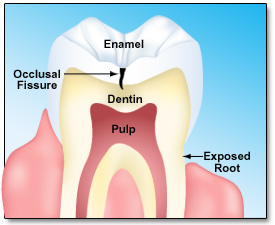
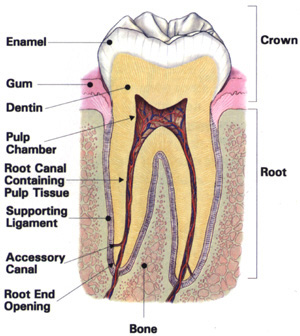
Cross section of a tooth illustrating the various structural regions susceptible to colonization or attack by microbes
Periodontal diseases
Periodontal Diseases are bacterial infections affecting teeth support structures (gingiva, cementum, periodontal membrane and alveolar bone).
- Gingivitis is an inflammatory condition of the gums – associated with bacterial plaque build-up in the affected area. Increased presence of ACTINOMYCES are suggested as the cause. Diseases confined to the gum do not usually lead to loss of teeth.
- More serious forms of periodontal disease affect periodontal membrane and alveolar bone – and can result in tooth loss. Bacteria in these lesions are consist of GRAM-POSITIVE organisms (including ACTINOMYCES and streptococcI) and Gram-negative organisms (including spirochetes and Bacteroides). The mechanisms of tissue destruction in periodontal disease are not clearly defined but hydrolytic enzymes, endotoxins, and other toxic bacterial metabolites seem to be involved.
FREQUENTLY ENCOUNTERED BACTERIA IN PLAQUE, DENTAL CARIES, GINGIVITIS AND PERIODONTITIS
BACTERIUM | Plaque | Dental caries | Gingivitis | Periodontitis |
Streptococcus sanguis | ++ | ++ | ++ | + |
S. mutans | ++ | ++ | 0 | 0 |
S. salivarius | 0 | 0 | 0 | 0 |
ACTINOMYCES VISCOSIS | + | + | ++ | + |
A. ISRAELI | + | + | ++ | ++ |
LactoBacillus | + | + | 0 | 0 |
PROPIONIBACTERIUM ACNES | 0 | + | + | ++ |
Bacteroides sp. | 0 | 0 | + | ++ |
Selenomonas sputigena | 0 | 0 | + | ++ |
Large spirochetes | 0 | 0 | 0 | ++ |
++ = Frequently encountered in high proportions;
+ = Frequently encountered in low to moderate proportions;
0 = Sometimes encountered in low proportions or not detectable.
Modified from Davis, et al.: Microbiology. 4th ed. J. B. Lippincott. Philadelphia, 1990.
References
Kenneth Todar, PhD. Online Textbook of BacteriologyIn the GI TractReferences