Health Happening

Attend to diet, lifestyle & emotional state:

Nutrition  

Exercise

 Water

Sun

Thoughts  

     Air

Rest

Trust

Sex

Leaf logo

Health Happening    

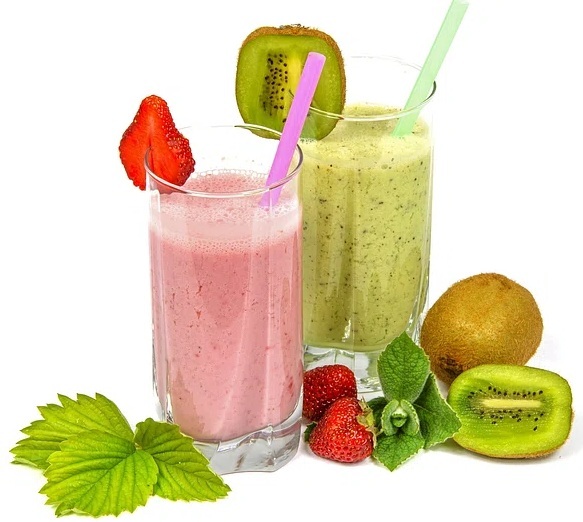
‘No-brainers’ 💡 for Physical / Mental Health: Magnesium, Omega-3 , C, D, Iodine in “Make-it-Happen” smoothie

Iodine-related

Red apple clipart

Iodine 💡- For much more than making thyroid hormones

This "medicine" has been around for well over a century

“If ye don’t know where, what, and why, prescribe ye then K and I”

This was a phrase recited by medical students (where “K and I” refer to potassium and iodine):

“When I was a medical student, iodine in the form of potassium iodide was the universal medicine. Nobody knew what it did, but it did something and it did something good”

– Nobel Laureate Albert Szent Gyorgyi M.D.

(Discovered vitamin C in 1928)

“Supplementing with high dose iodine may be the safest, simplest, most effective, and least expensive way to solve the healthcare crisis crippling our nation.”

– Dr. Guy Abraham, M.D.

(Endocrinologist, Author, Dedicated researcher of the benefits of iodine supplementation)

Iodine is possibly the best solution to prevent cancer of the breast, uterus, ovaries, endometrium, prostate and other organs having high iodine presence.   However, people who supplement also report needing less thyroid medication, weight loss, and improved energy, mood and mental clarity. Stadel B, Dietary iodine and risk of breast, endometrial, and ovarian cancer, The Lancet, 1976

Iodine and pregnancy.  Iodine is the only compound of significance during early pregnancy which can pass rapidly through all tissues of the fetus without the aid of any blood vessel or lymphatic transport.    It could be that not only does iodine control natural cell death (apoptosis) in the fetus but may also influence stem cell development.

CHART of Iodine Health Benefits

Iodine is present and essential in EVERY organ and tissue of the human body, not just the thyroid gland.

Government RDAs for iodine are sufficient to ensure thyroid function, but do not recognize the body’s many important extrathyroidal need

Iodine has many functions in the body . . .

Thyroid hormone productionAnti-cancer
Trace NutrientAntioxidant (iodide)
StimulantNatural Antimicrobial (elemental form)
ExpectorantReverses fibrocystic breasts
Increases secretions (opens ducts)Important for hormone production / balancing
Shrinks ovarian and thyroid cysts

Indeed, the thyroid is an organ unique to vertebrates, that combines iodine with the amino acid tyrosine to make the important thyroid hormones T3 (triiodothyronine) and T4 (thyroxine).   This well-known need for iodine is critical for cellular metabolism rate, and protein synthesis and growth,

Iodine against thyroid disorders

Unfortunately, more recent attention has focused only on iodine’s benefit for thyroid disorders, while its historical use as a panacea against other ailments has been neglected, by using iodine supplementation at higher doses than are needed to deal with just thyroid problems.

Hormone Balancing.  Iodine increases the sensitivity of the receptors for almost every major hormone and neurotransmitterin order for them to function efficiently.

  • Thyroid hormones.  For cellular metabolism, protein synthesis and growth
  • INSULIN.   Helps with diabetes
  • CORTISOL.  Manages stress
  • Neurotransmitters (e.g., SEROTONIN, DOPAMINE, GABA) in the brain. Helps reverse depression
  • Testosterone, estrogen, FSH (Follicle Stimulating Hormone), LH (Luteinizing Hormone).   In the reproductive organs.
  • Iodine balances estrogen levels.  Iodine/iodide is especially necessary for optimal function of the breasts, ovaries, endometrium, and prostate

Antimicrobial.  Elemental iodine taken into body organs and tissues has an oxidant effect against microbes.   In an aqueous environment, iodine converts to hypoiodous acid, with double the oxidizing potential of iodine.  Blood passing through the thyroid is mildly “disinfected”. Iodine is also used to disinfect drinking water and swimming pools!  

Iodine against microbes

Anti-Cancer.  Iodine prevents cancer by a process that induces apoptosis (programmed cell death).

Iodine against cancer

Anti-Cysts.  Iodine deals with breast, thyroid, ovarian and skin cysts.

Iodine against cysts

 

Iodine deficiency is common, due to several dietary and environmental factors in our changing world

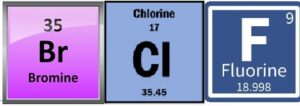
However, the major culprit is our current high-level exposure to iodine’s halide antagonists.  Commonly called goitrogens, they are: chlorine, fluorine and bromine.

Iodine deficiency – Common and affects more than just thyroid

Goitrogens vs. Iodine

How to supplement iodine

Food / Supplement sources of iodine

Body's iodine distribution, absorption and metabolism

Distribution of body’s iodine

A typical body can retain ~1500mg of iodine.   Contrary to popular belief, Dr. Abraham’s studies indicate that given a sufficient amount of iodine the body will retain 1,500 mg (that’s 30 times more than the presumed 50 mg), with only 3% of that 1500 mg residing in the thyroid gland, and the rest of the body’s iodine concentrated in extra-thyroidal tissues (70% in muscle/fat cells, 7% in skin) where its roles are only now being understood.

Different tissues concentrate different forms of iodine

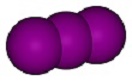
There are 3 forms of iodine: IodIDE,  IodINE and Triiodine

OrganPrimary form of
Iodine concentrated
Thyroid gland, skinIodIDE
Breasts, ProstateIodINE
Kidneys, spleen, liver, salivary glands,
blood, intestines
Both

Cells which require a higher iodine concentration express (produce) more iodine “pumps” in their cell membranes

Iodine is used by almost every cell in the body, but some cells have higher needs than others to enable their normal healthy function

Iodine pumps concentrate iodine into body’s cells.  Enables more iodine to be transported into the cell.

Iodine concentration is highest in the thyroid, ovaries and breast tissues.   However, this is only when iodine is ingested in milligram amounts (as opposed to the RDA micrograms);

  • The thyroid gland.   Accomplishes the major feat of concentrating iodide to 20-40 times higher than blood levels (determined by Baumann back in 1896).   The mechanism used for concentrating iodine in cells is the iodine pump, which is highly expressed in thyroid epithelial cells. The thyroid’s iodine concentration is influenced by Thyroid Stimulating Hormone (TSH) under negative feedback control.
  • Ovaries.    Only the thyoid gland contains a larger concentration of iodine than the ovaries.  (Slebodzinski AB, 2005)
  • Mammary glands.    These glands contain iodine pumps, which during lactation, enable iodide transfer to breast milk for the nursing newborn’s thyroid function; Evidence is presented that iodine is essential for breast normality and protection against fibrocystic breasts and breast cancer. Interestingly, Eskins et al found that the mammary glands prefer iodine and the thyroid prefers iodide.   (Eskin et al, 1995)

Salivary glands, stomach cells (gastric mucosa) and colon have the ability to concentrate almost as much iodine / iodide as the thyroid

Iodide uptake in non-thyroidal tissues does not appear to be influenced by TSH.   However, a number of other hormones are known to maintain a dynamic iodide balance in tissues. (Cann et al, 1999)

Tissues that use iodine pumps to concentrate iodine include:
• Thyroid gland• Mammary gland• Stomach cells (gastric mucosa)
•  Fat• Muscles•  Mucosa of small and large intestine
• Ovaries• Uterus• Placenta
• Prostate• White blood cells• Liver
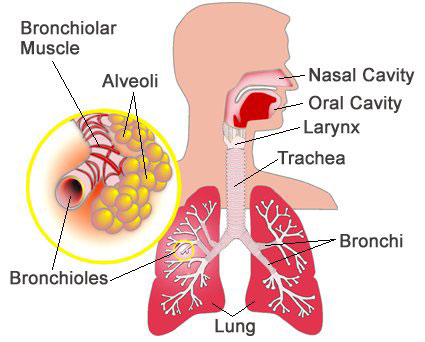
• Lung• Heart• Adrenal cortex
• Renal cortex• Thymus (master of adaptive immune system)• Pituitary gland
• Pineal gland• Skin• Joints
• Arteries• Bones• Nasopharynx
• Ciliary body of eye deals w/aqueous fluid and intraocular pressure• Choroid plexus in brain, makes cerebrospinal fluid• Specific brain cells (related to Parkinson’s)

Drs. Abraham and Brown have experienced better results from iodine supplementation by using a combination of both iodine and iodide

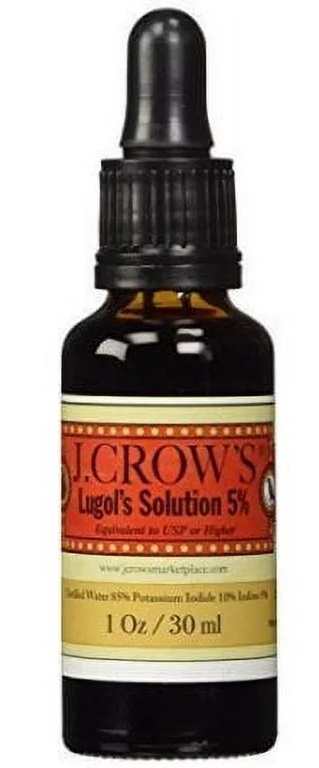
My clinical experience has proven, beyond a doubt, that a combination of both iodine and iodide (E.g. as found in Lugol’s solution or Iodoral) is much more effective than an iodide only supplement (E.g. SSKI and most other liquid iodide formulations)”.

– David Brownstein, MD

From his book, “Iodine, Why You Need It, Why You Can’t Live Without It”

Iodine absorption / metabolism in the body

  • Consumed iodide ions (Iare easily absorbed through the walls of the digestive tract in the stomach and duodenum of the small intestine and on into the blood and plasma.
  • Supplemented elemental iodine (I2also finds its way into the blood and plasma (in rat studies).    That is, provided the oral dosages are high enough. However, this is inconsistent with the commonly held view that iodine (I2is reduced to iodide (Ibefore it is absorbed systemically from the gastrointestinal tract. 

Thrall KD, Bull RJ, Differences in the distribution of iodine and iodide in the Sprague-Dawley rat. Fundam Appl Toxicol. 1990 Jul;15(1):75-81 PubMed

Thrall KD, Bull RJ, Sauer RL, Distribution of iodine into blood components of the Sprague-Dawley rat differs with the chemical form administered. J.Toxicology enviro.Hea;th, 1992 Nov. 37(3) 443-9 PubMed

  •  Iodine is transported in the blood as iodide ions (I (its ionized form)
  •  Iodine is transported in serum proteins and lipids as elemental iodine (I)

We do not conserve iodine long-term and so it must be obtained regularly via diet or supplementation.     With an iodine deficiency, the body conserves iodine for a while, but if the inadequacy continues, thyroid hormone is slowly depleted.

  • Iodine is used by almost every cell in the body, but some cells have higher needs than others to enable their normal healthy function

Thyroid hormone production

The thyroid combines iodine with the amino acid tyrosine to make thyroid hormones T3 (triiodothyronine) and T4 (thyroxine).   This well-known need for iodine is critical for cellular metabolism rate, and protein synthesis and growth,

Iodine against thyroid disorders

However, iodine has many other functions in the body . . .

Hormone Balancing.  Iodine increases the sensitivity of the receptors for almost every major hormone and neurotransmitter -in order for them to function efficiently.

  • Thyroid hormones. For cellular metabolism, protein synthesis and growth
  • InsulinHelps with diabetes;
  • Cortisol.  Manages stress
  • Neurotransmitters 

(e.g. SEROTONIN, DOPAMINE, GABA) in the brain. Helps reverse depression.

  • Testosterone, estrogenFSH (Follicle Stimulating Hormone), LH (Luteinizing Hormone).   In the reproductive organs.
  • Iodine balances estrogen levels.  Iodine / iodide is especially necessary for optimal function of the breasts, ovaries, endometrium, and prostate

Antimicrobial.  Elemental iodine taken into body organs and tissues has an oxidant effect against microbes. In an aqueous environment, iodine converts to hypoiodous acid, with double the oxidizing potential of iodine.  Blood passing through the thyroid is mildly “disinfected”. Iodine is also used to disinfect drinking water and swimming pools!  

Iodine against microbes

Anti-Cancer.  Iodine prevents cancer by a process that induces apoptosis (programmed cell death).

Iodine against cancer

Anti-Cysts.  Iodine deals with breast, thyroid, ovarian and skin cysts.

Iodine against cysts

3 forms of iodine

Iodine (I2)

Elemental form has two iodine atoms covalently bonded (ie sharing an electron); aka molecular or granular iodine.

An oxidant.    Since it is missing an electron in its outer valance shell, it readily accepts an electron to become an iodide ion. Potable water disinfectant treatments have a long history using concentrations of 2-7 mg/L (ppm); added to water, it hydrolyses  to form iodide  and hypoiodous acid (HIO) –  an oxidant with an oxidizing potential of .987 V,  almost twice that of iodine  at 0.535V);  it is most effective as a disinfectant when pH is near neutral to mildly alkaline (pH 7 – 7.5)  i.e. blood pH.  WHO Documention water sanitation.  Link

I2 + H2O <–> HIO + I- + H+   (in the ph 2-7 range)

Kills single-celled microbes (bacteria, virus, fungi, protozoa).  Two possible mechanisms are proposed:

  • By oxidation (at sufficient concentration);
  • May also work by reacting with tyrosine in microbial membrane

I2 form of iodine is rarely found in nature

Iodide (I)

Iodide is the negatively charged iodine ion (I).     Since it can so easily accept or donate an electron, the iodine ion (I) is found bound with other elements, such as sodium, potassium, oxygen, hydrogen or carbon to form inorganic salts, or with organic compounds such as the mammalian hormone thyroxine.

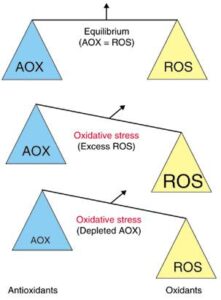
An antioxidant.   Iodide is an electron donor.

Oceans are the main source of iodine, which bonds easily with water.   Rivers travel to the sea, carrying iodine  from the soil, and so depleting soil content;

iodide is quickly and almost completely absorbed in the stomach and duodenum.

Triiodine (I3)

Form of iodine in Lugol’s Solution.

Elemental iodine is added to a potassium iodide solution to make it soluble.    Elemental iodine is not very water soluble on its own, but combining it with an aqueous solution of potassium iodide forms triiodide ion (three iodine atoms in linear configuration having an overall negative charge), which is completely soluble in water.

KI (aq) + I2(s) -> K I3(aq)

References

Abraham GE. “The concept of orthoiodosupplementation and its clinical implications.” The Original Internist, 2004;Abraham GE (2005) “The historical background of the Iodine Project.” The Original Internist;

Abraham GE (2004) The safe and effective implementation of orthoiodosupplementation in medical practice. The Original Internist:11:17-36.

Brown-Grant K (1961) Extrathyroidal iodide concentrating mechanisms. Physiol Rev;

Cann SA (1999) Johannes P. van Netten, David W. Glover, Iodide Accumulation in Extrathyroidal Tissues, The Journal of Clinical Endocrinology & Metabolism, Volume 84, Issue 2,  Page 821;   Link

Carrasco N (1993) Iodide transport in the thyroid gland. Biochimica et Biophysica Acta;

Eskin B et al (1995) Different Tissue Responses for Iodine and Iodide in Rat Thyroid and Mammary Glands. Biological Trace Element Research;

Siebodzinski AB  (2005) Ovarian iodide uptake and triiodothyronine generation in follicular fluid. The enigma of the thyroid ovary interaction. Domest Anim Endocrinol;

Spitzweg C et al (1999) Analysis of human sodium iodide symporter immunoreactivity in human exocrine glands. J Clin Endocrinol & Metab;

Spitzweg et al (1998) Analysis of human sodium iodide symporter gene expression in extrathyroidal tissues, J Clin Endocrinol & Metab;

Iodine-related

N E W  S T A R T S

Attend to Diet, Lifestyle & Emotional State

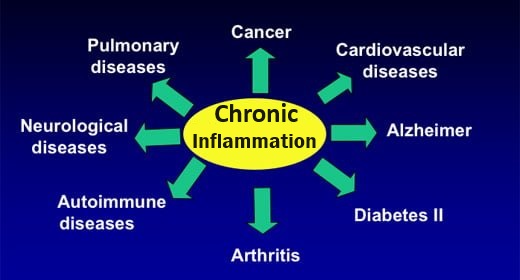
Chronic low-level inflammation

Electrotherapy

The Medical Kit of the Future

  • Detoxifies
  • Boosts immune system / cellular energy
  • Anti-inflammatory / Pain-relief
  • Aids sleep / Reduces stress
  • Accelerates healing of tissue, bone, muscles, scars
  • Improves circulation +++

Successful electrotherapies