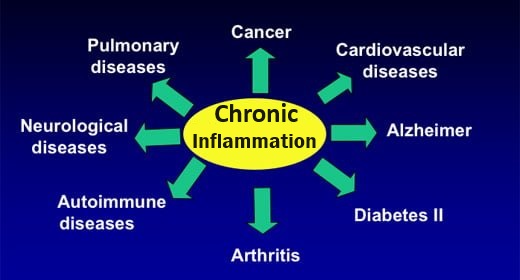


Neurodegenerative diseases - Common mechanisms

Abbreviations: Blood brain barrier (BBB); Cerebral spinal fluid (CSF); Central nervous system (CNS); Parkinson’s disease (PD); Alzheimer’s disease (AD); Huntington’s disease (HD); amyotrophic lateral sclerosis (ALS); multiple sclerosis (MS);
Neurodegenerative disease commonalities
The neurodegenerative diseases, which include Parkinson’s disease (PD), Alzheimer’s disease (AD), Huntington’s disease (HD), amyotrophic lateral sclerosis (ALS), multiple sclerosis (MS) and Creutzfeldt-Jakob disease, are considered incurable and characterized by gradual degeneration of function and structure of neurons, and overactivation of microglia (immune cells) in the central nervous system (CNS). Although each has respective features, they share some common mechanisms, such as:
- Amyloidosis – aggregation of misfolded α-synuclein (α-Syn), called Lewy bodies – pathological markers of neurodegenerative diseases. α-Syn is a protein abundant in the CNS involved in release of neurotransmitters
- Oxidative damage (damage caused by reactive oxygen or nitrogen species stealing electrons from neurons)
- Mitochondrial dysfunction (cellular energy is produced in the cell mitochondria)
- DNA damage
- Neuroexcitotoxicity (neuron burn-out)
- Bio metal dyshomeostasis
- Neurotrophic impairment (neurotrophins are mostly protein molecules that support the growth, survival, and differentiation of neurons in the nervous system)
- Neuroinflammatory responses
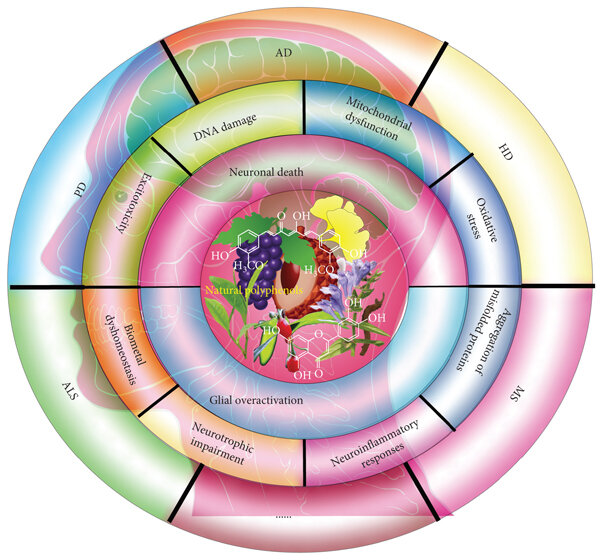
Polyphenols hold promise for slowing neuronal degeneration
Currently approved drugs offer only symptomatic treatment. Plant polyphenol antioxidants are showing neuroprotective benefits. The main obstacle in using therapeutic polyphenols is low bioavailability, resulting from (1) low stability and (2) low permeability across the blood brain barrier (BBB)
Omega-3 EPA helps neuronal repair in neurodegenerative diseases
Omega-3 EPA (but not DHA) significantly increased proliferation of neural stem cells (NSCs) compared to controls. An effect associated with enhancing endocannabinoid (EC) signaling in brain repair. ECs are small signaling lipids and elements of the EC system have roles in motor function and cognition. Studies have shown that an imbalance in the endocannabinoid system is involved in neurodegeneration Dyall et al, 2016 Micale et al, 2007
Omega-3 demonstrated to help neuroplasticity (brain’s ability to reorganize and rewire its neural connections, to adapt to any changes)
Fish oil helps relieve depression in PD. Depression is estimated in ~50% of PD patients. Ticyana Moralez de Silva et al, 2008
Omega-3 crosses the BBB and supplementation increases CSF levels. Omega-3 in the CNS has been demonstrated as bioavailable and affects markers in the CNS for AD and inflammation. Karalinska Institute Leclerk et al, 2021
Neurogenesis
Neurogenesis is the process of growing new neurons in the brain. In childhood they are quickly generated, and the rate of neurogenesis steadily declines into our old age.
Some ways to increase neurogenesis are:
- Exercise
- Using and challenging your brain
- Stress relieving activities
References
Avallone R et al (2019, Aug) Omega-3 Fatty Acids and Neurodegenerative Diseases: New Evidence in Clinical Trials. Int J Mol Sci. 20(17):4256.
Dyall et al, (2016) Distinctive effects of eicosapentaenoic and docosahexaenoic acids in regulating neural stem cell fate are mediated via endocannabinoid signalling pathways. Neuropharmacology, Volume 107, Pages 387-395.
Leclerc M, Dudonné S, Calon F (2021 Mar) Can Natural Products Exert Neuroprotection without Crossing the Blood-Brain Barrier? Int J Mol Sci. 25;22(7):3356.
Lu Yan et al, (2022) Dietary plant polyphenols as the potential drugs in neurodegenerative diseases: Current evidence, advances, and opportunities
Micale V et al (Nov 2007) Endocannabinoids and neurodegenerative diseases. Pharmacol Res. 56(5):382-92.
Ticyana Moralez da Silva et al (2008) Depression in Parkinson’s disease: A double-blind, randomized, placebo-controlled pilot study of omega-3 fatty-acid supplementation, Journal of Affective Disorders, Volume 111, Issues 2–3, Pages 351-359,