

Acne (Acne Vulgaris/ Cystic Acne) - The most common skin disease addressed by dermatologists

What is acne?

Acne is a condition presenting unsightly red and swollen follicles that we call pimples

Acne affects ~85% of the population at some time in their life, including adults. Most teens get the type of acne called acne vulgaris, which can appear on face, neck, shoulders, back and chest (these are the locations where most sebum-secreting sebaceous glands are found). Appearing on the face as it does, it obviously causes its owner significant psychological stress.

Acne can be a chronic problem – sometimes lasting several years

Types of acne “lumps and bumps”

Plugged follicles

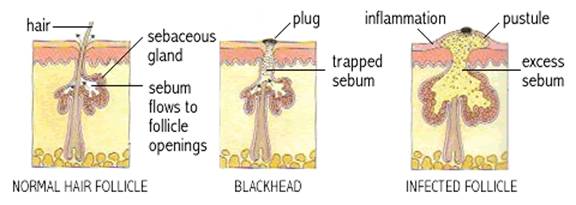
  • Whitehead (Closed comedone).  Clogged follicle; usually small, round, white bumps on skin.
  • Blackhead (Open comedone).   Plugged follicle that opens and turns dark at the surface of the skin; the black is not indicative of dirt.

Inflammatory lesions – Occur when comedones rupture, spreading bacteria with associated inflammation:

  • Papules.    inflamed lesions; seen as small, pink bumps on the skin.
  • Pustules (pimples).   Inflamed pus-filled lesions; red at their base.
  • Cysts and nodules.   Large, inflamed, pus-filled lesions deep under the skin; can cause pain and scarring.

What causes acne?

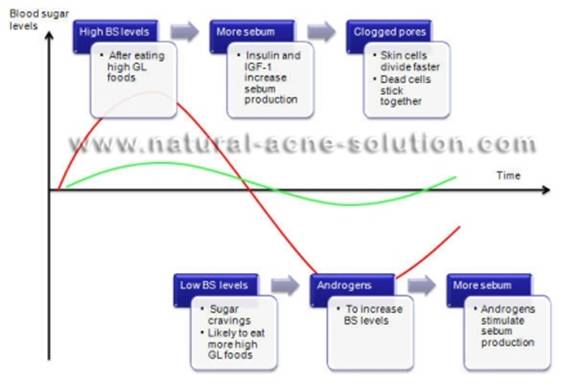
Blood sugar “Roller Coaster” ride aggravates acne

Acne joins the blood sugar roller coaster ride when you eat starch and sugar.  insulin and Insulin-like Growth Factor (IGF-1) hormone levels are increased.  Which can lead to:

  • Secretion of sebum (a greasy substance that attracts acne-promoting bacteria) from pores.
  • Multiplication of skin cells (keratinocytes).   A process associated with acne.

H. Aizawa, M. Niimura, Elevated serum insulin-like growth factor-1 (IGF-1) levels in women with postadolescent acne. J Dermatol. 1995 April; 22(4): 249-252.ef=”http://www.ncbi.nlm.nih.gov/pubmed/7608381?dopt=Abstract”PubMed

The BS “Roller Coaster Ride”

  • The glycemic load reflects how much a particular food increases your BS levels. Eating high GL foods spikes your blood sugar (BS) levels, since the body can quickly convert them to glucose.
  • To protect against a harmfully high BS level after eating high GL foods (non-fiber /high starch and sugar carbs), the pancreas responds by releasing large amounts of insulin to bring it down.
  • High insulin ▲  and IGF-1 ▲  levels increase sebum production ▲  ▲  ▲
  • However, large quantities of insulin cause BS level to plummet.   BS levels that are low or swing too low trigger an emergency response instructing the adrenal glands to release androgens.   These male hormones signal the liver to release some of its glycogen stores to raise the BS level and so prevent the person from becoming unconscious.
  • Low BS levels also trigger strong sugar cravings.    Such that you’ll eat something sweet (with its inherent high GL) and the cycle repeats. Treating yourself to something decadent once in a while won’t harm you, but unfortunately today’s typical diet comprises an abundance of processed foods loaded with high GL foods and the roller coaster ride for blood sugar becomes a cycle repeated several times a day

Consequences of the BS Roller coaster

  • The pancreas becomes worn out trying to produce sufficient insulin
  • Cells become resistant to insulin’s message to store glucose to get it out of the blood (called insulin resistance);
  • insulin resistance revs up your acne problem  . . . more cell proliferation, more sebum and well-fed bacteria increase their colonies.

Hormonal and other elusive factors are involved with acne

Although IGF-1 and androgen levels cause acne in acne prone individuals, the levels are roughly the same for people with and without acne.  Mark Cappel, MD; David Mauger, PhD; Diane Thiboutot, MD, Correlation Between Serum Levels of Insulin-like Growth Factor 1, Dehydroepiandrosterone Sulfate, and Dihydrotestosterone and Acne Lesion Counts in Adult Women -ARCH DERMATOL/VOL 141, MAR 2005

Hormonal changes – common during adolescence, pregnancy, or menstruation (acne tends to flare up 2 – 7 days before menstruation begins)

  • Family history of acne
  • Using oily cosmetic or hair products
  • Certain medications.  E.g. corticosteroids, androgens, oral contraceptives, lithium, halogens, isoniazid, phenytoin, phenobarbital, and high levels of iodine (such as from kelp)

Sweating / friction.   Caused by headbands, back packs, bicycle helmets, or tight collars. Acne and its Therapy by Guy F. Webster and Anthony V. Rawlings

  • Squeezing / picking comedones

Thyroid Hormones increase sebum production

  • Thyroidectomy in rats decreases the rate of sebum secretion – andadministration of thyroxine reverses this effect. Thody AJ, Shuster S. A study of the relationship between the thyroid gland and sebum secretion in the rat. J. Endocrinol 1972; 54:239-244.
  • Thyroxine given to hypothyroid patients increased sebum secretion rate. Goolamali SK, Evered D, Shuster S. Thyroid disease and sebaceous function. Br Med J 1973; 1:432-433

Thyroid hormone nuclear receptors have been demonstrated in human scalp follicles – in the nuclei of the outer root sheath cells,dermal papilla cells, sheath cells, and sebaceous gland cells.  Ahsan MK, Urano Y, Kato S, Oura H, Arase S. Immunohistochemical localisation of thyroid hormone nuclear receptors in human hair follicles and in vitro effect of L-triiodothyronine on cultured cells of hair follicles and skin. Lab Med Invest 1998:44:179-184.

insulinthyroid-stimulating hormone (TSH), and hydrocortisone stimulate sebocyte proliferation.  Zouboulis CC, Xia L, Akamatsu H, Seltmann H, Fritsch M, Hornemann S, Ruhl R, Chen W, Nau H, Orfanos CE1998 The human sebocyte culture model provides new insights into development and management of seborrhoea and acne. Dermatology196:21-31 PubMed

Increased sebum and excess skin cells can clog skin pore

Those with acne secrete more sebum than unaffected individuals

Sebum is an oily / waxy substance secreted by the skin’s sebaceous glands used to lubricate the skin and hair follicles – oddly however, the distribution of sebaceous glands and amount of sebum produced doesnot correlatewithdryskin. Sebum is composed of triglycerides, free fatty acids, wax, squalene, and a little cholesterol,with their proportions being altered in a person with acne (more squalene and TGs and less free fatty acids and wax)

Altered Proportions of fats in Sebum of a person with acne

Overproduction of sebum can:

  • Increase the incidence of clogged pores
  • Stimulate inflammation- which further promotes sebum production
  • Provide nutrients for bacterial growth
  • Influence other factors central to the pathogenesis of acne vulgaris.

Sebum production in skin pores is increased by:

  • Inflammation
  • Increased male hormones.   Can occur in puberty, with hyperandrogenism, low blood sugar or low blood sugar dips on a blood sugar roller coaster ride, or taking androgenic drugs. Androgen presence is only partly involved, since sebum production activity also varies with:

Sebaceous gland receptivity to androgens.    Central problem in male acne and possible role in female acne

Sebaceous glands’ ability to metabolize or synthesize (from cholesterol).   Activity of the enzyme Type-1 5α-reductase (converts Testosterone or DHEAS to more potent DHT) is higher in sebaceous glands on the face, compared to other body areas not prone to acne. Hyper conversion of circulating androgens (called hyperandrogenism) and/or overproduction of androgens by ovaries or adrenals (called hyperandrogeny) may have roles in female acne.

Sebaceous gland’s ability to more fully use circulating androgens

What affects sebum production?

Increased sebum and over-proliferation of skin cells can create a hyperkeratotic plug (a.k.a. micro-comedone or whitehead).  Faster skin cell regeneration means more dead skin cells to be expelled, and the heavier “traffic”means they have to be clumped together for the journey out. Dead cell clumps, “glued” together with the increased sebum, invariably leads to “traffic jams” i.e. plug-blocked pores.

Excess sebum trapped behind blockage aggravates acne by promoting Propionibacterium acnes bacteria

Promoting over-colonization of Propionibacterium acnes bacteria in skin leads to an Inflammatory acne flare-up

  • P. acnes is found on the surface of everybody’s skin.   Their controlled numbers are an important part of the skin’s defense mechanism
  • An over-supply of sebum serves as a nutritional source to enlarge colonies of acne-causing bacteria.    Proliferation of these bacteria (such as P. Acnes) and their excrement can stimulate an inflammatory reaction seen as an acne flare-up, which presents a reinforcing loop by promoting the increased production of sebum to further feed the bacteria.
  • P. acnes stimulates the production of several inflammatory cytokines (E.g. IL-1α, IL-1β, IL-6, IL-8, IL-12, TNFα, GM-CSF, αMSH) by keratinocytes, sebocytes and macrophages

Mainstream acne treatments

The following treatments get rid of the acne, but on their own, do not remove its underlying cause(s):

Topical agents:

Benzoyl peroxide – antibacterial, peeling (keratolytic), and drying actions; sold OTC under many brand names, and is the active ingredient in such as Clearasil and ProActiv;

Prescription retinoid creams

  • Tretinoinc / All trans retinoic acid (Renova®, Retin-A®, Aberela®, Airol®, Atralin®, Avita®, Retacnyl®, Refissa®,Stieva-A®)
  • Adapalene (Differin®)
  • Tazarotene (Tazorac®, Avage®, Zoracc®)

Oral prescription drugs:

  • Antibiotics – typically tetracycline-type antibiotics are prescribed to kill acne infections, but no physician wants to keep their patient on long-term antibiotics, with good reason.
  • Oral retinoid

Isotretinoin ( no longer available as Accutane®, but still available in generic form).   Prescribed in extreme cases, isotretinoin significantly reduces the amount of sebum produced by the sebaceous glands. It is the only drug classified as category X, meaning it is 100% guaranteed to cause birth defects if used by a pregnant woman. As of 2002, if you are a woman of child bearing age, you have to get a pregnancy test before it can be prescribed; Also has other side effects, such as feelings of depression, aggression, and suicide.

Treat the underlying causes of acne

Treatment goals:

  • Reduce sebum production / Testosterone activity
  • Stimulate cell turnover / Help skin shed dead cells – to prevent build up
  • Prevent bacterial accumulation / Reduce inflammation.

Resist temptation to pick or squeeze your blackheads /pimples

Squeezing, scratching, rubbing or even touching your pimples and blackheads results in more pimples.    Since these actions actually increase sebum production. Also, when you squeeze, you can rupture the membranes below your skin, causing infection and sebum to spread underneath your skin. The result is more pimples.

Control your blood sugar

Your diet is a likely underlying reason causing the Propioniform bacteria to result in acne cysts or lesions.

Too much glucose from sugars and ALL grains (including whole-grains) raises insulin levels, reduces insulin sensitivity and increases levels of the hormone IGF-1 associated with acne:

  • Vegetable-carbs (high fiber/low starch) vs. Grain-carbs (low fiber/high starch) – vegetable-carbs are slow to break down into the SIMPLE sugars, glucose and fructose, and have minimal impact on insulin levels; in contrast, when grain-carbs are digested, they more quickly break down into glucose and fructose, raise insulin levels and also insulin-LIKE GROWTH FACTOR (IGF-1), which increases male hormone levels, which stimulate sebum production by sebaceous glands.
  • Studies support that low-glycemic diets improve acne

In a 2007 study published in the American Journal of Clnical Nutrition – young men (ages 15 to 25) with acne were placed on low-glycemic diets for 12 weeks, showing significant improvements in acne and insulin sensitivity. Robyn N Smith, Neil J Mann, Anna Braue, Henna Mäkeläinen and George A. Varigos, A low-glycemic-load diet improves symptoms in acne vulgaris patients: a randomized controlled trial, Am. J. of Clin. Nutr., Vol. 86, No. 1, 107-115, July 2007

A 2002 study found similar results to above study  Cordain L et al, Acne vulgaris: a disease of Western civilization. Arch Dermatol. 2002 Dec;138(12):1584-90.

  • By removing high glycemic foods from your diet, you should notice rapid improvement in your complexion in just a few weeks
CUT OUT / MINIMIZE:MODERATE / LIMIT 
Sugars / High fructose corn syrup 
Pasta, Rice, potatoesFruit consumption –
especially high sugar content fruit (E.g. grapes and bananas)
Processed foods 
Fruit juice (unless highly diluted) 
Bread / Cereal grains (including whole-grains and corn) 

Colon cleanse

Cleanse your colon.    This simple process has demonstrated dramatic improvement in skin blemishes by facilitating the removal of toxins from body.

Clear the “Exit Doors”

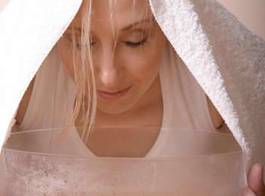
Facial steaming deep cleanse

Facial steaming removes oil from your facial skin and unclogs / minimizes your pores.  One of the best, yet most overlooked ways to eliminate acne – It unclogs and detoxes facial pores, removes dead skin cells, and stimulates blood circulation which is essential for the reproduction of new cells. Unclogged pores can’t form acne!  Acne sufferers need only do this powerful remedy a few times per month to fully benefit from its results.    Overdoing it (more than 3-5 times / week) can dry your skin out too much.

How to do a facial steaming cleanse:

  •  Boil water.    Bring a large pan of water to a boil or boil a kettle full of water and pour into a large bowl placed ready on a table for use (safer than carrying a bowl full of hot water to the table)
  • Optionally add a few drops of some anti-bacterial essential oils.   E.g. lavender, lemon, chamomile, tea-tree and/or oregano oil. Adding a teaspoon of salt can also help disinfect skin
  • Use a headband to keep hair out of your face
  • Steam your face for 5-10 minutes.   Sit at a table next to the pan or bowlful of hot water with a light-colored towel (allows you to see the water level) over your head to make a tent and stay over the steam. Don’t get too close to the water at first or it will be too hot
  • Rinse your face with warm and then cool water.  Next gently pat dry with a soft towel

Kill the infecting bacteria

  • Wash affected areas morning and night with organic antibacterial soap.   Be gentle to your skin – over washing actually stimulates sebum production, increasing your acne.
  • Tea tree oil is a good natural, topical antibiotic for the skin – used in lotions or soap
  • Chlorine Dioxide Solution (CDS)optionally combined with DMSO (for deeper penetration).    Has shown great success as an effective topical antibiotic to quickly deal with acne

Chlorine Dioxide Therapy (Topical Applications)

Trace minerals zinc and chromium

Zinc

This mineral is reported to have very satisfactory results in clearing acne. Some acne sufferers see results even within a few days, others persist over a few months before eventually attaining success.

Zinc actions against acne:

  • Stabilizes the formation of oily sebum within the pores of the skin
  • Acts as an immune booster that speeds up wound healing
  • Antioxidant
  • Increases vitamin A absorption
  • Reduces hormonal effects on the skin -to break the acne cycle.

Take 30 mg ELEMENTAL zinc in a supplement.   In the morning (with breakfast) and 30mg (with dinner) for 2-4 weeks and then cut back to 30-50 mg once / day. Common forms are zinc picinolate (highly absorbable????), zinc gluconate or chelated zinc)

  • Try taking on empty stomach with a full glass of water – but if you have stomach cramps / nausea then take with food (being aware that food interferes with absorption some, especially foods high in phosphorus or calcium. E.g. whole grains, legumes, milk and nuts)
  • Zinc sulfate is purported to cause stomach problems
  • Zinc can interact with tetracycline

Chromium

Helps heal skin infections. Supplement once/day to speed up healing and prevent future breakouts

Topical vitamin A therapy

Retinoids reduce sebum production.

Retinoids inhibited sebocyte proliferation in a dose-dependent manner and down-regulated lipid synthesis and sebocyte differentiation in vitro.

Zouboulis CC, Xia L, Akamatsu H, Seltmann H, Fritsch M, Hornemann S, Ruhl R, Chen W, Nau H, Orfanos CE 1998 The human sebocyte culture model provides new insights into development and management of seborrhea and acne. Dermatology 196:21-31 PubMed

Topical NATURAL vitamin A (choose a retinoid in a natural, chemical-free cream base)

The best choices for treating acne are either:

  • Retinaldehyde (aka. Retinal) (0.05 -0.075%).   The only antibacterial retinoid and causes less irritation
  • Retinol (1%)

Important information for effective use of topical retinoids and handling any irritation.   A common problem, particularly when beginning treatment

  • Tailor application amount and frequency to skin type and personal reaction to treatment.   Redheads / blondes with delicate skin require lower, less frequent dose than brunettes with thicker more resilient skin. Reaction time may take a few days to a couple of weeks.
  • Begin slowly and build up only if necessary.   Start with one treatment every two days; if peeling/burning/redness is too intense, then stop for 4-5 days before resuming treatment applications further apart; some initial peeling/flaking is usual as skin cell regeneration takes place; DON’T GIVE UP! – skin becomes more tolerant over time.
  • Only apply cream at night.    Retinoids are inactivated by light, but  phototoxity from using topical retinoids is minimal and has been over-exaggerated.
  • Wait at least 15-30 minutes after washing face before application.    Especially if washing with soap; washing makes skin overly receptive and sensitive, which can cause irritation.
  • It is absolutely necessary to apply a soothing moisturizer in the morning.   Limits /corrects irritation from previous night’s application. Even males need to do this
  • Apply a natural sunscreen lotion if going outside in the sun
  • Minimize frequency of application around the delicate nasolabial folds
  • Use opened retinol product within 1 month of opening.   Keep lid on container to avoid exposing cream to light; or alternatively buy cream with a pump
  • To be safe, do not use if pregnant or trying to get pregnant.   High doses of any form of vitamin A are contraindicated for pregnant women, since it may be teratogenic (i.e. adversely affect growing cells /embryo)

Limit breakouts at the start of treatment by combining topical retinoid with a topical anti-inflammatory cream.   E.g. erythromycin or benzoyl peroxide

Oral NATURAL (not synthetic) vitamin A

  • It is safe to take doses up to 300,000 units/day for just a few weeks.   Provided you balance it with vitamin D (usually from taking a “sunbath“) and discontinue if unusual symptoms develop, E.g. headaches, nausea.
  • Decrease dose to 100,000 units for up to 3 months and then discontinue supplementation
  • Regarding pregnancy and supplementing vitamin A.    The latest studies suggest that these dosage levels will NOT likely cause complications, but to be safe whilst taking vitamin A, do not get pregnant or take during pregnancy.

Consume / Supplement Probiotics

Probiotics re-establish beneficial bacteria in GI tract to restore immune system function – especially important after a dose of antibiotics, which indiscriminately kill good, as well as bad bacteria, sometimes resulting in a yeast infection. Reducing sugar and carbs will remove the “bad” bacterias’ favorite food source.

Dietary fermented / cultured foods contain probiotics.    E.g yogurt, sauerkraut

Probiotics -“For Life”

Other treatments of mention

Drink plenty of water:

  • Facilitates cell growth and regeneration
  • Eliminates wastes
  • Sloughs away dead skin cells
  • Hydration improves your skin tone

Exercise.   Helps control blood sugar / insulin levels

Sweat.   Sweating releases toxins from skin and increases sebum flow.   Work outside in the sun / Use a sauna

Sleep.   ~8 hours in darkened room

Enhance immune system

Reduce stress

Vitamin D/Sunlight – Crucial for healthy immune system response.   Most people are D-deficient and without it your body is unable to control infection, in the skin or anywhere else.

  • Vitamin D promotes production of broad spectrum, anti-microbial antibiotics.     >200 host defense peptides essential components of innate immune response
  • Expose BARED skin of most of body to sun every day for 30-45 minutes until skin just turns pink (a “built-in”signal that you have obtained optimal D production around 20,000 IU).    The best time for taking a “sunbath” is from 10 am – 2pm; no hat, no sunglasses and especially no sunblock (not only will it prevent vitamin D production in the skin, if it is not natural and organic, suntan lotion contains dangerous cancer-causing chemicals). If sun is not available use a safe tanning bed that utilizes natural light frequencies.

Echinacea.    Echinacea may help normalize sebaceous gland function by blocking the endocannabinoid receptor-2 (CB2) responsible for sebum production. However, this has not been proven.
Control inflammation

Omega-3 and Omega-6 dihomo-gamma linolenic acid (DGLA).    The anti-inflammatory fatty acids.

  • Omega-3

The “O3 Fix” – How to obtain Omega 3

  • Omega-6 DGLA (Dihomo-gamma-linolenic acid) is found in evening primrose, blackcurrant or borage oil

Borage, Blackcurrant and Evening Primrose Oils  (For Omega-6 DGLA)

Epsom Salts (Magnesium sulfate)

  • Make and apply (DO NOT RUB IN) Epsom salt paste to problem areas.    Let sit 10-15 minutes before rinsing off with cold water. Repeat twice daily for best results. This two-pronged therapy provides anti-inflammatory magnesium and also draws toxins and blackheads from skin.
  • HOW TO MAKE EPSOM SALT PASTE:  Place 2 tbsp. Epsom salts into a small container and add 1 cup of warm water. Mix with a spoon until the salts have dissolved and formed a thick paste.
  • Soak in Epsom salt bath.   Directly treats acne on back, neck, shoulders, and buttocks and indirectly provides an inflammatory systemic treatment by absorbing magnesium into the body. Add 2 Cups epsom salts to running water in body-covering warm bath and soak for 30 minutes

Mg – Anti-Inflammatory

Topical lavender essential oil

Factors affecting sebum production

▼▼   Factors decreasing sebum production ▼▼

Retinoids

A group of cell-signaling molecules, derived from Vitamin A – Specific  retinoids directly control proliferation of sebaceous glands and sebum production. In addition to its anti-aging properties, retinoids (particularly retinol and retinoic acid) used on skin have been shown to be effective in the treatment of acne by:

  • Diminishing sebum production
  • May reduce the number of open and closed comedones (black heads and white heads).
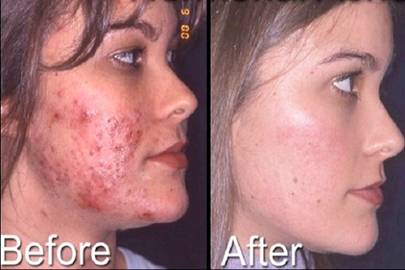
Reduction of acne after Retinoid use
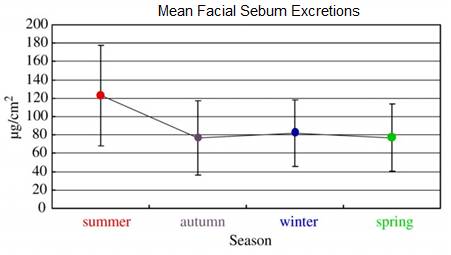
Seasonal Variations in Mean Facial Sebum Excretions

E.g. Accutane (isotretinoin) – is a powerful anti-acne, retinoid drug. Accutane molecules bind to specialized receptors on the surface of sebocyte cells causing them to slow down their growth and sebum production. Note that Accutane is categorized as a category X drug, meaning it is 100% guaranteed to cause birth defects if used by a pregnant woman. Also, the FDA reported that Accutane is associated with depression, aggression and even suicide. The makers of Accutane removed it from the US market in 2009 after paying millions of dollars in lawsuit damages. However, isotretinoin is still produced and available under numerous names by a wide range of generic pharmaceutical companies (E.g. as Amnesteem, Isotane, Sotret, Oratane and Roaccutane).

Estrogens

  • Estrogens (female sex hormones) usually antagonize (i.e. suppress) the effects of androgen hormones. This relationship partially explains why acne symptoms tend to change over the course of a woman’s menstrual cycles, or during /after pregnancy. Men produce very few estrogen hormones. Estrogens may also directly affect sebaceous gland activity.

▲  ▲   Factors increasing sebum production ▲  ▲

Androgens

  • Androgens  (Male sex hormones – e.g. DHEA, Testosterone, DHT,5-ANDROSTENEDIOL) – stimulate the proliferation of sebaceous gland and sebum production;
  • Androgens are produced (under the influence of the pituitary gland) by the ovaries in females, the testes in men and the adrenal gland by both sexes – pilosebaceous units in the skin possess all the steroid metabolizing enzymes (such as Type 1 5a-reductase) needed to convert DHEA to more active forms, DHT and 5-ANDROSTENEDIOL, further increasing sebum production. Furthermore, sebocytes have thecapacity to produce their own androgens from cholesterol, thus exercising local control over sebum production.
  • What conditions elevate androgen levels?

▲ Puberty/adolescence

▲ Using anabolic steroids

  • Androgen levels decrease with age – and thus sebum production decreases with age in both men and women. In women,sebum reduces substantially after menopause.

Blood sugar roller coaster ride aggravates acne

▲ LOW blood sugar level or fluctuating blood sugar from eating too many low-fiber/high-starch carbs – a dipping blood glucose level invokes an emergency response for the adrenals to signal the liver to release some of its glycogen stores, to bring back up the blood

INSULIN-LIKE GROWTH FACTOR (IGF-1)

  • High IGF-1 levels correlate with elevated sebum production. IGF-1 is a protein hormone produced in the liver, similar in structure to INSULIN.
  • What raises IGF-1?

▲ HUMAN GROWTH HORMONE (hGH) stimulates IGF-1 hormone production – hGH levels tend to be highest during adolescence (the growing years).

▲ Milk consumption is linked to Increased IGF-1

Elevated INSULIN levels

  • Elevated INSULIN levels could also cause increased sebum production – since INSULIN is similar in structure to IGF-1;

▲ INSULIN levels are often elevated in individuals who consume a high glycemic diet (high sugar/carbohydrate), or who have Type 2 diabetes – chronically high INSULIN resistance and T2d, offering an explanation for the observed correlation between high glycemic diets, obesity and increased incidence of acne vulgaris.

Inflammation

  • In a reinforcing feedback loop, trapped sebum in a clogged follicle provides an environment conducive for bacterial infection, which causes inflammation as it feeds on sebum, which increases sebum production to provide more food for bacteria.

▲  ▼ ▲  Other factors affecting sebum production ▼ ▲  ▼

Seasonal variations in facial sebum excretion

  • Sebum excretion higher in the summer, but acne symptoms are toned down – higher summer sebum levels may be due to the increased fluidity of sebum in warmer conditions. Acne sufferers tend to observe an improvement in their acne symptoms during the summer, although this may be more directly related to factors such as UV light or stress levels than to sebum production.

Stress

  • Stress does NOT affect sebum production – although research finds a direct correlation between stress and increased acne symptoms, stress does not appear to increase the levels of sebum production. This means that even though stress can modulate hormone levels, such as CORTISOL, it does not appear that these pathways directly impact sebaceous gland activity.

References

http://www.therapeutique-dermatologique.org/spip.php?article1528#biblio

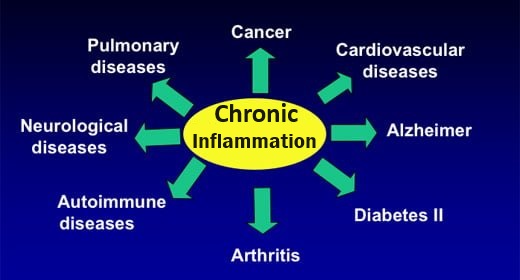
Chronic low-level inflammation

  • Detoxifies
  • Boosts immune system / cellular energy
  • Anti-inflammatory / Pain-relief
  • Aids sleep / Reduces stress
  • Accelerates healing of tissue, bone, muscles, scars
  • Improves circulation +++

Successful electrotherapies

Related-articles