

Body's Flora - Indigenous bacteria in the human body

About one hundred trillion indiginous bacteria live inside you
- Up to a 1000 species and more than TEN TIMES the number of cells you have in your body! These indigenous bacteria are referred to as the body’s flora and live in many areas of your body, including the skin, intestines, mouth, nose, pharynx, urethra and vagina
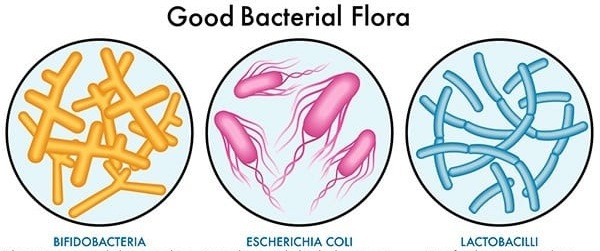
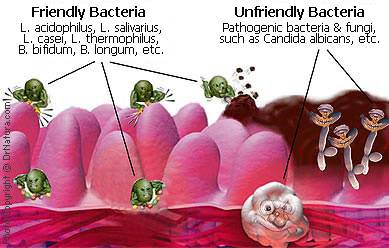
- Organisms are considered either “friendly” or “unfriendly”. When “Friendlies” and “Unfriendlies” have an appropriately balanced presence, the body can better maintain health.
- Friendly Bacteria. Provide many health benefits to the body. They thrive on dietary fiber and other so called prebiotic foods
- Unfriendly organisms. Includes pathogenic bacteria, friendly bacteria multiplying out of control, and fungi, such as yeast. E.g. Candida albicans. These thrive on sugar in your body. Just imagine the “party” those pathogenic bacteria and fungi (incl. yeast) are having when you feed them!
Beneficial flora / probiotics have at least 30 known pharmacological actions
- Anti-infective. Antibacterial, antiviral, antifungal
- Immune system-supportive. Upregulates glutathione (GPX) and certain glycoproteins that help regulate immune responses, including IL-4 (Interleukin-4), IL-10, IL-12; more than 60% of your I.S. is in your gut.
- Anti-proliferative. Apoptopic (promotes natural self-destruction of cells); Inhibits tumor necrosis factor (TNF) alpha inhibitor, NF-kappaB, epidermal growth factor receptor, +++
- Protective. Antioxidant, cardioprotective, gastroprotective, radio- and chemo-protective
- Anti-allergenic
- Anti-depressive. The vagus nerve (10th cranial nerve) connects your gut to your brain, each affecting the other, explaining the link between neurological disorders and GI dysfunction (E.g. ADHD, autism). Intestinal health has been found to profoundly influence mental health.
- Detoxifying. probiotics appear to have a role in detoxing harmful chemicals.
How do beneficial flora /probiotics work against pathogens?
Antagonistic / Competitive towards pathogenic bacteria
- Probiotics help normalize acid/alkali balance in the intestine –“Friendly”bacteria decrease colonization of pathogenic organisms in the gut by secreting acids that are toxic to local pathogenic bacteria – by liberating hydrogen peroxide and organic acids (E.g. Lactic, butyric and acetic acids) in the intestines, the local luminal pH is shifted downward to create an unfavorable environment for growth of pathogenic flora. Williams NT. Probiotics. Am J Health-Syst Pharm. 2010;67:449-458. Alvarez-Olmos MI, Oberhelman RA. Probiotic agents and infectious diseases: a modern perspective on a traditional therapy. Clin Infect Dis. 2001;32:1567-1576.
- Compete with pathogens for adhesion sites on intestinal wall (epithelium)
Macintyre A, Cymet TC. Probiotics: the benefits of bacterial cultures. Compr Ther. 2005;31:181-185.
- Compete with pathogens for nutrients
- Produce bacteriocins (protein toxins) to inhibit pathogens
- Modify pathogen-derived toxins
Stimulate immune mechanisms of intestinal mucosa
- Increase cytokine activity
- Increase lymphocyte activity / intestinal macrophage phagocytosis – by causing local macrophages to increase antigen presentation to B-lymphocytes and increase secretory antibody immunoglobulin A (IgA) production both locally and systemically;
- Reduce immune system reaction to food antigens
- Help stimulate the production of the protective mucus layer lining the GI tract – they can also line the mucus layer to add an extra level of defense keeping out pathogenic bacteria
Produce beneficial metabolic enzymes
- Digest undigested polysaccarides/mucin/fiber. E.g. starch, glycogen, cellulose and chitin.
- Produce the enzyme lactase which breaks down lactose. Benefits those who are lactose-intolerant;
Induce synthesis of B vitamins. B1, B2, B3, B5, B6 and B12, also folic acid and biotin;
Improve uptake and absorption of calcium
Help reduce cholesterol
- Regulating levels of an enzyme that is involved in production of cholesterol within body
- Acting directly on cholesterol in the GI tract
How to increase body's beneficial flora
Avoid anything that reduces body’s beneficial flora
The following factors reduce presence of beneficial flora in favor of pathogenic organisms. (Includes pathogenic bacteria, and fungi. E.g. the yeast Candida Albicans):
- Antibiotics. Includes those given to livestock for food production, antibacterial soaps
- Poor nutrition / glucose. Suga r/ fructose, refined grains, processed foods, high glycemic index foods (E.g. potatoes, yams, corn, white rice, pasta), almost exclusively feed pathogenic bacteria and fungi (E.g. Candida albicans) in your digestive system, allowing them to proliferate. Lack of necessary nutrients handicaps your immune system such that it cannot deal with the pathogens.
- Sugar may be the most important factor in GI candidiasis. Candida ferments and rapidly proliferates in the presence of simple sugars, which significantly increase Candida’s ability to adhere to epithelial mucous cells.
- Toxins. Chlorinated / fluoridated water, environmental pollution, agricultural herbicides, insecticides, pesticides, cleaning chemicals, smoking etc;
- Drugs. NSAIDS (Non-steroidal anti-inflammatories) E.g. acetaminophen, ibuprofen; NSAIDs thin the mucus layer making it more difficult for probiotics to survive; steroids, corticosteroids;
- Hormonal drugs (E.g. contraceptive pill, HRT)
- Recreational drugs. Alcohol (liquor,beer, wine), caffeine and nicotine.
- Stress. E.g. surgery
- Bottle feeding
- Although sometimes unavoidable, certain illnesses/conditions. Diabetes, Lupus, thyroid problems, or pregnancy.
Encourage body’s beneficial flora
- Consume and/or supplement probiotics. High quality, multi-strain, high organism count supplement and probiotic-containing foods (E.g. yogurt, kefir, sauerkraut)
- A little tip: Mix a little yogurt into salad to increase its probiotic activity. The chopped up leaves increase the surface area for the bacteria, creating a beneficial ecosystem for the probiotic bacteria.
- Choose organic, locally-grown fruits and vegetables, and meat, dairy and butter from animals that ate grass and organic foods. Raw milk and products are best (if you can obtain them from a reputable source). Avoid chemicals in food.
- Drink natural spring water and/or filter chlorinated /fluoridated /contaminated water sources. Chlorine and fluoride harm probiotics;
- Consume prebiotics (food for probiotics) in your daily diet to feed beneficial flora. E.g. chicory root, dandelion greens, bananas, garlic, onions, leeks, asparagus, jerusalem artichokes, barley, oats, flaxseeds;
- Have rest and relaxation time and get sufficient sleep. Strengthens immune system
References
Kenneth Todar, PhD. Online Textbook of Bacteriology In the GI Tract