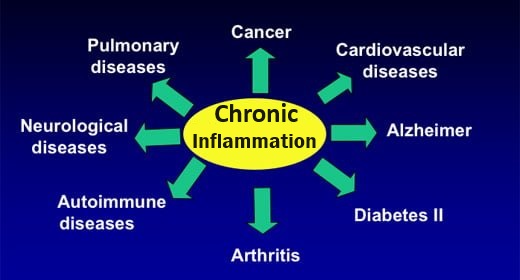


Ozone therapy - For restoring health

What is ozone therapy?
An appropriately dosed protocol for ozone therapy is an effective biooxidative therapy
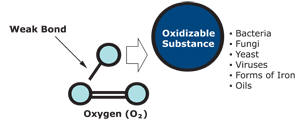
Ozone is an unstable, strong oxidizing gaseous molecule comprised of 3 oxygen atoms.
Introducing a controlled mixture of ozone and oxygen into the body, produces chemically reactive oxidizers, which safely remove toxins and inactivate anaerobic microbes (often responsible for disease). Best of all though, ozone “brings in the cavalry”, by enhancing the body’s immune system and improving cellular energy production. This enables the body to “fix” its own problems, including the destruction of cancer cells. Ozone therapy is used in surgery, therapeutics, neurology, gynecology, dermatology, urology, dentistry +++.
- Removes toxins from the body
- Directly kills microbes in the body – ozone oxidizes the double bonds of fatty acids in anaerobic bacterial cell walls and oxidizes the protein capsid of viruses.
- Enhances immune system function. Increases special messengers of the immune system (cytokines).
- Oxygenates the body and Increases cellular energy production
- Increases antioxidant enzyme systems in healthy cells. The integrity of cellular membranes depends on peroxides being quickly removed by the body’s primary antioxidant glutathione peroxidase (GPx) system. Ozone makes this and other antioxidant enzyme systems more efficient.
Biooxidative Therapy – Oxidative / Oxygenating
Immune system produces ozone as an attack weapon
Immune system neutrophils are little cellular factories that produce singlet oxygen and other oxidants. During an immune response, neutrophils engulf and destroy bacteria and fungi by “blasting”them with these oxidants.
Antibodies generate ozone and hydrogen peroxide. By using singlet oxygen produced by neutrophils. Thus, in addition to killing the bacteria themselves, neutrophils feed singlet oxygen to the antibodies, which convert it into ozone and hydrogen peroxide, adding powerful weapons to the assault. Babior BM, Takeuchi C, Ruedi J, Gutierrez A, Wentworth P Jr. Investigating antibody-catalyzed ozone generation by human neutrophils. 2003 Mar 18; Proc Natl Acad Sci U S A. 100(6):3031-4. PubMed
The following chemical equation sums up these reactions (unbalanced and missing intermediate steps):
H2O + 1O2 → O3 + H2O2 + O2
Water + Singlet Oxygen → Ozone + Hydrogen Peroxide + Oxygen
International M.D.'s list of 33 major diseases successfully treated with ozone
(Note: ozone removes viruses and bacteria from blood, both in vivo and stored)
Ozone Successfully used with: | ||
|---|---|---|
| AIDS | Herpes | Hepatitis |
| Mononucleosis | Cirrhosis of the liver | Gangrene |
| Cardiovascular Disease | Arteriosclerosis | High Cholesterol |
| Cancerous Tumors | Lymphomas | Leukemia |
| Ozone Highly effective with: | ||
| Rheumatoid and other Arthritis | Allergies of all types | Multiple Sclerosis |
| Ozone Ameliorates: | ||
| Alzheimers Disease | Senility | Parkinson’s |
| Ozone Effective with: | ||
| Proctitis | Colitis | Prostate problems |
| Trichomoniasis | Candidiasis | Cystitis |
| Externally, Ozone effective treating: | ||
| Acne | Burns | Leg ulcers |
| Open sores | wounds | Eczema |
| Fungus | ||
Anecdotal List of Health problems helped with ozone therapy: | ||
|---|---|---|
| In general: ozone therapy deals with circulatory problems; disease caused by bacteria, viruses or fungi; Badly healing wounds; Inflammatory conditions; | ||
| •Abscesses •Acariasis Cryptospiridiosis •Acne •Acrodermatitis Cytomegalovirus •Acute otitis media •Acute vestibulopathy •Addisons disease •Adenocarcinoma •Adenovirus •Adrenalitis •AIDS •Allergies/hayfever ALL types •Alopecia Ehrlichiosis •ALS (Lou Gehrig disease) •Alzheimer’s disease •Amebiasis •Amenorrhea •Amyloidosis •Anal fissures •Anemia •Angina •Angiodema •Ankylosing spondylitis •Anthrax •Apthous stomatitis •Arterial occlusion •Arteriosclerosis •Arthritis •Arthrosis •ascites •Asthma •Athlete’s foot •Babesiosis •Back problems •Bacterial infections •Bacterial pneumonia •Bartonellosis •Basalinoma •Bell palsy •Blood disorders •Bornholm myalgia •Botulism •Bronchitis •Bronchopulmonary aspergillus •Broncospasm •Brucellosis •Bullous pemphigus •Burkit lymphoma •Cancer ALL types •Candida albicans •Candidiasis •Candidosis vaginalis •Canker sores •Carbuncles •Cavernous sinus thrombosis •Cellulitis •Cerebral atrophy •Cerebral sclerosis •Cerebro vascular accident •CFS •Chagas disease •Chicken pox •Chlamydia •Chlorosis •Cholecystitis •Chronic pain •Chronic pulmonary disease •Crohn’s disease •Circulatory problems •Cirrhosis of the liver •Coccidiomycosis •Colitis •Colorado tick fever •Conjunctivitis •Constipation •Contact dermatitis •Corneal ulcers •Coronavirus •Cryoglobulinemia •Cryptococcosis •Cutaneous larva migrans •Cystitis •decubitus ulcers •Dengue fever •Dermatitis •Diabetes •Diarrhea •Diphtheria •Diverticulitis •Ear infections •Echovirus •Eczema •Emphysema •Encephalitis •Encephalomyelitis •Endocarditis •Endometritis •Endophthalmitis •Enteric fever •Enteritis necroticans •Environmental hypersensitivity •Epidermoid carcinoma •Epidermolitic keratosis •Epidermophytosis •Epididymitis | •Epstein-Barr virus •Erysipelas •Erythema migrans •Fibromyalgia •Fistulae •Flavivirus •Floaters •FM •Folliculitis •Food poisoning •Fulminant varicella •Fungal diseases -ALL types •Furuncle •Furunculosis •Gangrene •Gastrodujodenal ulcers •Gastrointestinal disorders •Genital warts •Giardiasis •Glaucoma •Glioma •Glomerular membrane disease •Glomerulonephritis •Goodpasture syndrome •Gout Ocular trachoma •Graves disease •Guillaine-Barre syndrome •Hairy leukoplakia •Heart arrhythmia •Heart disease •Hematoma •Hemolytic anemia •Hemorrhage •Hemorrhagic fever •Hemorrhoids •Hepatitis ALL types •Herpes ALL types •High Cholesterol •Histoplasmosis •HIV •HTLV •Huntingdon chorea •Hypercholesterolemia •Hypersensitivity •Hyperthyroidism •Hypotension •IBS •Ichthyosis •Ileitis •Ileitis Polyoma virus •Impetigo •Influenza •Insomnia •Intravascular coagulation •Ischemic optic neuropathy •Kyanasur Forest disease •Landry syndrome •Lassa fever •Leishmaniasis •Leptospirosis •Leukemia •Leukoencephalopathy •Leukopenia •Lipomas •Listeriosis •lung problems •Lupus erythematosus •Lyme disease •Lymphocytic choriomeningitis •Lymphogranuloma •Lymphoid pneumonia •Lymphoma •Macular degeneration •Malaria •Mastoiditis •Measles •Melanoma •Melioidosis •Meniere disease •Migraine •Molluscum ecthyma •Mononucleosis •Morbilloform •Morphine poisoning •Mucous colitis •Multiple Sclerosis •Mumps •Muscle cramps •Myalgia •Myasthenia gravis •Mycobacterium avium complex •Mycosis •Myelitis •Myocarditis •Myonecrosis •Myositis •Nerve related disorders •Neurodermatitis •Neutropenia colitis •Optic nerve dysfunction •Optic neuritis •Oral erythema •Orbital cellulitis •Orchitis •Osteomyelitis | •Osteoporosis •Osteosarcoma •Otosclerosis •Pancreatitis •Panniculitis •Papillitis •Parainfluenza •Parkinson’s disease •Pediculosis Urethritis •Pelvic inflammatory disese •Pemphigoid •Pernicious anemia •Peyronie’s disease •Pneumocytosis •Pneumonia •Poliomyelitis •polyarthritis •Polyateritis •Polyps •Poor circulation •Postpartum fever •Proctitis Acne Cystitis •Prostate enlargement •Prurigo •Psoriasis •Pulmonary Fibrosis (see below) •Pulmonary toxiplasis •Pyoderma •Rabies •Radiculoneuritis •Relapsing fever •retinitis pigmentosa •Reynaud’s disease •Reynold’s syndrome •Rheumatoid arthritis •Rhinitis •Rift Valley fever •Rosacea •Rubella •Salmonella •Salpingitis •SARS •Scabies •Scars after radiation •Scleroderma •Senile demetia •Senile macular degeneration •Senility •Sennutsu fever •Sepsis control •Septicemia •Shingles •Shock •Sickle cell anemia •Sinusitis •Sjogren’s •Skin burns •Skin problems ALL types •Spider veins •Spinalioma •Spondylitis •Staphyloococcus •Stiatonigral degeneration •Stomatitis •Stroke •Strychnine poisoning •Sudeck’s disease •Syphilis •T.cruzi •Tardive dyskinesia •Tendinitis •Tetanus •Thoracic zygomycosis •Thrombopenic purpura •Thrombophlebitis •Thyroiditis •Tinea versicolor •Tinnitus •Togavirus •Tourette syndrome •Toxic amblyopia •Toxoplasmosis •Traveller’s diarrhea •Trench fever •Trichomoniasis •Trypanosomiasis •Tuberculosis •Tularemia •Ulcers •Ulcus cruris •Urticaria •Uterine spasm •Uveitis •Vaccination damage •Varicella pneumonia •Varicose veins •Vascular retinopathy •Vasculitis •Viral infections all types •Vitiligo •Volvovaginitis •Warts •Wegener granulomatosis •Whooping cough •Wound healing disturbances |
How does ozone work as a therapy?
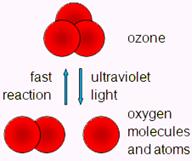
Ozone (nicknamed “Active Oxygen“) is applied topically or introduced into the body in low, controlled amounts as a biooxidative therapy. Being unstable, ozone decays back to O2, within 45 mins. or so, and in so doing, it releases an Excited oxygen ATOM O1*and a “fighting tiger” (microbe-destroying) singlet oxygen molecule(1O2*), which itself emits health beneficial near infrared energy. At appropriate doses, all of these products can be safely put to work to rid the body of toxins and improve circulation, immune function and energy production, and even destroy cancer cells.
Ozone has a Short Life. If ozone does not find something to oxidize, then after about 45 minutes it reverts to oxygen, which the body can also certainly use to its benefit
Ozone therapy can be done safely in a clinic or at home
Either a Cold Plasma or Corona Discharge ozone generator is used to produce ozone from oxygen.
- The cold plasma generator is preferred for therapeutic purposes and is readily available for sale to the general public. It produces greater amounts of ozone, is more durable and has less problems. In fact, the original cold plasma generators were invented by Nikola Tesla in the 1920s and still work 80 years later. UV lamp ozone generators are more suitable for air purification.
- Corona Discharge generators are more suitable for air purification.
Clinical use of ozone therapy. Germany has several thousand doctors applying ozone therapy, which began in WWI Europe with treatment of infected wounds. After extensive research ozone has entered the mainstream in Russian healthcare and its use is now spreading to other parts of the world -E.g. Cuba has a very active ozone program in its health-care system. Although not FDA-approved, U.S. legislation allows physicians to legally apply ozone therapy in their practice without fear of prosecution. Ozone therapy has not been established in North America because, compared to the current high-profit solutions involving pharmaceuticals, radiation / chemotherapy and surgery, and since ozone’s profit-making ability is negligible, it does not warrant the cost of the the expensive research required by the FDA.
“Do-it-Yourself”. With the right equipment and know-how, ozone therapy can safely be applied at home.
General information on how to apply ozone (O3) therapy at home
Contraindications / Warnings
- ALL forms of ozone therapy are contraindicated for people who have had a tissue transplant – since the body’s immune system will be stimulated into attacking the transplant.
- Some ozone protocols are also contraindicated in the following situations:
- If Pregnant or had Previous stroke -Do NOT use Sauna protocol
- If recent internal bleeding, including menses – Do NOT use intravenous protocol –
- If thrombocytopenia, recent internal bleeding or liver under stress – Do NOT use autohemotherapy
- With fauvism (deficient G-6-PD enzyme, the oxidant protection system of red blood cells)
- Ozone will degrade DMSO. People who use both of these treatments separately usually wait eight hours between each treatment. (Wu et al, 2007)
- Ozone amplifies the effect of drugs and supplements – due to increased cellular absorption.
- Wait 1 hour Before / After Eating – Since ozone oxidizes just about anything, people avoid ozone for one hour before and one hour after eating anything.
- If taking VITAMIN C in large amounts (> 1 GRAM) – then take the Vitamin C about 1 hour after ozone therapy because of vitamin C’s antagonistic affect on ozone activity. A 5g oral dose of vitamin C will actually stop the effect of already administered ozone, if for some reason you want to do that.
Ozone therapy application methods
Ozone APPLICATION Choices for Specific Health Problems | ||||||
| CONDITION | TECHNIQUE | |||||
| Insufflation | Cupping | Sauna | ||||
| Ear | Vagina | Rectum | Urethra | w/funnel | ||
| AIDS | no | yes | yes | no | no | Yes |
| Arthritis | no | yes | yes | no | no | Yes |
| Lymphoma | no | yes | no | no | yes | Yes |
| Brain cancer | yes | no | no | no | no | Yes |
| Breast cancer | no | yes | no | no | yes | Yes |
| Colon cancer | no | yes | yes | no | no | Yes |
| Cervical cancer | no | yes | no | no | no | Yes |
| Lung cancer | no | no | no | no | yes | Yes |
| Prostate cancer | no | no | yes | yes | no | Yes |
| Cancer, other types | no | yes | yes | no | yes | Yes |
| Previous stroke | yes | yes | yes | no | no | No |
| Previous heart attack | yes | yes | yes | no | yes | low heat |
| In pregnancy | yes | no | yes | no | yes | No |
| Circulatory problems | no | yes | yes | no | no | Yes |
| Heart Disease | yes | yes | yes | no | yes | low heat |
| Multiple Sclerosis | yes | yes | yes | no | no | low heat |
| Alzheimer’s | yes | no | no | no | no | Yes |
| Asthma | yes | no | no | no | yes | Yes |
| Bacterial infection | yes | yes | yes | no | yes | Yes |
| Bladder infection | no | no | no | Yes | yes | No |
| Viral infection | yes | yes | yes | no | no | Yes |
| Herpes | no | yes | yes | yes | yes | Yes |
| Cervical dysplasia | no | yes | no | no | no | No |
| Candida and CFS | yes | yes | yes | no | no | Yes |
| Cataracts | yes | no | no | no | no | No |
| Glaucoma | yes | no | no | no | no | No |
| Macular degen. | yes | no | no | no | no | No |
| Retinitis pigmentosa | yes | no | no | no | no | No |
| Colitis, Crohn’s, IBS | no | yes | yes | no | yes | yes |
| Diabetes | no | yes | yes | no | Bagging | Yes |
| Diverticulitis | no | no | yes | no | yes | Yes |
| Emphysema | no | no | no | no | yes | Yes |
| Fibromyalgia | yes | yes | yes | no | yes | Yes |
| Hepatitis | no | yes | yes | no | yes | Yes |
| Lupus | yes | yes | yes | no | no | Yes |
| Rheumatoid Arth. | yes | yes | yes | no | no | Yes |
| Sinusitis | yes | no | no | no | no | No |
| Tinnitus | yes | no | no | no | no | No |
Ozone therapy success depends on administering the right amount of ozone
The Arndt-Schultz phenomenon – states that a substance is stimulating in a small dose, modulating in a larger one, and suppressive in a larger dose. Every therapeutic agent has an optimal dose, and ozone is no exception – it too has a “therapeutic window”.
- On the one hand, a sufficiency of an active form of oxygen for the blood means – Better blood circulation, assimilation of nutrients, body temperature balance, vasomotor activity, digestion, better elimination of waste products, less chance of auto-intoxication or toxemia, better ability for the body to repair and restore itself during sleep, and less chance of infection and disease.
- On the other hand, oxidant stress becomes a problem when there is a lack of oxidant-buffering antioxidant systems – Ozone therapy has been in existence for over a hundred years, and although not completely agreed upon, the effective treatment variables have been quite well established for treating various health problems.
Ozone doses are controlled by the user – and will be determined by the ozone concentration required for the chosen application method and by the amount of time exposed to the ozone. Concentration is controlled by setting the flow rate of oxygen into the ozone generator and/or altering the concentration directly at the generator.
Treatment dose is determined by ozone concentration and amount of time exposed to the ozone
Ozone Concentration
Ozone used for treatment is a mixture of a little ozone with a lot of oxygen. The ozone concentration refers to the percentage of ozone in the Ozone /Oxygen mixture. It is also measured in μg of ozone / ml (or cc) of the mixture. Since 1 liter (L) of oxygen weighs 1.4g, then for example:
1% ozone = 1 /100 x 1.4 g/L = 14 μg /ml;
3.5% ozone = 49 μg /ml;
5% ozone = 70 μg /ml.
Ozone concentration is determined by setting the flow rate of oxygen into the ozone generator. Also, some generators have a dial/control function allowing the concentration to be varied directly at the generator, which provides the ability to further manipulate the concentration using a source of oxygen with a fixed flow rate.
- The lowest flow rate produces the highest concentration. Ozone generator manufacturers usually supply a chart indicating the ozone concentration for different flow rates and concentration settings on the generator (if it has this function).
ozone concentration is inversely proportional to the flow rate
GENERAL EFFECTS OF DIFFERENT OZONE CONCENTRATIONS | |
| 30 to 55 ug/ml(< ~3.5%) | At this concentration level the 3 main health restoring properties of ozone, dealing with diminished oxygen levels and a compromised immune system are: • Oxidative influence on the oxygen metabolism i.e. Enhanced ATP production is important with stroke and burns – decreasesswelling at injured site, minimizing damage and subsequent scarring – if ozone is administered within 48 hours of injury • Increases antioxidant enzymes in the body • Activation of immuno-competent cells to stimulate the immune system – Causes the greatest increase of immune system messengers interferon (50ug/ml gives greatest increase), Tumor Necrosis Factor(TNF) and Interleukin-2 (IL-2), setting off a cascade of positive changes throughout the immune system. |
| 55 to 70 ug/ml range(3.5-5%) | Exhibits a strong germicidal effect by oxidative destruction, useful for killing bacteria, viruses and fungi, topically and internally, which makes ozone ideal for treating infected wounds, intestinal infections, vaginal infection and topical fungal diseases |
| > 72 ug/ml(>5%) | Shown to suppress the immune system and inhibit tissue generation. |
Other factors affect ozone concentration. House voltage and frequency variations, humidity and temperature of input oxygen, and the pressure (including barometric pressure). These tend not to concern the home user too much (unless perhaps you live in the Swiss Alps).
Input oxygen flow rate (Liters/ minute)
Different applications require appropriate oxygen flow rates of 1/32 L/m (for ear insufflation) up to ½ L/m (for an ozone sauna). As mentioned above, the lower the flow rate, the higher the ozone concentration. Lower flow rates also use less oxygen.
- Some applications require lower flow rates to be able to apply treatment for longer times – E.g. Rectal insufflation.
- Ear insufflation simply requires a low flow rate to prevent damage to the delicate ear canal.
- Using a low flow rate during insufflation reduces cramping.
CT Value
A meaningful measure of the amount of oxidative power administered (amount of work done) is figured as:
Concentration of ozone X Time Ozone is in contact with Body tissues.
A higher CT value is more desirable
| Flow Rate Liters/min(L/m) | Example ozone generator concentrations (ug/ml) | Exposure Time (min) | CT Value | |
|---|---|---|---|---|
| (determines ozone concentration) | ||||
| Ex. 1 | 1/32 | 50 | 12 | 600 |
| Ex. 2 | 1/16 | 30 | 20 | 600 |
| Ex. 3 | 1/8 | 20 | 30 | 600 |
| Ex. 4 | 1/4 | 10 | 60 | 600 |
Treatment methods and duration vary with each specific health problem.
The duration of treatment will depend on the severity of the problem – Body weight should also be considered.
How to apply ozone for different applications
In every application the dosage is always determined by:
- The ozone concentration (μg /ml) (by setting the ozone generator’s input oxygen flow rate (L/M) and/or controlling the ozone concentration directly at the generator)
- Exposure time
Applications
Drinking ozonated water / juice
| DRINKING ozonated water or juice (e.g. lemon, orange, aloe vera) | ||||||||||||
|---|---|---|---|---|---|---|---|---|---|---|---|---|
| CONCENTRATION | EXAMPLE PROBLEMS TREATED | INSTRUCTIONS / INFORMATION | ||||||||||
| ~65 μg /ml O2 Flow rate: 1/8 L/M | Gastritis; Gastric carcinoma; | Increases circulation / oxygen levels;
Ozone is ~ 10 times more soluble in water than oxygen. Ozonated water can also be used as a retentive enema and a vaginal douche. See under topical uses. How to make ozonated water / juice: • A quality air-fed generator is ok for ingestion of ozonated water. • Attach ceramic diffuser to ozone output tube. • Submerge diffuser in water / juice and ozonate for: 15 mins. /quart, 5 mins. / glass. How to consume ozonated drink • Drink on an empty stomach – At least 3 -8oz. glasses /day. Ozone dissipates after about 40 minutes. To extend life of ozonated water many months: Freeze in HDPE plastic. Add a few drops of Concentrace® (a solution of trace minerals from the Great Salt Lake with sodium, cadmium, copper and lead removed). | ||||||||||
Ozone therapy using INSUFFLATION
| EAR (Auricular) insufflation ozone therapy | ||
|---|---|---|
| Requires HUMIDIFICATION of the ozone output (Improves tissue absorption without oxidizing the skin). | ||
| CONCENTRATION | EXAMPLE PROBLEMS TREATED | INSTRUCTIONS / INFORMATION |
35-50 μg /ml O2 Flow rate: 1/32 L/M | Brain related problems: E.g. ADHD; Depression; Parkinson’s Disease;Alzheimer’s; Ear-related: Ear infections, mastoiditis; hearing problems caused by candida; tinnitus; Nose/sinus /lung-related: sinusitis; head colds; flu; bronchitis, asthma; Eyes-related: Macular degeneration; retinitis pigmentosa; | Supplies oxygen to brain, by-passing mucous membranes. How to apply ozone insufflation in the ear: • Attach flow reducing ear adapter to ozone output tubing. • Carefully insert adaptor into ear. • Start by treating each ear for about 3 mins / 3 x weekly at lowest dose. • Build up over months to 10-15 mins daily. |
| VAGINAL insufflation ozone therapy | ||
|---|---|---|
| Requires HUMIDIFICATION of the ozone output (Improves tissue absorption without oxidizing the skin). | ||
| CONCENTRATION | EXAMPLE PROBLEMS TREATED | INSTRUCTIONS / INFORMATION |
| 25-30 μg /ml O2 Flow rate: 1/4 or 1/8 L/M | Ovarian cancer; Endometriosis | • Attach a clean catheter lubricated with Vitamin E or olive oil to the ozone output tubing. • Insert lubricated catheter into vagina • Treat 15 minutes once per day, 3 times / week. Note that killing bacteria can cause a burning sensation, if it burns too much, try again next day. With any discomfort or redness, increase the length of time between treatments, and / or decrease the ozone concentration. |
| RECTAL insufflation ozone therapy | ||
|---|---|---|
| Requires HUMIDIFICATION of the ozone output (Improves tissue absorption without oxidizing the skin). | ||
| CONCENTRATION | EXAMPLE PROBLEMS TREATED | INSTRUCTIONS / INFORMATION |
| For healing: 30-45 μg /ml O2 Flowrate: 1/8 or 1/4 L/M To stop bleeding in bleeding colitis: 60 μg /ml | Fistulae (abnormal passageway between 2 epithelial lined organs); Hemorrhoids; IBS, Colon cancer; Amebiasis (specific amoeba in colon); Intestinal tuberculosis, diverticulitis (infected pockets on outside of colon) Fissures and abscesses; Inflammatory diseases of the bowel: •Ileitis (end of ileum); •Proctitis (anus, last 6″of rectum lining); •Ulcerative colitis: Pancolitis (ulcerative colitis of entire colon); Proctosigmoiditis (rectum or sigmoid colon); •Crohns disease (GI tract); | Ozone introduced into the rectal cavity infuses through the intestinal wall into the blood stream, via the portal circulatory system. Detoxifies the liver; Have a bowel movement or clean bowel with enema. Prepare ozone supply – You can use ozone directly from the ozone generator, but the preferred method is to fill an ozone-safe plastic bag with ozone. This method allows you to control the speed ozone enters the rectum – safer and more comfortable than having ozone enter directly from ozone generator. • Attach a 3 way valve to the output tube of your ozone generator, and an ozone destruct to the valve to collect and destroy any off-gassing ozone. (The 3 way valve is often called a ‘luer lock’, or a ‘stopcock’ and then turn on the ozone generator. You should not smell any ozone (it will be destroyed by the ozone destruct). • Attach the bag to the 3 way stopcock. Turn the valve on the 3 way stopcock to direct the ozone into the bag. Allow the ozone to flow until you have obtained the desired volume of ozone in the bag. For the bag filling: With an oxygen flow rate of 1/8 L/M let the ozone flow into the bag for 2 minutes to collect 250 cc of ozone. If using an oxygen flow setting of 1/4 L/M let the ozone flow into the bag for 1 minute to collect 250 cc of ozone. • Turn the 3 way stopcock back to the original position. Disconnect the bag from the 3 way stopcock and clamp the tubing to the bag. How to apply ozone for rectal insufflation: Attach a clean catheter lubricated with Vitamin E, coconut or olive oil to ozone output tubing. If using ozone direct from generator, make sure the ozone is flowing (you can smell it) • Lie on left side, and insert catheter 3-4 inches. • If you are using a bag, release the clamp on the hose to the bag. Slowly push the ozone in by squeezing the bag. • When you have a feeling of fullness or strong cramping (~ 1/2 minute -2 minutes), withdraw catheter or slow or stop ozone flow if using a bag. • You do not have to hold the ozone. It has now been shown that the ozone is immediately absorbed through the intestinal wall. Turn off the ozone generator and oxygen supply. • Evacuate bowel, if necessary. Store catheter in hydrogen peroxide. Rinse before reuse. However, do not reuse more than 5 times (ozone will eventually break down the catheter releasing toxic by-products). You should take a daily probiotic supplement during and after treatment to restore the flora balance disturbed by pathogenic organisms. |
TOPICAL / TRANSDERMAL ozone therapy
Topical / Transdermal ozone generally used for:
- Infected / poorly healing wounds; burns; ulcers;
- Staphylococcal infections; Fungal /radiation lesions; Herpes simplex and zoster;
- Gangrene; any microbial infection (systemic or skin)
High ozone concentrations used for disinfection / cleaning / debridement / Low concentrations – promote skin growth and healing.
| SAUNA transdermal ozone therapy | ||
|---|---|---|
| CONCENTRATION | EXAMPLE PROBLEMS TREATED | INSTRUCTIONS / INFORMATION |
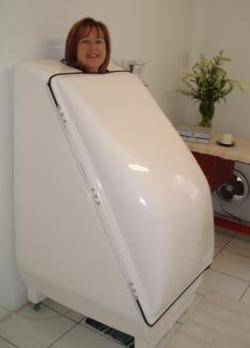
| 35-40 μg /ml O2 Flow rate: 1/2 L/M | General detoxification for ANY systemic health problem – including: All cancers, heart disease, diabetes; shingles; arthritis; emotional problems. | THOSE WHO HAVE HAD A STROKE SHOULD CHOOSE A DIFFERENT METHOD An ozone sauna is a cabinet which can be simultaneously filled with steam and ozone. Sitting on a seat inside the cabinet, your head stays out, with a folded towel around the neck sealing off the opening.Skin pores open in the moist heat so that ozone can be absorbed slowly and safely in large amounts through the skin. The beauty of this method is that, since oxidized toxins are sweated out, the usual cleansing reactions are avoided, and the burden on the liver is reduced. Zip-up body suits are also available, which encase the whole body, except the head – not too popular, since they feel uncomfortably clammy as skin dries out. How to have an ozonated sauna therapy: • Place folded towel to sit on, and neck towel over opening. • Heat sauna to ~100°- 107°, whilst filling it with ozone. • Climb in naked, place folded towel around neck, close door, adjusting towel to seal opening. • Stay in sauna 20-30 mins. keeping ozone flowing in. • A helper may adjust temperature, if desired. • A funnel can be used inside sauna (1/8 L/M ~40-50 μg /ml) to target specific areas (especially effective with hepatitis, diverticulitis, pancreatitis and cancer). • Persons with heart conditions should limit themselves to 15 minutes at a lower temperature for the first few sessions, increasing to 20, 25 and then 30 minutes, as the body adjusts to the thermal stress over time. • Typically – do one daily session 10-30 times, then cut back to once/week. |
| CUPPING WITH FUNNEL transdermal ozone therapy | ||
|---|---|---|
| CONCENTRATION | EXAMPLE PROBLEMS TREATED | INSTRUCTIONS / INFORMATION |
~80 μg /ml O2 Flow rate: | COPD; Pulmonary Fibrosis; | Ozone is applied through any sized funnel to a particular target area on the skin, which can be sealed by the funnel’s edge. Ozone penetrates to tissue below skin. Funnel can also be used inside a sauna or body suit for localized concentration. How to use ozone for transdermal cupping: • Wet treatment area first, or humidify ozone. • Attach funnel. • Hold funnel firmly against skin for 20-30 mins. |
| OZONATED OLIVE OIL (OOO) transdermal ozone therapy | ||
|---|---|---|
| CONCENTRATION | EXAMPLE PROBLEMS TREATED | INSTRUCTIONS / INFORMATION |
~65 μg /ml O2 Flow rate: | All localized skin conditions: E.g. Bedsores; | Procedure for making OOO: |
| ARM / LEG / HAND BAGGING transdermal ozone therapy | ||
|---|---|---|
| CONCENTRATION | EXAMPLE PROBLEMS TREATED | INSTRUCTIONS / INFORMATION |
~70 μg /ml O2 Flow rate:
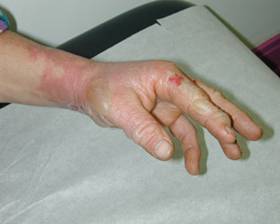
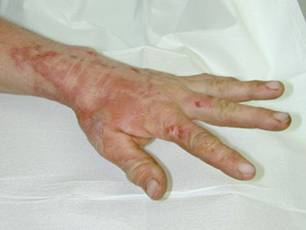
| Burns; Ulcers; Crush damage; Non-healing / infected wounds; | How to apply limb bagging: • First wet limb or humidify the ozone. • Place large, clear, strong plastic bag over limb /hand. • Insert end of output tubing into bag and tie end snugly with soft cotton strip. • Treat for 30 mins. • Afterwards, apply ozonated olive oil. Badly burned hand before then after 3 days and only one ozone bagging |
Ozone therapy using INHALATION of ozonides
Ozone bubbled through olive oil produces ozonides which can be safely inhaled for therapy (funneling ozone gas over lungs may be even better). You should never breathe straight ozone, which is toxic to membrane mucosa at doses > 0.1 ppm especially when exceeded for > 8 hours.
| BREATHE Ozonides | ||
|---|---|---|
| CONCENTRATION | EXAMPLE PROBLEMS TREATED | INSTRUCTIONS / INFORMATION |
10 μg /ml (max. 20 μg /ml) O2 Flow rate: 1/2 L/M | Pulmonary fibrosis; Asthma; Bronchitis; Pneumonia | DO NOT USE WITH AN ORGAN TRANSPLANT or known adverse reactions to ozone. Ozone bubbled through olive oil produces peroxides and ozonides that are NON-toxic. (Terpene peroxide gas has the molecular formula C10H18O3) . How to set up equipment for ozone inhalation: • GLASS TRAP. Connect ozone source to inlet of an empty glass bottle trap (doesn’t need to be very big) to protect generator by preventing backflow. • OIL BUBBLER Connect outlet of trap to inlet of oil bubbler, which is an ozone diffuser placed in oil (bubbler can lay on bottom of container). Fill only 1/3 to 1/2 the container with oil to provide space for bubbles, but ensuring diffuser is covered to prevent breathing straight ozone. Ozone reacts almost immediately on contact with oil to produce peroxides / ozonides (within 1 mm of diffuser?). Change oil at the first sign of irritation to throat whilst breathing ozonides — oil eventually becomes fully reacted / saturated with ozone, which then bubbles straight through the oil. A 250mL laboratory gas washing bottle is ideal for most uses as a container for bubbling oil (however, site author uses a tall, empty glass salad dressing bottle closed with silicone stoppers and slow drilled for inlet and outlet glass medicine dropper tubes, which inside the bottle are attached to silicone tubing and diffuser at the inlet and left open after passing through the stopper on the outlet, and outside the bottle are attached to silicone tubing at the inlet and outlet) Nasal cannula, Connect outlet of oil bubbler to a nasal cannula (or face mask). Inhale output from the oil bubbler via nasal cannula or face mask. Begin with 10 mins. twice daily (building up to 15-20 mins up to 3-4 times daily). Continue therapy daily for 3 to 8 weeks (until problem is resolved). Oil and cannula / face mask can be reused. A good idea to stabilize / prevent breakage of glass air trap and bubbler is to place them in a sturdy box cushioned with bubble wrap. |
Ozone therapy by INJECTION
| Ozone therapy by INJECTION | |
|---|---|
| (Not usually for home application) | |
| APPLICATION METHODS | GENERAL INFORMATION |
| DO NOT USE If recent internal bleeding or menstruating | |
| Major autohemotherapy | 50 to 100 ml. of blood is withdrawn and mixed with medical ozone and then reintroduced by intravenous drip back into the patient |
| Minor autohemotherapy | 10 ml of venous blood is drawn from the patient, mixed with medical ozone, then injected intramuscularly |
| Direct injection into tumor | Up to 10 ml is mixed with medical ozone into the gluteus maximus or the deltoid. |
| Direct injection into circulation via vein /hemorrhoidal vein | Blood Sterilization/Purification. Treatment of 500 ml of whole blood with 100ml of 40 to 50 ug/ml ozone is reported to render it virus-free without injuring any cellular elements. |
How to alleviate ozone response rash
Ozone therapy commonly produces a rash as a result of toxins leaving the body via the skin. This can be annoyingly itchy, so it is useful to have some method of relieving the itch. Here are some things to try:
Topical use:
- Ozonated olive oil
- Activated charcoal slurry
- Oat juice
- Hydrogen peroxide 3%
- Ionic Colloidal silver
- Emu oil
- Vodka
- Boric acid powder
- Bentonite powder paste
- Safflower oil
- Coconut palm butter
Internal use:
- Vitamin B12: up to 1500 micrograms at a time
- Activated charcoal slurry
Synergistic Therapies
Ozone Can / Ozone Can't
- Ozone cannot oxidize fluoride
- Ozone can oxidize other toxins – including mercury, allowing it to be sweated out through the pores.
Material compatibility with ozone chart
The following materials were tested at ozone levels exceeding 1,000 PPM
Ratings — Chemical Effect Ratings
- A. Excellent. — No effect
- B. Good– Minor Effect, slight corrosion or discoloration.
- C. Fair — Moderate Effect, not recommended for continuous use. Softening, loss of strength, swelling may occur.
- D. Severe Effect– Not recommended for ANY use.
- N/A= Information Not Available.
| Material | Rating (Source: Cole Parmer) [Ozone Concentrations not specified] |
| ABS plastic | B – Good |
| Acetal (Delrin®) | C – Fair |
| Aluminum | B – Good |
| Brass | B – Good |
| Bronze | B – Good |
| Buna-N (Nitrile) | D – Severe Effect |
| Butyl | A – Excellent |
| Cast iron | C – Fair |
| Chemraz | A – Excellent |
| Copper | B – Good |
| CPVC | A – Excellent |
| Durachlor-51 | A – Excellent |
| Durlon 9000 | A – Excellent |
| EPDM | A – Excellent up to 100-deg F |
| EPR | A – Excellent |
| Epoxy | N/A |
| Ethylene-Propylene | A – Excellent |
| Flexelene | A – Excellent |
| Fluorosilicone | A – Excellent |
| Galvanized Steel | In Water (C – Fair), In Air (A – Excellent) |
| Glass | A – Excellent |
| Hastelloy-C® | A – Excellent |
| HDPE | A- Excellent |
| Hypalon® | C – Fair |
| Hytrel® | C – Fair |
| Inconel | A – Excellent |
| Kalrez | A – Excellent up to 100-deg F |
| Kel-F®(PCTFE) | A – Excellent |
| LDPE | B – Good |
| Magnesium | D – Poor |
| Monel | C – Fair |
| Natural rubber | D – Severe Effect |
| Neoprene | C – Fair |
| NORYL® | N/A |
| Nylon | D – Severe Effect |
| PEEK | A – Excellent |
| Polyacrylate | B – Good |
| Polyamide (PA) | C-D (Not recommended) |
| Polycarbonate | A – Excellent |
| Polyethylene | In Water (B-Good), In Air (C-Fair) |
| Polypropylene | C – Fair |
| Polysulfide | B – Good |
| Polyurethane, Millable | A – Excellent |
| PPS (Ryton®) | N/A |
| PTFE (Teflon®) | A – Excellent |
| PVC | B – Good |
| PVDF (Kynar®) | A – Excellent |
| Santoprene | A – Excellent |
| Silicone | A – Excellent |
| Stainless steel – 304 | B – Good/Excellent |
| Stainless steel – 316 | A – Excellent |
| Steel (Mild, HSLA) | D – Poor |
| Teflon | A – Excellent |
| Titanium | A – Excellent |
| Tygon® | B – Good |
| Vamac | A – Excellent |
| Viton® | A – Excellent |
| Zinc | D – Poor |
Remember that different materials react differently to wet or dry ozone.www.ozonesolutions.com
How to choose and set up an ozone generator for home use
Ozone Generator choices
Type
Ozone’s medicinal effects were discovered in the 19th century and clinically applied to wounds and infections during World War I. However, it was not until the late 1950’s that ozone generation equipment was capable of delivering pure and reliable oxygen-ozone mixtures. Today, ozone is generated from a source of oxygen with 3 main technologies:
(1) Ultraviolet radiation. Created naturally when ultraviolet radiation from the sun contacts the oxygen in the earth’s atmosphere.
- Low ozone concentrations can be created using an ultraviolet bulb. However, the bulb quickly loses its efficacy, and it may be difficult to find a generator that can produce the minimum 5% concentration required for therapy.
- 100% oxygen source is NOT required. Since this clean production method does not form harmful nitrous oxide.
- UV Ozone generator is the only ozone generation technology to produce Hydroxyl Radicals (OH-)
(2) Corona discharge. Electrical sparks are generated via a tube with a hot or cold anode surrounded by a metal anode and passed through an oxygen-rich environment. The best corona discharge generators are called dual dielectric, having a glass layer separating each component from the gas stream, and so prevent contamination of the ozone.
- The major drawback of these generators is lack of durability. Due to the current draw to the metal, they are prone to electrical arcing and burnout, thereby shortening their life length., especially if any water enters the tube.
- These generators also need large cooling fans – to dissipate the heat created.
(3) Cold plasma (invented by Nicola Tesla). An ionic flow is induced in a glass cathode tube filled with a noble gas, which is highly electrified. This unit is enveloped in a second tube, usually 316 L grade steel, which is the second electrode, through which pure oxygen is passed. The second electrode acts only as a ground and does not receive any direct current, hence avoiding arcing. The flow of plasma within the tube induces the oxygen molecules to break apart and re-form as O3.
Ozone Generator for Medical Application
For medical applications at home, it is necessary to have a medical grade ozone generator. A good quality, cold plasma medical generator to handle most home applications can be obtained for ~$2000 or more (2025),
Oxygen Input Source
For home medical applications the oxygen source used should be at least 90% pure. The two choices are:
- An oxygen tank (100% oxygen)
- It can be difficult to obtain refills for a tank, but sometimes a garage will fill it for you (acetylene welding torches need O2).
- Oxygen tank requires a low-flow regulator, usually called a pediatric regulator, which enables settings of 1/32, 1/16, 1/8, ¼ and ½ L/M (Liters/minute)
- A good quality oxygen concentrator (costs over $1000)
To make ozonated water it is sufficient to use an ozone generator with air input. SOTA® makes a quality, air-fed water ozonator.
Minor or major autohemotherapy, or direct injection into veins or tumors requires a 100% oxygen source. i.e. from an oxygen tank,
How to set up equipment for Ozone (O3) therapy at home
Connect oxygen source to ozone generator
- If using oxygen tank. Securely attach low-flow regulator to tank.
- Connect air-line tubing. From oxygen tank regulator or oxygen concentrator output (if not using oxygen tank) to ozone generator input fitting.
- If ozonating water, oil or juice, or using the insufflation method. Connect the necessary humidifier bottle(s) – see below in accessories.
- Following specific treatment instructions and settings:
- Set oxygen flowrate on regulator or oxygen concentrator
- Set concentration level on ozone generator.
- Add necessary attachment to end of ozone output tubing.
- Turn on oxygen concentrator or open valve on oxygen tank.
- Turn on ozone generator.
- The ozone is available for treatment when you can smell it coming out of the tube. It sometimes takes a couple of minutes when humidifying the ozone. (The first ozone is being used to ozonate the water).
Accessories
- Ozone can penetrate many materials, but some that it cannot penetrate are: Teflon®, silicone, glass, Kynar®, HDPE and Viton®. Ozone contact with nylon should be avoided
Material Compatibility with Ozone Chart
- Clear, high-density polyethylene (HDPE) plastic container (very ozone resistant). Ozonate in glass, then transfer to HDPE plastic container if you want to freeze it.
- Clear plastic air-line tubing. Connects Oxygen Tank / Concentrator to Ozone Generator Input.
- Silicone tubing. Connects Ozone Output to Treatment Area (need a couple short pieces and to connect to humidifier bottles, and another about 3-4 feet long leading to lead to treatment application area.
- Funnels. Hard HDPE plastic
- Humidifier Bottles. Used for water, oil or juice ozonation and humidification for insufflation. Need 2 bottles:
- An empty humidifier bottle is placed nearest to the generator output to prevent fluid entering the generator and causing damage.
- For insufflation. The output of the empty bottle is attached with a short piece of silicone tubing to the input on the second bottle, which is half-filled with distilled water. The output of the water-containing bottle is attached to the long silicone tube supplying the treatment ozone.
- For water, oil or juice ozonation. The output of the empty bottle is attached with a piece of silicone tubing. A diffuser is attached to the end of that tubing, which is then submerged in the container of fluid to be ozonated. This container needs to be large enough to accommodate active bubbling.
Ozone in nature and industry
- Ozone protects the Earth from harmful ultraviolet radiation. Oxygen in the stratosphere absorbs UV rays from the sun to become ozone, which is a blue gas – and actually the reason why the sky is blue.
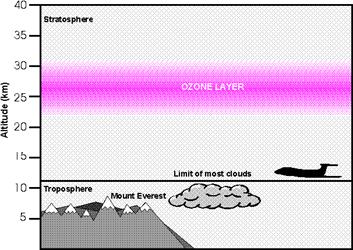
- Nature’s wonderful self-cleaning system. Ozone‘s third oxygen atom (with a weak bond) detaches and begins a chain of reactions that produce powerful oxidants, which can combine with airborne pollutants and change them into less harmful compounds. Heavier than air, ozone falls earthward, oxidizing /destroying any pollutant it contacts. E.g. carbon monoxide and benzene.
- Ozone is a Powerful Disinfectant and Toxin Remover. Ozone has the ability to alter, decompose and/or neutralize materials that are toxic, without creating additional toxic compounds. Second only to fluoride as the world’s most powerful oxidizer and sanitizer, ozone will eventually break down most chemicals into their natural components: H2O, carbon dioxide, sulfur, nitrogen and oxygen. Ozone has been used to clean water for large cities for over 100 years.
E.g. Formaldehyde (HCHO) + Ozone (O3) →CO2 (Carbon Dioxide) + H2O (Water) + O2
- Ozone forms beneficial hydrogen peroxide (H2O2) in rain and snow. As a result of ozone in the upper atmosphere acting on water vapor, rain and snow both contain oxidant-producing H2O2. This is why plants grow better with rain water than with irrigation. Commercial horticultural growers actually add H2O2 to their irrigation water to produce healthier, disease free plants. H2O2added to drinking water for farm animals has also demonstrated very positive results E.g.Cow’s milk production is increased, with a lower bacteria count. Turkey and chicken growers report increased weight per bird using less feed.
Hydrogen Peroxide -Oxidative / Oxygenative Water
- Many industries use ozone as an industrial oxidizer and sterilizer. Including industrial waste treatment, sewage treatment, aquarium sanitation, food preservation, sterilization of containers; The best known use of ozone is in water treatment because of its ability to kill bacteria and viruses. The EPA and the FDA acknowledge ozone‘s ability to oxidize 99.9992% of all waterborne pathogens.
| Examples of Ozone Applications | |
|---|---|
| Chemicals | Asphalt Fumes; Butane;Benzene; Gasoline; Toluene; Carbon Monoxide; Kerosene; Cigarette Smoke; Exhaust Fumes; Industrial Wastes; Creosote; Propane; Formaldehyde; Tetrachloride; Ammonia; Moth balls; Diesel fumes; Resins; Ether; Ethyl alcohol; Nicotine; |
| Germs | Viruses; Mold; Fungi; Bacteria; Algae; Mildew; |
| Odors | Cooking; Food; Garbage; Fecal, Paint, Onions, Garlic, Sewer Gases, Dead Animals; Bathroom; Decaying; Moth balls; Old Manuscripts; Furniture (incl. smoke damage); Coal smoke; Carpet; Fire; Animal; Body; Fish; Flood; Burned food; Smoking; |
| Other | Lactic acid; Rancid Oils; |
Ozone (O3) Chemistry
What is ozone?
Ozone is an unstable, strong oxidizing gaseous molecule comprised of 3 oxygen atoms
In nature, ozone (O3 ) is formed by the action of UV radiation on Oxygen (O2) – which causes the 2 atoms in an oxygen molecule (O2) to split up, after which each single oxygen atom joins another O2 molecule to make ozone (O3).
3 O2 + UV Radiation → 2 O3
Ozone can also be created when an electrical “spark” acts on oxygen. E.g. that “clean” smell you detect after a lightning storm is ozone.
Ozone formation
In nature, ozone is created by Near UV Radiation
3 3O2 → 2 O3 Exothermic reaction (light energy to heat)
Molecular Oxygen + 240nm< UV< 310nm → Ozone (O3) Absorbs UV radiation
Achieved in 2 Steps:
Step 1 – By PHOTOLYSIS:The OXYGEN MOLECULE is split into 2 EXCITED OXYGEN ATOMS O1* | ||||
3O2 | → | O1* | + | O1* |
| 240nm< UV< 310nm |
|
|
|
FREE DIRADICAL OXYGEN MOLECULE Electrons in lowest energy state | Exothermic | EXCITED OXYGEN ATOMS Technically written as O (1D) Each with 2 unpaired electrons and Absorbed “Splitting”energy make these HIGHLY REACTIVE w/excitation energy of 190 kJ/mol | ||
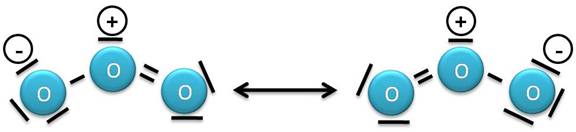
Step 2 – FORMATION of OZONE BY ELECTRONEGATIVITY:EXCITED OXYGEN ATOM joins an Oxygen molecule | ||||
| O1* | + | 3O2 | → | O3 |
 |  | See below | ||
| EXCITED OXYGEN ATOM | FREE DIRADICAL OXYGEN MOLECULE | OZONE Formation of Ozone by Electronegativity | ||
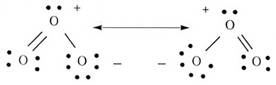
Some important ozone reactions
Ozone is a strong oxidant. Oxidation occurs when any atom loses one or more electrons, giving it the ability to combine with other substances. E.g. an oxygen atom can combine with other substances to form water and gases.
– Oxidation potential of ozone is 2.7 – meaning it is much more reactive than oxygen, which has an oxidation potential of 1.23
Ozone strongly absorbs UV radiation to produce singlet oxygen MOLECULES and active oxygen ATOMS
O3 + hv (λ <= 313nm) → O2 (1Δg ) + O(1D)
O3+ hv (λ <= 268nm) → O2 (1Σ+ or 1Δg) + O(1D)
Ozone reacts with biological molecules to produce the reactive oxidant agent singlet oxygen 1O2*. Singlet oxygen is a name given to several higher-energy species of molecular O2 in which all the electron spins are paired.
Kanofsky JR, Sima P Singlet oxygen production from the reactions of ozone with biological molecules. J Biol Chem. 1991 May 15;266(14):9039-42. PubMed
Ozone reacts with the unsaturated fatty acids of the lipid layer in cellular membranes, forming hydro-peroxides. Lipid peroxidation products include alkoxyl RO▪and peroxyl radicals ROO▪, singlet oxygen 1O2*, ozonides, carbonides, carbonyls, alkanes and alkenes.
• If targeted cell membrane does not have sufficient protective antioxidant and antioxidant enzymes (SOD, CAT, GPx and reductase), it will be damaged and destroyed by reactive hydro-peroxide products – such as 1O2* , RO▪ and ROO▪. Healthy cell membranes contain protective enzymes, many bacterial cell walls lack them.
E.g. Glutathione catalyzed by glutathione peroxidase reduces / neutralizes lipid hydroperoxides
Ozone is destroyed by hydroxyl radicals. The reaction converts ozone into oxygen.
O3 + OH• → O2 + HO2
HO2 + O3 → OH• + 2O2
EXCITED OXYGEN ATOM oxidizes water to hydrogen peroxide.
O1* + H2O → H2O2
Ozone will oxidize most metals (except gold, platinum and iridium)to oxides of their metals in their highest oxidation state
E.g. 2 Cu+ + 2 H3O+ + O3 →2 Cu2+ + 3 H2O + O2
Ozone oxidizes nitric oxide to nitrogen dioxide:
NO + O3 → NO2 + O2
Ozone oxidizes ammonia to ammonium nitrate-but does not react with ammonium salts
2 NH3 + 4 O3 → NH4NO3 + 4 O2 + H2O
Ozone reacts with carbon to form carbon dioxide:
C + 2 O3 → CO2 + 2 O2
Ozone oxidizes sulfides to sulfates
PbS + 4 O3 → PbSO4 + 4 O2
Ozone gas reacts with hydrogen sulfide to form sulfur dioxide:
H2S + O3 → SO2 + H2O
Sulfuric acid can be produced from ozone, water and either elemental sulfur or sulfur dioxide:
S + H2O + O3 → H2SO4
3 SO2 + 3 H2O + O3 → 3 H2SO4
Ozone Decay
Ozone is unstable at high concentrations and decays to oxygen if it is does not contact something oxidizable – ozone has half-life of ~ 30 mins. in atmospheric conditions, but proceeds more rapidly with increasing temperature and pressure
2 O3→ 33O2
In 2 steps:
O3 → 3O2 + O*
O* + O* → 3O2
Ozone layer depletion
Ozone depletion is caused by two non toxic, non flammable, normally very slowly or non reactive groups of gases: chlorofluorocarbons (CFCs) and halons. Used as refrigerant, propellants in aerosol spray cans, cleaning solvents in the manufacture of electronic circuit boards and as a blowing agent in the manufacture of foam insulation and furniture foam.
The CFC or halon molecule makes its way to the upper atmosphere where UV light can separate chlorine atoms from the CFC molecule and bromine from the halon. Once released, the chlorine or bromine molecule is capable of destroying ozone molecules in a continuous, repeating chemical reaction that allows a single chlorine or bromine atom to react with as many as 100,000 ozone molecules before finally settling out below the ozone layer
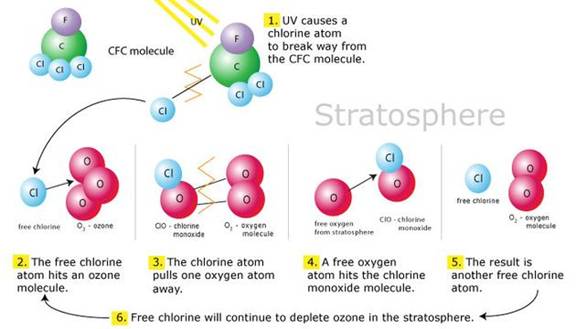
The process by which catalysts such as chlorine (E.g. in the CFC molecule shown above), bromine, nitrogen oxide and hydrogen destroy atmospheric ozone (O3).
Source: Adapted from Hengeveld, 1991.
References
The Story of Ozone (Sixth Edition) by Saul Pressman
Wu JJ, Muruganandham M, Chen SH. (2007 Oct 1) Degradation of DMSO by ozone-based advanced oxidation processes. J Hazard Mater. 149(1):218-25. Epub 2007 Mar 27. PubMed
Ozone therapy safety record. The medical use of ozone has an excellent safety record with a lack of toxic side effects after millions of treatments over nearly 100 years.