





Near Infrared Radiation (NIR) Therapy
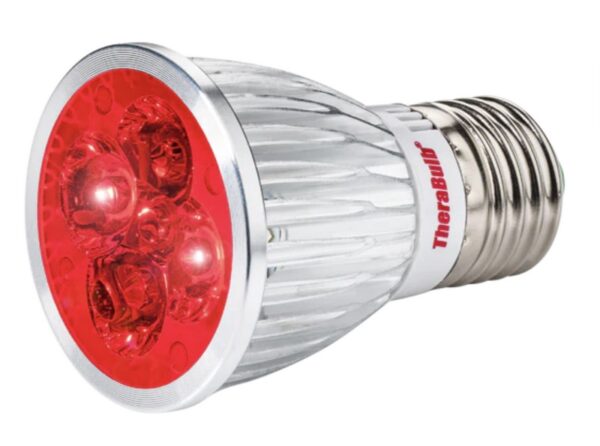

Infrared waves are located at the long wavelength end of the visible light spectrum
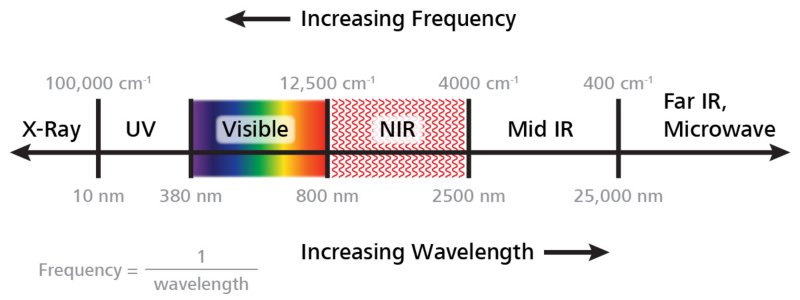
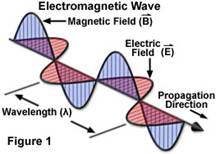
The visible light spectrum color frequencies range from 380 – 780 nm wavelengths with the infrared wavelengths, which are invisible, starting just beyond the red wavelength – and include:
- NEAR-infrared radiation (NIR or infrared-A); Wavelength Approx. 780 – 2500 nm. The smaller the wavelength, the more energy is carried by the wave.
- MID-infrared (Infrared-B). Associated with heat. Many molecules absorb mid-infrared. Wavelength Approx. 2500 -25000 nm
- FAR-infrared (FIR or Infrared-C). Associated with radiant heaters. Approx. 25,000 – 1,000,000 nm
Near Infrared (NIR)
- Cannot be felt as heat (MID and FAR infrared can be felt).
- NIR penetrates deep into body tissues since it is poorly absorbed by water molecules. However, MID and FAR infrared are absorbed by water and so heat up tissue, with >3000 nm being fully absorbed.
NIR health benefits
MID and FAR Infrared heat is used medically to increase blood circulation, but NIR, which cannot be seen or felt, has shown particular therapeutic benefits, documented in 100’s of scientific papers over the past 3 decades
- Helps prime the cells in your retina for repair and regeneration. Lack of NIR can cause age-related macular degeneration (AMD), the leading cause of blindness in the U.S.
- Cell energy production. Chromophores optimally absorb 600-1400 nm (i.e. mostly NIR light) in cell mitochondria, which are responsible for producing ATP energy. In particular cytochrome c oxidase, involved in the final step in ATP production, absorbs light between 570 – 850 nm to boost energy production — even in cells having low production levels. NIR enables all cells to function better, from helping liver cells to detoxify, to enabling fibroblasts in skin to produce more collagen, in order to heal wounds and promote anti-aging.
The more NIR we obtain, the less electrons from food are needed to maintain thermal homeostasis in the body.
LED lights deprive us of the health benefits of infrared radiation
Compared to incandescent light sources, LED lights were designed to save up to 95% on energy use because they do not emit thermal infrared radiation
LEDs are now a primary indoor light source exposing you to possibly the most significant daily source of unnatural EMF radiation. Compared to non-thermal, incandescent light sources, LEDs save up to 95% energy use, but do not emit infrared radiation, which would otherwise provide health benefits for those who do not obtain it from time spent in the sun.