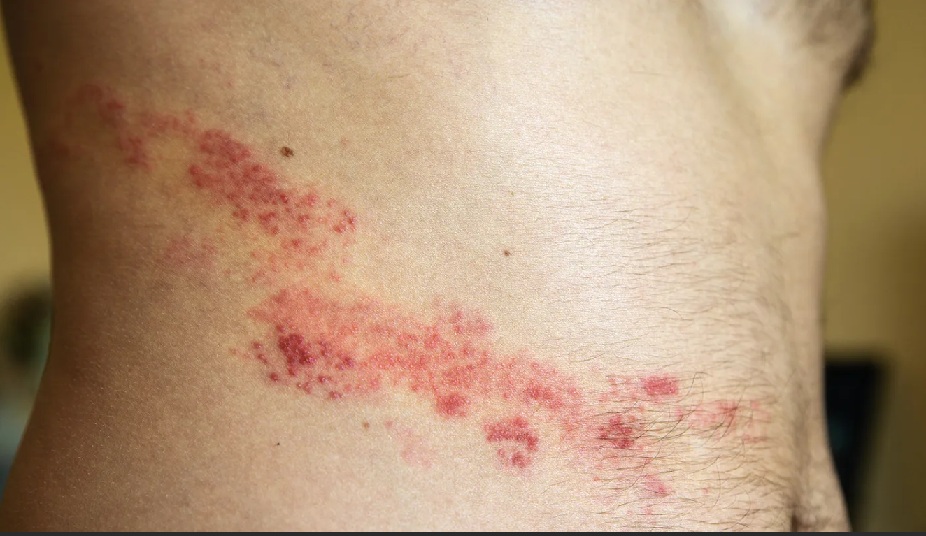
Shingles is an infection of the Herpes zoster virus (HZV) (typically occurring as a painful, blistered rash on the face or torso), which multiplies out of control. This occurs due to a combination of two factors:
Conditions in the body encouraging its growth
An overwhelmed or weakened immune system to keep it in check.
The Herpes zoster virus (HZP) is the same virus responsible for chickenpox. This virus can remain dormant for many years after contracting this typically childhood infection.
Once you have had shingles, the risk of recurrence is increased. The virus lies dormant until your body undergoes more stress or develops an environment /terrain which encourages the virus to reactivate.
Rarely, HZV may enter the brain causing meningitis. HZV is not common in children.
Shingles symptoms
Painful rash. Usually on just one side of the body. Often on the face or torso. Pain is sometimes described as an intense burning sensation.
The rash develops into blisters. Typically – they scab over in 7-10 days and clear up in 2-4 weeks.
Pain can last for months (even years) after rash is gone. This common complication is called postherpetic neuralgia (PHN), which occurs in 10-18% of those who have had shingles and risk increases with age.
About 100 people / year die in the U.S. as a result of having shingles. Usually, only occurring in the elderly and immuno-compromised.
Causes of shingles
Shingles is a recurrence of the Herpes zoster virus (HZV). HZV is the virus responsible for chickenpox. It can lie dormant after its first arrival, sometimes for many years.
Shingles attacks typically occur and recur when someone is undergoing a majorly stressful situation. The stress can be physical, such as an injury or major illness, or emotional, caused by such as the loss of someone dear to you or by feeling deeply hurt by someone you care about.
Stress is combined with a weakened immune system. If the immune system becomes chronically overwhelmed, it is unable to effectively control the shingle virus and prevent the reoccurence of an attack.
Risk of getting shingles increases with age. In the U.S., 1 in 3 people develop shingles during their lifetime.



 for Physical / Mental Health: Magnesium,
Omega-3 ,
C,
D,
Iodine in
“Make-it-Happen” smoothie
for Physical / Mental Health: Magnesium,
Omega-3 ,
C,
D,
Iodine in
“Make-it-Happen” smoothie