

Acetylcholine (Ach) - Movement, memory, learning neurotransmitter
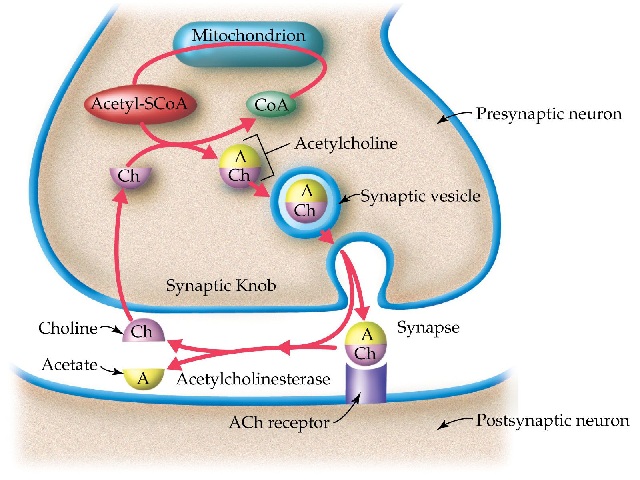
What is Acetylcholine (Ach)
The neurotransmitter acetylcholine (Ach) plays a major role in voluntary muscle movement throughout the body (the muscle movement that you control). Ach fires up motor neurons to stimulate muscles to contract. It also has an important role in the brain’s basal forebrain nerve cells in such processes as memory, thinking and learning.

Acetylcholine (Ach) production and presence
Ach itself will not pass the BBB, but its precursor choline will. This protective strategy enables the brain to produce its Ach on an as-needed basis. Once inside the CNS, choline is used by cholinergic (Ach-producing) neurons to synthesize acetylcholine via the enzyme choline acetyltransferase.
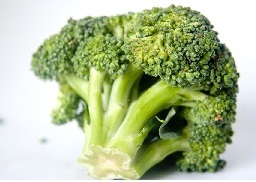
Choline-rich food sources – include some meats, fish, eggs and cruciferous vegetables.
Acetylcholinesterase (AChE)
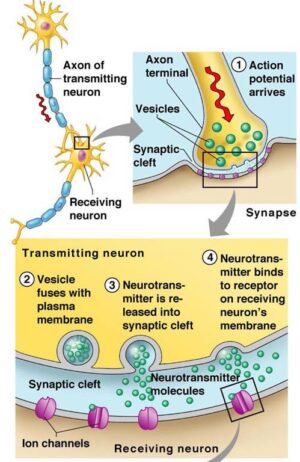
- AChE breaks down Ach in the synapse. An AChE inhibitor can indirectly increase Ach in the brain by prolonging its presence:
- Medicinal ACHEs are designed to cross the BBB
- The flavonoid quercetin has been shown to be an AcHE inhibitor. This powerful antioxidant is found in high concentrations in apple peels.
Nerve growth factor (NGF), a neurotrophin, is crucial for the development, survival and maintenance of basal forebrain cholinergic (i.e. acetylcholine-producing) neurons (BFCNs). NGF robustly enhances BFCN release of acetylcholine (Ach). Auld et al, 2001 BFCNs innervate cortical and associated structures important for attention (Baxter and Chiba, 1999), and shown to degenerate in Alzheimer’s disease Bartus, 2000. Reduced NGF levels are reported in Parkinson’s disease (PD), and boosting glial cell-derived NGF is shown therapeutic for PD. Allen et al, 2013 However, neurotrophins do not pass the BBB and must be administered / transported by novel mechanisms.
ACETYLCHOLINE has many roles
Acetylcholine has many roles enacted when it binds to either:
- Muscarinic receptors. Primarily found in the parasympathetic nervous system (“Rest and Digest” or “Brake” ) affecting bodily functions.
- Nicotinic receptors. Mediates rapid communication between neurons and muscles and transmits outgoing signals in both the sympathetic (“Fight or Flight”) and parasympathetic nervous systems influencing physiological responses.
When it binds to muscarinic receptors, it:
- Regulates heart contractions and blood pressure and decreases heart rate.
- Moves food through your intestine by contracting intestinal muscles and increasing stomach and intestine secretions.
- Causes glands to secrete substances such as tears, saliva, milk, sweat and digestive juices.
- Controls the release of urine.
- Contracts muscles that control near vision.
- Causes an erection.
When it binds to nicotinic receptors, it:
- Allows skeletal muscle to contract.
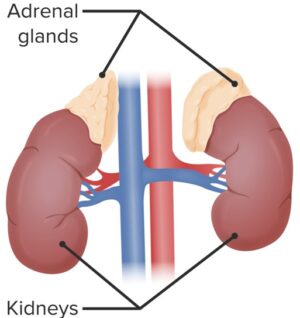
- Causes the release of adrenaline and norepinephrine from your adrenal glands.
- Activates your sympathetic system with the release of norepinephrine.
Both types of receptors are involved in memory, including long-term and working memory, memory formation and consolidation and retrieval.
Within your brain, acetylcholine is also involved in motivation, arousal, attention, learning and promoting rapid eye movement (REM) sleep.(“Rest and DIgest” or “Brake”)