

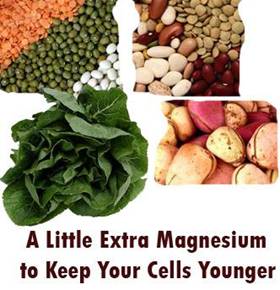
Magnesium deficiency is a COMMON problem
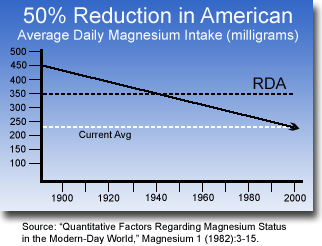
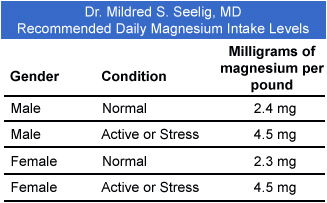
Estimated U.S. Intake of Magnesium Recommended Daily Allowance
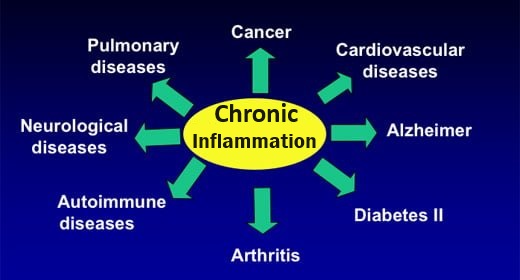
"Deficiency of magnesium is associated with virtually every known disease: heart attacks, diabetes, depression, cancer... "
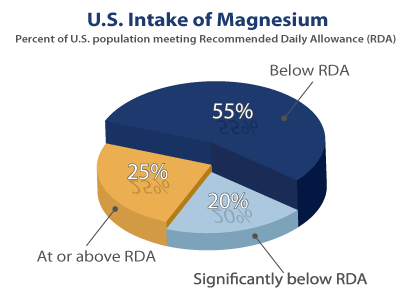
>70% of U.S. population may be magnesium deficient
In 2006, the World Health Organization reported that a majority of the world’s population is magnesium deficient. Likewise, in 1995, the Gallop Organization conducted a survey and found that 72% of adult Americans consume less than the RDA for magnesium.
Since magnesium has so many roles in the body, its deficiency is therefore involved in many health Problems. Increasing the body’s magnesium levels is thus a “no-brainer” for those experiencing magnesium deficiency-related health problems.

Signs of magnesium deficiency
Blood tests for magnesium deficiency are misleading, since blood magnesium level may be normal in spite of a significant magnesium deficiency. Most magnesium is inside cells and < 1% of the body’s magnesium is in the blood, which the body works hard to keep at a constant level.
What happens when magnesium intake is insufficent? If magnesium within the cell becomes depleted from its normal level, then calcium levels increase inside the cell – i.e. the intracellular Mg : Ca ratio decreases having an impact on cell functions, which incidentally includes impacting all aspects of the stress response (“Fight-or-Flight”reaction). In a life-threatening crisis, such reactions can be life-saving as they allow a person to perform with unusual strength and speed, and then levels return to normal when the stress is over. However, when a low intracellular Magnesium : Calcium ratio exists because of insufficient magnesium, these become chronic conditions:
- In blood vessel smooth muscle cells – causes vasoconstriction, arterial stiffness, and/or hypertension;
- In blood platelet cells – causes increased aggregation, stickiness and clotting;
- In fat and skeletal muscle cells – makes them less able to respond to INSULIN – aka INSULIN-resistance;
- In pancreatic beta cells – causes them to produce more INSULIN – causing hyperinsulinemia, which may lead to hypoglycemia and sodium retention/hypertension;
- In neurons – increases nerve cell activity
- In endocrine tissues –increases their response.
- In heart cells – causes enlargement (hypertrophy);
The following symptoms indicate increased requirement for magnesium. Not all symptoms need to be present to assume deficiency, But many of them often occur together
| Muscles | Digestive System |
|---|---|
| • Backache • Convulsions • Cramps, • Difficulty swallowing /lump in the throat (especially provoked by eating sugar) • Facial Tics • Muscle tension / contractions /Muscle soreness • Neck pain • Numbness • Nystagmus (rapid eye movements) • Spasms • Tension headaches • Tingling • TMJ dysfunction • Tremors • Twitches • Urinary spasms | • Colic, • Constipation, • Chronic diarrhea, • Malabsorption, • Pancreatitis (inflammation of the pancreas) |
| Circulation | |
| • Angina (due to spasms of the coronary arteries) • Palpitations • Abnormal heart rhythms (arrhythmias) • Arteriosclerosis/atherosclerosis • High cholesterol w/hypertension • Heart attack • Stroke • Tachycardia (fast pulse), • Thrombosis • Seizures • Mitral valve prolapse | |
| Nervous System | Other |
| Agoraphobia • Apathy • Anxiety • Confusion • Depression • Disorientation • Epilepsy • Hallucinations • Hyperactivity • Increased excitability /jumpiness • Insomnia • Irritability • Loud noise sensitivity (from stapedius muscle tension in the ear) • Mental illness • Multiple sclerosis (MS) • Nervousness • Neuritis paranoia • Panic attacks • Parkinson’s disease • Poor memory • Premenstrual irritability • Restlessness with constant movement • Senility | • Alcoholism • Arthritis • Body odors • Breast tenderness • Broken bones • Calcification in any organ • Cancer • Carbohydrate intolerance or craving (esp. chocolate) • Chest tightness • Chronic Fatigue Syndrome • Diabetes • Eclampsia • Gallstones • Headaches • Infections /Inflammations • Kidney stones (calcium oxalate) • Liver cirrhosis • Lupus erythematosus • Migraines • Old age • Peculiar sensation that one can’t take a deep breath • Photophobia (especially difficulty adjusting to oncoming bright headlights in the absence of eye disease); • Overactive thyroid • Prostate problems • Rickets • Rigidity • Salt craving • Sighing a lot • Skin wrinkled/tough • Stiffness |
Why are we magnesium deficient?
| At a Glance – Factors affecting our Magnesium Levels | ||
|---|---|---|
| PRO- CESSES | Magnesium deficiency in soil – today’s common use of potassium and phosphorus based fertilizers causes these minerals to be taken up by plants in preference to magnesium and calcium; magnesium and calcium used up neutralizing nitric acid in acid rain; herbicides/pesticides kill bacteria/worms that enable plants to absorb minerals. | Water-treatment methods – deplete mineral content, including magnesium; water from deep wells supplies more than surface water, typically the source of city water. Most filtered, bottled water provides little or no magnesium. Fluoride in water / toothpaste – binds magnesium |
| Magnesium lost in food processing and refinement – 80+% lost in flour milling. Not in the oils of magnesium-rich nuts/seeds | Soaking / boiling / broiling /steaming foods** – leaches magnesium into the water or drippings. Magnesium is in the broth or vegetable water; | |
| COND- ITIONS | Malabsorption Disorders – Prevents effective use of magnesium: any intestinal inflammatory disease. E.g. Crohn’s, celiac disease; leaky gut; gluten / casein insensitivities; fungi/parasites; fat malabsorption (greasy /offensive stools; magnesium binds to unabsorbed fat; usually no gall bladder, gallstones) | Removal of any part of small intestine – reduces magnesium absorption Low stomach acid production – needed for digestion, decreases with age |
| Mental and Physical stress – any “fight or flight” reaction increases magnesium need; Eg. worry/anxiety, perfectionism, anger, guilt, lonliness, fear, overwork, lack of sleep, troubled relationships, career/financial pressure; Type A’s (aggressive; living on adrenaline, time pressure, and stress) drain the body of magnesium – Prolonged psychological stress raises ADRENALINE, the stress hormone, which depletes magnesium. Surgery / Chronic Pain / Large area burns / Chronic Disease / infections / extreme temperatures Stress causes magnesium deficiency / magnesium deficiency magnifies stress reaction – Studies associate the stress hormones ADRENALINE and CORTISOL with decreased magnesium. Stress decreases stomach acid (HCl) needed for effective magnesium digestion/absorption; | ||
| Sweating / Diarrhea / Excessive vomiting – causes loss of magnesium. Eg. regular use of saunas / steam rooms. | Larger people – have higher amounts of magnesium in their body, which lowers magnesium absorption, regardless of source. | |
| Diabetes – magnesium excretes in urine with sugar | High bloodINSULIN levels | |
| Aging – > 55 may impair magnesium uptake. | Excessive physical exercise / over-training | |
| DIET | Sugar, caffeine, coffee, tea, sodas, alcohol ALL increase magnesium excretion in the urine Alcohol – more than 7 drinks / week (significant loss) Coffee (significant loss) Tea – tannins bind magnesium Soda – (diet or not, especially colas) – most dark colored sodas contain phosphates, which bind with magnesium in the GI tract, rendering it unavailable to the body. Refined sugar – not only lacks magnesium, since sugar-refining removes magnesium-containing molasses from sugar cane, but it also causes the body to excrete magnesium through the kidneys. Average consumption of carbonated beverages has increased 10-fold since 1940, and is certainly responsible for the body’s reduced availability of both magnesium and calcium. Dean C, 2007; Weiss et al, 1992, Brink et al, 1992; Heany RP, Rafferty K, 2001 | |
| Phytic acid – in cereals, most grains, nuts, seeds; binds magnesium; | ||
| High carbohydrate intake – white sugar/flour, HFCS; | ||
| Trans fats / excess saturated fat – alter cell membrane integrity disrupting magnesium transport in/out of cells | ||
| Highly refined table salt intake | ||
| Oxalic acid ( e.g. in rhubarb, spinach, chard, cocoa, almonds) – intake may form insoluble magnesium salts with magnesium | ||
| High calcium levels – blocks magnesium uptake. E.g. from overuse of calcium carbonate antacids. | ||
| Low potassium levels – can increase urinary loss of magnesium | ||
| Vitamin D, calcium and phosphorus – reduce magnesium uptake. A high phosphorus blood level tends to cause magnesium and calcium levels to be low | ||
| High or low protein diets –can decrease magnesium absorption | ||
| Dieting – reduces magnesium intake; causes stress; | ||
| DRUGS | Amphetamines, Antacids, Antibiotics, Cocaine, Corticosteroids, insulin, diuretics (even potassium sparing types) / birth control pills, Estrogen Replacement Therapy, heart and asthma medications, Phentermine or Fenfluramine (appetite suppressants), Warfarin (anticoagulant), Cyclosporine (immunosuppressant). EXTRA magnesium is protective. These drugs deplete body’s magnesium | |
** Soups retain some magnesium in water; magnesium content retained after cooking varies greatly with the food – Where magnesium in a food is found mostly in water-soluble form, blanching/steaming/boiling results in a substantial loss of magnesium. E.g. ~ 1/3 magnesium is lost blanching spinach and cooking navy beans loses 65%. However, as long as whole almonds are used, the magnesium is retained even after roasting or making into almond butter.
Magnesium Deficiency Questionaire
From: Magnesium for Life by Mark Sircus
1. Circle each “YES” answer which is given a numerical value.
2. Total your score, then Subtract 15 if you supplement at least 600 mg of magnesium daily
▲ Score 30-50-It is likely your body is magnesium deficient.
▲ Score >50- You are magnesium deficient!
QUESTION -“YES?” | POINTS |
| Under excessive emotional stress | 2 |
| Irritable, or easily provoked to anger | 3 |
| Restless, or hyperactive | 2 |
| Easily startled by sounds or lights | 4 |
| Difficulty sleeping | 2 |
| Chronic headaches or migraines | 3 |
| Convulsions | 2 |
| Fine tremor or shakiness in your hands | 3 |
| Fine, barely noticeable muscle twitching around your eyes, facial muscles, or other muscles of your body | 3 |
| Muscle cramps | 3 |
| Muscle spasms in hands or feet | 3 |
| Gag or choke from spasms in your esophagus | 4 |
| Have asthma or wheezing | 3 |
| Suffer from emphysema, chronic bronchitis, or shortness of breath | 2 |
| Have osteoporosis | 5 |
| Have you ever had a kidney stone | 3 |
| Suffer from chronic kidney disease | 2 |
| Have diabetes | 4 |
| Have an overactive thyroid, or parathyroid gland | 3 |
| Have high blood pressure | 3 |
| Have mitral valve prolapse (“floppy heart valve”) | 4 |
| Have very fast heart beats, irregular heart beats, or arrhythmia | 3 |
| Take Digitalis (Digoxin) | 3 |
| Take any kind of diuretic | 5 |
| Recent radiation therapy or exposure | 5 |
| Have more than 7 alcohol drinks weekly | 4 |
| Have you ever had a drinking problem? | 3 |
| Have more than 3 servings of caffeine daily | 2 |
| Eat sugar containing food daily | 2 |
| Crave carbohydrates &/or chocolate | 2 |
| Crave salt | 2 |
| Eat a high processed food/ junk food diet | 2 |
| Eat a diet low in green, leafy vegetables, seeds, & fresh fruit | 2 |
| Eat a low protein diet | 2 |
| Pass undigested food or fat in your stools | 2 |
| Suffer from chronic intestinal disease, ulcerative colitis, Crohn’s, irritable bowel syndrome | 3 |
| Frequent diarrhea or constipation | 3 |
| Suffer from PMS or menstrual cramps | 3 |
| Pregnant or recently pregnant | 2 |
| In previous pregnancy had high blood pressure or preeclampsia | 4 |
| Chronic fatigue | 2 |
| Muscle weakness | 2 |
| Cold hands &/or feet | 2 |
| Numbness in face, hands, or feet | 2 |
| Persistent tingling in body | 2 |
| Chronic lack of interest, indifference, or apathy | 2 |
| Poor memory | 2 |
| Loss of concentration | 2 |
| Anxiety | 3 |
| Chronic depression for no apparent reason | 2 |
| Feelings of disorientation as to time or place | 2 |
| Feel your personality is stiff or mechanical | 2 |
| Hallucinations | 2 |
| Feel that people are trying to harm or persecute you | 2 |
| Face pale, puffy, or lacking in color | 2 |
| Loss of considerable sexual energy or vitality | 2 |
| Been told by your Dr that your blood calcium is low | 3 |
| Take Calcium supplements regularly without magnesium | 2 |
| Take iron or zinc supplements regularly without magnesium | 2 |
| Known chronic exposure to fluorides | 2 |
| Frequently use antibiotics, steroids, oral contraceptives, Indomethacin, Cisplatin, Amphotericin B, Cholestyramine, synthetic estrogens | 3 |
References
Dean C. The Magnesium Miracle. New York: Ballantine Books; 2007.
Weiss GH, Sluss PM, Linke CA. Changes in urinary magnesium, citrate and oxalate levels due to cola consumption. Urology 1992;39:331-3.
Brink E. J., Beynen A. C., Dekker P. R., Beresteijn E.C.H., Meer R. Interaction of calcium and phosphate decreases ileal magnesium solubility and apparent magnesium absorption. The Journal of Nutrition. 1992; 122:580-586 Seelig M, Rosanoff A. The Magnesium Factor. New York: Avery Books; 2003.
Heaney RP, Rafferty K. Carbonated beverages and urinary calcium excretion. American Journal of Clinical Nutrition. 2001; 74:343-347.