
The prostate gland 101
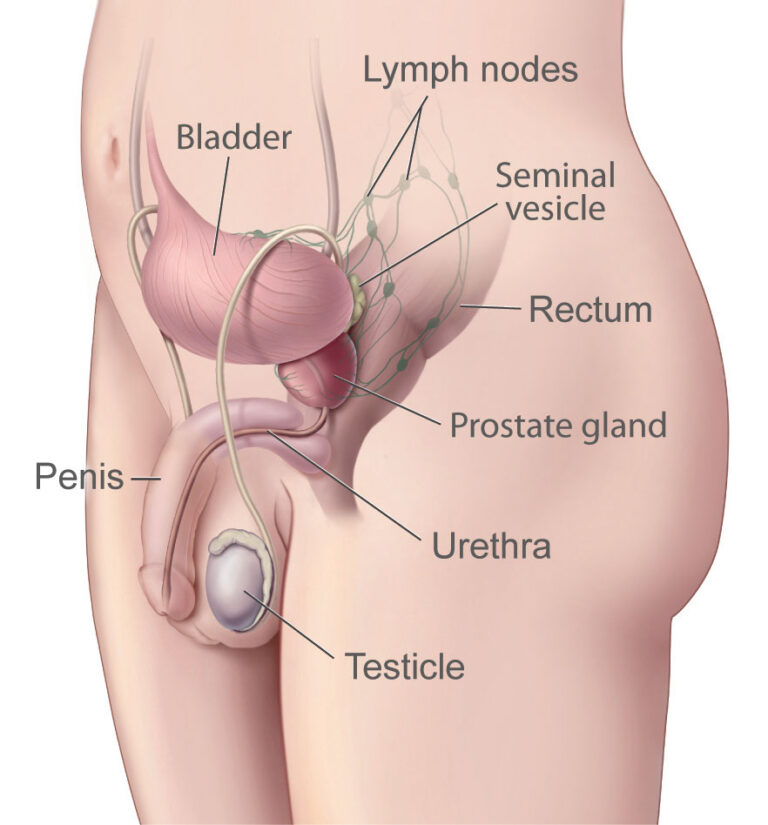
The prostate gland is a walnut-sized male gland (really glandular tissue) located directly beneath the bladder, which produces prostatic fluid to nourish sperm and stimulate their motility. Prostatic fluid is the liquid part of semen.
- Envelops the urethra (carries urine from bladder to penis) and its thousands of glands secrete prostatic fluid to nourish and transport semen – especially during sexual arousal
- Size of a small kiwi fruit -weighs 20-25 grams (2/3 to 3/4 of an ounce), but can weigh > 10 oz.
- Divided into 2 lobes
- Contains smooth muscle cells and connective tissue (“stroma”) -muscles can contract to expel prostatic fluid
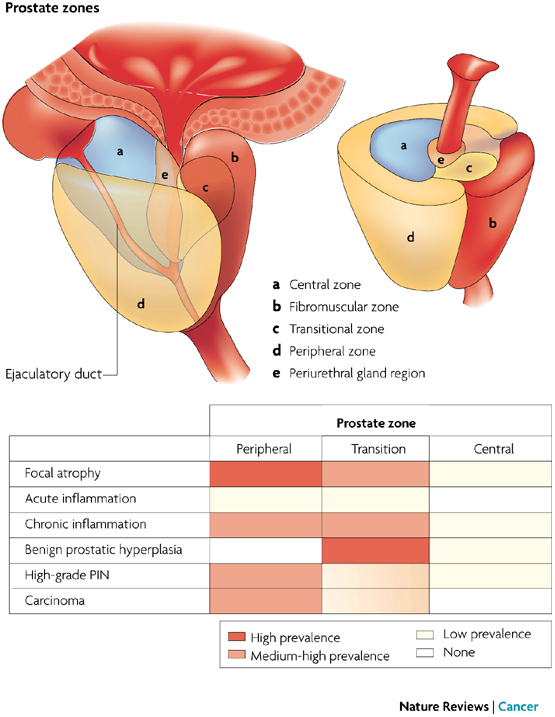
- Divided into 3 zones:
- Central zone (involved with connection of seminal vesicles to prostate);
- Transitional zone (located between central and peripheral zones; the exclusive site of BPH)
- Peripheral zone (felt during a rectal examination; the most common site of cancer).

Semen / Seminal Fluid
Right and left seminal vesicles (a.k.a. seminal glands) are coiled pouches that secrete seminal fluid (the major part of semen) and drain into the prostate and urethra via the ejaculatory ducts. (pass through the prostate and open into the urethra, to transport semen during ejaculation). Semen is alkaline to help neutralize acidity in the vaginal tract. The seminal vesicles / glands take about 3 days to refill after an ejaculation.
SEMEN (ejaculated during orgasm) is formed from:
- 25-30% Prostatic Fluid from prostate. During ejaculation, muscular contractions squeeze prostatic fluid into urethra (whose other function is to carry urine from bladder out through penis)
- 65-75% Seminal fluid from seminal vesicles) . Excretory duct of each of two seminal glands (located in pelvis) opens into the vas deferens to enter the part of urethra passing through the prostate gland; high in fructose, it can provide food for the sperm on their journey
- 2-5% Sperm from testes). Travel via the vas deferens from testes to join with the seminal vesicle to form the ejaculatory duct, which passes through the prostate and empties into the urethra. Rhythmic muscle movements propel sperm forward during ejaculation. After a vasectomy, ejaculate no longer contains sperm.
- <1% Bulbourethral fluid from bulbourethral glands. Its cohesive jelly-like texture “hangs on to “sperm and lessens semen viscosity allowing them to swim in it more easily
Prostate cancer
Occurs when there is an abnormal growth of cells in the prostate gland. Not always aggressive, some may grow more slowly than others.