

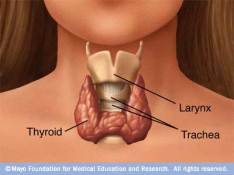
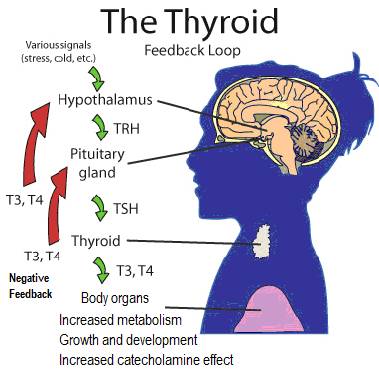
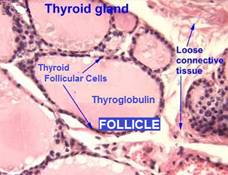
Thyroid Disorders - Problems occur when the thyroid produces too few or too many thyroid hormones

Thyroid Hormones T3 / T4 – “Master Metabolism Hormones”
Hypothyroidism (under-active thyroid)Hypothyroidism |
Hyperthyroidism (over-active thyroid)Hyperthyroidism |
| The thyroid produces too little thyroid hormone. This lowers the metabolism rate of the body’s cells. A DAMAGED thyroid may not be able to produce enough hormones | A malfunctioning, OVERACTIVE thyroid produces too much hormone. This speeds up the rate at which each cell functions. A DAMAGED thyroid may “leak” hormones leading to thyrotoxicosis (high blood levels of TH) and so show symptoms of hyperthyroidism (usually followed by symptoms of hypothroidism, since a damaged thyroid stops producing thyroid hormones and stored hormones are eventually depleted). |
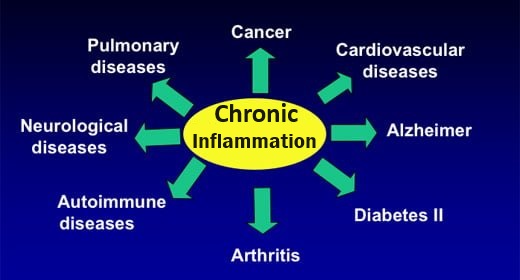
Hypothyroidism is seen:When there is an insufficiency of raw materials. E.g. iodine, selenium, and/or the amino acid tyrosine for the thyroid to make sufficient thyroid hormones; In thyroiditis (incl. autoimmune thyroid disease) – generally an attack on the thyroid gland causing inflammation, damage and possible death of thyroid gland cells. Causes include:
|
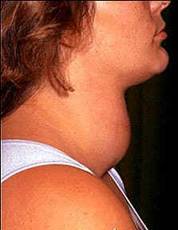
Hyperthyroidism is seen:In patients with Grave’s Disease. An auto immune disease with antibodies against the thyroid stimulating hormone (TSH) receptor (whilst also activating the receptor); characteristics include hyperthyroidism, high T4, and diffuse goiter. Graves Disease In certain phases of thyroiditis: |
The mainstream medical treatment for hypothyroidism is to supplement thyroid hormones
|