Multiple Sclerosis (MS)

MULTIPLE SCLEROSIS (MS):
What is MS?
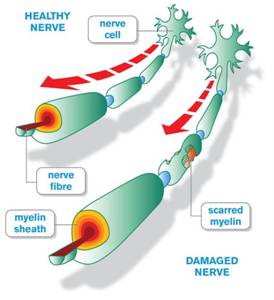
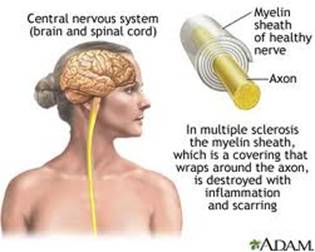
MS is a chronic neurodegenerative, autoimmune disease of the central nervous system. In which the body’s own (usually defensive) immune system attacks the protective tissues surrounding the nerves
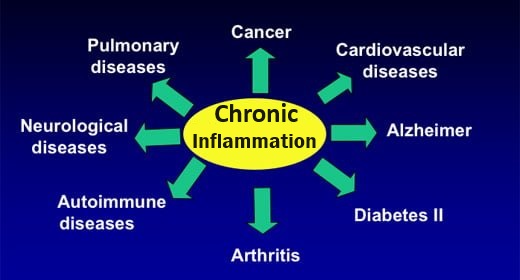
- MS causes inflammation and the “patchy” destruction of myelin. Which surrounds nerve fibers and acts like insulation on a wire preventing “short-circuits”. Demyelination interferes with nerve impulse transmission (i.e. their ability tocommunicate properly);
- Nerve fiber scarring and progressive disability. Is a consequence of continual demyelination and remyelination, which can affect physical and cognitive abilities. Symptoms, progression, and severity vary fromperson to person.
- MS typically diagnosed in young adults between age 20 and age 40. Women are twice as likely to develop MS than men.
- MS is not considered fatal and those diagnosed commonly have unaffected life spans.
- Risk of having M.S. in the U.S. is about 1 in 133, having doubled in the last 4½ decades. In the U.S., a comprehensive online 2019 study estimated almost a million adults were living with MS – almost double that reported in 1975.

MS Symptoms
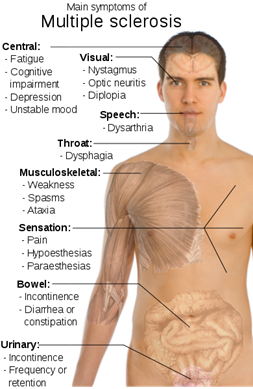
- Bladder problems /UTIs (80%) – most commonly frequency increase, incontinence and UTIs; also inability to begin urination, leaking, retention, and sensation of full bladder;
- Cognitive impairments (40-60%). Mild to severe; most commonly deficits in recent memory, attention, processing speed, emotional instability, visual-spatial abilities, and executive function. Dementia is NOT common;
- Emotional symptoms (common). Most commonly clinical depression at rates exceeding general population and even other groups diagnosed with chronic illnesses. ~15% of MS patients commit suicide!
- Fatigue (common). Often disabling;
- Restrictions in mobility (common). Most MS patients have difficulty in walking/mobility eventually (33% within 5 years of diagnosis) requiring use of an aid or wheelchair.
- Vision Problem (common). Optic neuritis episodes (up to 50%), experiencing rapid onset of pain in one eye followed by blurred vision (usually goes away but may leave decreased color vision or decreased ability to focus). Many persons with MS also experience episodes of double vision and involuntary eye movement making focusing difficult.
- Chronic Pain (common). Usually after a lesion to the ascending or descending tracts that control the transmission of painful stimulus. The disease commonly causes acute temporary pain, but narcotic pain control methods are usually effective;
- Lhermitte’s sign (25-40%). An electrical sensation that runs down the back and into the limbs. The sign suggests a lesion of the dorsal columns of the cervical cord.
- Dysesthesias. Abnormal sensations produced by ordinary activities, often described as painful feelings such as burning, itching, electricity, or pins and needle; caused by lesions of the sensory pathways;
- Sexual dysfunction (85% in men). Erectile dysfunction being the most documented sexual symptom;
- Spasticity (common). Characterized by increased stiffness in limb movement, development of certain postures, weakness of voluntary muscle power, and involuntary spasms;
- Transverse myelitis. Rapid onset of numbness, weakness, and loss of muscle function in the lower half of the body as a result of attack on spinal cord; symptoms vary according to extent of damage, with only~20% of individuals having a prognosis for complete recovery, the rest have permanent symptoms from transverse myelitis;
- Tremors (frequent and common). Typically in the hands, arms, and legs; can be severe and disabling;
MS Causes
First ask – Do you have a B12 deficiency – Not MS?
B12 is needed to build myelin, a B12 deficiency can also cause myelin sheath damage:
- Vitamin B12 deficiency shares common symptoms with MS. Soreness and weakness of the legs and arms, difficulty in walking, diminished sensory perception, difficulty in speaking, memory loss, jerking of limbs, fatigue andparalysis;
- Unfortunately, orthodox B12 tests are not accurate. The book -“Could It Be B12? – An Epidemic of Misdiagnoses, 2nd Edition, by Sally M. Pacholok and Jeffrey J. Stuart explains how to get a proper diagnosis of a B12 deficiency;
- B12 may need to be given by injection to be effective;
Otherwise, the two most likely causes for nerve cell myelin sheath damage in M.S. involve the presence of: NEUROTOXINS and/or MICROBES
(1) Neurotoxins (especially heavy metals, but also other chemicals) can cause MS.
Mercury poisoning
In the alternative health field, the most common theory for causing M.S. is mercury poisoning followed by a parasitic invasion of the nervous system (and particularly the brain).
- Mercury can come from fish, dental amalgams, vaccinations or other sources:
- Fish from contaminated waters. in Norway, Japan and the state of Alaska, where they eat a lot of ocean fish, they have high rates of MS.
- Dental amalgams. The irony is that the mercury used by dentists to manufacture dental amalgam is shipped to the dental office as a hazardous material and the amalgam leftovers also require special precautions for disposal. Dr. Hal Huggins, a leading world expert in biological dentistry, has treated >1000 MS patients, finding evidence of mercury in every case.
Hal Huggins Website and Book “Solving the MS Mystery”
Magnesium deficiency allows heavy metal deposition in the brain. Has been shown to precede M.S., Parkinson’s and Alzheimer’s.
Magnesium protects cells from aluminum, mercury, lead, cadmium, beryllium and nickel. Lower than normal magnesium levels observed in CNS white matter including demyelinated plaques of MS samples.
Magnesium concentration in brains from multiple sclerosis patients. Acta Neurol. Scand Denmark 81 (3): 197-200. 1990.
(2) Microbes (spirochete bacteria in particular) hiding inside the myelin sheath (where the immune system (I.S.) can not reach them).
- The best the I.S. can do is attack the tissue surrounding them. This may actually cause more damage than the toxin/microbe is causing.
- Possible causes can be determined through laboratory testing for pathogens, metals, and toxins.
Spirochetes
If the MS patient has been infected with spirochete bacteria, then this is the likely cause (E.g. Borrelia burgdorferi transmitted by ticks causes Lyme’s disease; Treponema pallidum is an agent of syphilis and yaws; Borellia recurrentis causes relapsing fever).
Oral spirochetes cause disease in man. Traditionally, dentists treated gum disease as an isolated phenomenon not damaging the whole person. We now know that gum disease is linked to common chronic illnesses. Bacteria can come from a perpetual stream of microbes from the jawbone area, as a result of periodontal disease or root canals/tooth extractions that became infected during the dental procedure. Root canals are a safe “hiding place”for microbes, until a time when they can “come out” and cause a recurrence of any disease. Levels of oral spirochetes are elevated in patients with periodontal diseases.
See: Youtube video http://www.youtube.com/watch?v=hyof5QXflos
These bacteria can go through the skin of the gums just like the syphilis spirochete bacterium (Treponema pallidum) goes through the skin of the genitals. Once inside the body they can enter the blood stream and travel to any part of the body, including blood vessel walls and the brain, and damage them. (The spirochetes found in various places in the body have been identified by PCR DNA typing to be of oral origin).
Oral spirochetes have been found in the brains of Alzheimers patients and in the plaques of heart disease patients (perhaps the link between gum disease and heart attack – the spores of spirochetes have been found in virtually all coronary artery plaques).
Spirochetes morph to a protective spore form when treated with antibiotics. When under attack, the surviving oral spirochetes will stimulate a rapid transition to a protective spore form, especially in granulation (wound-healing) tissue. A review of other spirochetal diseases traces a one hundred year trail of evidence that leads to oral spirochetes as a major contributory factor in systemic disease.
Lyme Disease and MS can follow a relapse-remitting progression, thought to result from the many different forms that spirochetes (such as Borrelia Burgdoferi) is known to take: spirochete has an elongated form (5-20um) when there is a positive environment for itsactivity, but in the presence of antibiotics it curls up defensively into an undetectable, seemingly latent granular form ( .3 – .5 Ï¥um)
Mattman LH, Cell Wall Deficient Forms: Stealth Pathogens (3rd Ed.), 2001, NY: CRC Press.
However, in this form it can squeeze through body pores and enter cells and organs, until when no longer threatened it can re-elongate.
Saier MH, Garcia-Lara j, The Spirochetes: Molecular and Cellular Biology. 2001, Wiltshire, UK, Horizon press
Cystic structures more common in the cerebral spinal fluid (CSF) of MS patients than in control individuals. Scientists also observed that spirochete Borrelia burgdorferi transforms to cystic forms after incubation in CSF and that they can reconvert to spirochetes if the conditions become favorable;
Philadelphia Bacteriologist Rose Ichelson reported success in cultivating the microbe, Spirochaeta myelophthora, which she has found in the spinal fluid of MS victims. She infers that MS is caused by the spirochete, and early attack on it should lead to cure or alleviation.
Ichelson, R.: Cultivation of spirochete from spinal fluids of multiple sclerosis cases and normal controls, Proc. Soc. Exper. Biol. & Med., 95:57, 1957.
Steiner observed Spirochaeta myelophthora in brain lesions from autopsied MS patients in the 1950s
Steiner G: Morphology of Spirochaeta myelophthora in M5. J Neuropathol Exp NeuroI19S4; 13: 221-229.
Older references of spirochete involvement in M.S.:
Ichelson, R.: Cultivation of spirochete from spinal fluids of multiple sclerosis cases and normal controls, Proc.
Soc. Exper. Biol. & Med., 95:57, 1957.
Schroeder, G. E.: Sclerose en plaques et spirochetes, Rev. Neurol., 41:785, 1924.
Speer, E.: Spirochatenfund im menschlichen Zentralnervensystem bei multipler Sklerose, Munch. Med. Wchschr.,
68:425, 1921.
Steiner, G.: Demonstration von Spirochaten im menschlichen Gehirn bei multipler Sklerose, Deutsche Ztschr. f. Nervenheilk., 107:112, 1928.
Steiner, G.: Acute plaques in multiple sclerosis, their pathogenetic significance and the role of spirochetes as etiological factor, J. Neuropath. & Exper. Neurol., 11:343, 1952.
Spirochetes thrive on steroids. Medication typically given to reduce neural inflammation in MS. However, the steroids could actually result in the bacteria’s destruction . . . acting as bait, steroids cause spirochetes to change into a form more susceptible to T-cell attack, possibly explaining the success of steroids.
NOTE: Treatment requires killing spirochete bacteria with electromedicine. Required because the bacteria is not in the bloodstream; electromedicine involves very low amperage electrical currents, electromagnetic waves or magnetic pulses, which can be done at home using painless, relatively affordable, electrical pulsing “tools”attached to or near the body;
Mainstream treatments for MS
Drugs
Typically prescribed drugs are toxic, with major health-harming side-effects. They work by suppressing the activity of the body’s immune system. They do not cure MS.
Prednisone. A corticosteroid hormone that can significantly impair your immune system and cause diseases such as osteoporosis and cataracts;
Beta-Interferon. Blocks the immune system’s white blood cells from attacking the protective coating (myelin sheath) that surrounds nerve fibers. Pfizer’s Rebif, Schering’s Betaseron, and Biogen Idec’s latest “wonder”drug Avonex (injectable) have been linked to critical, potentially fatal, side effects. The FDA and Biogen have issued a warning that Avonex could cause severe liver damage to MS patients; Both Rebif’s and Betaseron’s labels already contain warnings pertaining to potential liver problems. Additionally, interferons have shown harmful effects on the brain and depression as a common side-effect
Renowned “medical doctor turned natural health doctor” Dr. Joseph Mercola (of mercola.com) considers that the chance of going into remission with the above conventional treatments is near zero
Your chances can be considerably increased if you employ natural therapies for multiple sclerosis
Alternative /natural treatment options for multiple sclerosis
What do we know about MS to help us focus on a solution?
- MS involves an immune system (I.S.) attack on the myelin sheath. The likely cause is toxins (mercury highly suspect) or microbial infection INSIDE the myelin sheath that the I.S. is unable to “get at” and destroy, and in an attempt to do so is damaging the myelin tissue;
- People with MS have a wide variety of nutritional deficits. Including B vitamins, and minerals (especially magnesium);
- Several nutrients are needed to maintain the integrity ofmyelin sheath. E.g asuric acid, vitamin D, and essential fatty acids;
Treatment plan for MS
(1) Remove the source of damage INSIDE and outside of myelin sheath. Microbes or toxins inside myelin and/or any other substances that induce production of oxidants that can damage myelin;
(2) Counter inflammation. Provide antioxidants to counter any oxidants produced by immune system; control inflammatory reaction;
(3) Rebuild the myelin sheath;
(4) Other Contributions to the Plan
Suggestions for dealing with any inflammatory health problem are found at:
INFLAMMATION – Can’t live with it, Can’t live without it
(1) Remove the source of Damage
(a) Remove the most likely source of damage
If mercury (or other heavy metals) could be the cause of your MS, then you should first do a chelation treatment to remove them
***HIGH PRIORITY ***
- If you were to first use electromedicine to remove bacteria from the myelin sheath and mercury is present, mercury vapor will be released into the brain – making the problem much worse; it is better to assume mercury is the problem and treat with chelation first – if you are wrong, there is no harm done, only benefit.
- Suspect mercury poisoning if the person has . . .handled heavy metals (e.g. in a dental office); an abnormally high number of “silver” fillings (~ 50% mercury); been exposed to drinking water contaminated with chemicals; eaten a lot of fish (most is highly contaminated with mercury); had their mercury fillings removed by an unqualified dentist, etc.
Treatment requires chelation(removes heavy metals from the body) that can penetrate the blood brain barrier;
- Chlorella / cilantro, iodine (promotes excretion over base-line of cadmium, lead and mercury), EDTA, zeolites, chelation by I.V. or Bio-chelat®, magnesium (protects cells from aluminum, mercury, lead, cadmium, beryllium and nickel), Vitamin C(weak chelator),OSR (Oxidative Stress Reliever, developed by Dr. Boyd Haley), and others – are used to remove mercury from your body. You must do your research on this, because some of the stronger methods of chelation can be dangerous if not done properly;
Helpful book on chelation: “My Recovery Protocol” by Ken Presner.
Have dental amalgam removed by a QUALIFIED dentist – if this process is not done safely, it could kill you!
- Go to a “biological” or “holistic” dentist (NOT a regular dentist) – they are trained to do two things: (1) Use a rubber dam to protect against swallowing mercury bits and (2) Use a vacuum tube to prevent inhalation of vaporized mercury (tube at least 3″diameter). placed on chest a few inches away from mouth, or even better, an “elephant trunk” tube hanging from ceiling; MS can actually be a result of improperly removed mercury amalgams;
ONLY After removing mercury- Use electromedicine to Kill bacteria inside myelin sheath
***HIGH PRIORITY ***
Electromedicine is the only way to kill bacteria that is not in the blood stream – there are several choices of electrical units you can use for a systemic DAILY treatment to kill microbes (all are sold as research units and legally can not mention their health benefits)
Note: If you still have mercury in your teeth, use daily chelation to continuously remove the mercury that may be entering your bloodstream.
Here are a couple of choices of electromedicine devices:
(1) Beck Protocol Units – these are very affordable units, which you can make yourself using Dr. Bob Beck’s schematics or buy ready-made for ~$600; these work very effectively to remove ALL microbes from the body that are not inside cells. One drawback is that the low output frequency (~4Hz) of these devices causes cell membranes to become very permeable, allowing many substances (E.g. mercury) to be absorbed into cell (technically called “transfection”, but Beck called it “electroporation”). This means that the treatment would also increase the effect of any drugs you are taking, and as such, you can not be taking any drugs concurrent with treatment . The transfection effect is less when using a device operating at a frequency of at least 10Hz (40 Hz is better if taking strong drugs), such as the “HIGH RF FREQUENCY GENERATOR” . However, using the 4Hz Beck Protocol unit, it may be possible to take some herbs or mild drugs, provided they are taken 2 hours before or 1 hour after daily electromedicine treatment session, to allow time for these substances to exit the body before the next day’s treatment session.
(2)“HIGH RF FREQUENCY GENERATOR” – most frequencies utilized do NOT cause transfection(see above in Beck Protocol Units) and therefore do not increase effect of drugs beng taken
- Versatile/powerful unit – “sweeps” through many frequencies in succession to target certain microbes. It runs frequencies up to 20 MHz (most other generators top out at < 40,000 Hz). Its 2.4 MHz ‘carrier wave carries lower frequencies far into the body. “HIGH RF FREQUENCY GENERATOR” offers a selection of wave patterns, and several other features to set it apart; the major drawback to this generator is it’s price (~$2300-$4600 depending on options)
- Use programs for MS, Lyme Disease or any programs involving treponemes, spirochetes or microplasma
More information:
“HIGH RF FREQUENCY GENERATOR”
(b) Avoid/remove other harmful substances
Cleanse liver – toxins may be responsible for MS and a poorly functioning liver will not be able to remove them from the body;
Liver/Gallbladder Cleanse (I won’t lie – this is not fun!)
And/or
Coffee Enema -“Trash Truck” For Liver and Colon
AVOID Toxic fats
***HIGH PRIORITY ***
- Highly oxidized, damaged/processed fats (usually omega-6 fats) – E.g. trans fats found in most all processed/deep fried foods, typical grocery store oils (E.g. soy-, canola-, and corn oil), margarine, most peanut butter;
- These toxic fats distort cellular functions throughout the body – including the brain.
Eliminate / minimize sugar, particularly fructose, and also minimize / eliminate refined carbs
***HIGH PRIORITY ***
- Sugar / fructose / glucose promotes the production of inflammation-causing AGES (Advanced Glycation End products);
- Cutting out processed foods and sweetened beverages – will go a long way to keeping fructose intake to a healthy level of< 25 grams / day;
- Avoid refined carbs – since the body quickly turns them into glucose;
Too Much Sugar/HFCS and Other Refined carbohydrates
Eliminate milk and dairy – Studies demonstrate a correlation of cow’s milk consumption with MS prevalence
Neuroepidemiology 1992;11:304-12, and Neuroepidemiology 1993;12:15-27;
Avoid MSG –which has been linked to neuronal pathway damage
Avoid aspartame, commercial fruit juices, bottled / canned fruits and vegetables – Aspartame ( NutraSweet®, Equal®, etc.), typically found in sugar-free soda and foods, quickly metabolizes to methanol a potent neurotoxin. (Fresh fruit and veggies also contain methanol, but bound to pectin, and your body does not have the enzymes to break down this form. Unfortunately, the methanol in bottled/canned fruit or vegetables or their juice tends to dissociate from the pectin into free methanol, which you do absorb, and which is then converted into formaldehyde (yes, the same chemical used to embalm dead bodies). Interestingly, ethanol (alcohol) is the antidote to methanol and could explain why moderate (one-a-day) “drinkers” often live longer than those who don’t drink! Epidemiologic studies show moderate consumption of alcohol is associated with a reduced risk of myocardial infarction, dementia, lupus, and other diseases of civilization;
Check your iron levels – Excess iron can cause damage to the endothelium, the inner lining of blood vessels as well as create massive amounts of free radicals. It can also damage your DNA. Therefore, if you have MS it is very important to check your blood for iron overload, through a simple blood test called a serum ferritin test. The healthy range of serum ferritin is 20-80 ng/ml (ideally 40-60 ng/ml) ng/ml.Ferritin levels can even exceed 1,000, but anything over 80 is likely a problem. Donate your blood 1-3 times per year, even up to as many as once/month as tolerated, until your ferritin levels have been sufficiently lowered. Menstruating women would be unlikely to have excess iron, because they lose iron each month in blood lost during menstruation.
Avoid cured meats/nitrites(involved in MS) – nitrites are used to cure meat such as bacon, bologna, corned beef, sausages and hot dogs.
- Raised serum nitrate and nitrite levels in patients with MS
- Nitrites can be converted to nitrosamines (known cancer-causing agent) in the body – however, bifidobacteria (good stomach bacteria) can prevent this conversion ; also molybdenum and iron containing enzymes are also needed to reduce nitrites in the body.
- Cured foods are more common in the U.S., Canada and European countries – where MS is also more prevalent;
(2) Counter inflammation
Regardless of why the immune system is being induced to produce damaging oxidants, these oxidants are indeed inflicting damage to tissue as a consequence of a chronic, low-level inflammatory reaction. There are, however, several tactical maneuvers you can use to counter the oxidants and also temper the extent of the inflammatory response:
Ensure essential fats to maintain control of inflammatory reaction
***HIGH PRIORITY ***
- The specific omega-3 and omega-6 fats you consume sit in cell membranes and produce hormone-like, lipid compounds, called eicosanoids (E.g. prostaglandins, leukotrienes) – that mediate an appropriate reaction to any “happenings” in the vicinity of the cell; eicosanoids can increase or decrease inflammation/pain, relax or contract muscles, contract or dilate blood vessels, and much more;
Local “Hormones”-First Response Team
- The essential fats are also needed to maintain myelin sheath integrity:
Optimize your body’s vitamin D level
***HIGH PRIORITY ***
- MS is less common in areas with lots of sunlight exposure and in areas where fish is commonly eaten – Sunlight and fish are major sources of vitamin D.
- For general health, an optimal blood level is 50-70 ng/ml, but when treating major diseases, your level should be 70-100 ng/ml – In order of preference, your options are:
(1) Regularly exposing your skin to sun,
(2) Using a safe tanning bed
Or (3) Taking an oral vitamin D3 supplement.
The general recommendation (from those who have done the research) is 35 IU/ pound/day -typically ~4000-10,000IU/day (far exceeding the woefully deficient U.S. RDA value).
Vitamin D (CALCIDIOL) testing is strongly recommended. To evaluate the success of the dose you take;
- A Harvard study concluded that vitamin D had a protective effect against the development of MS
- BBC News: – “. . . researchers found that by just analyzing sunlight, they could explain 61% of the variation in the number of MS cases across England. However when they combined the effect of sunlight and glandular fever, 72% of the variation in MS cases could be explained.”
BBC News April 19, 2011 Neurology April 19, 2011;76(16):1410-4
- U. of Wisconsin Study – demonstrated that exogenous vitamin D3 can completely prevent experimental autoimmune encephalomyelitis (EAE), a widely accepted mouse model of human MS;
Hayes CE, Cantorna MT, DeLuca HF, Vitamin D and multiple sclerosis. Proc Soc Exp Biol Med. 1997 Oct;216(1):21-7.
- In an exploratory study, mortality from MS was found to be reduced by exposure to sunlight by up to 76% – depending on degree of exposure.
Occup. Environ Med 2000;57:418-421;
Vitamin D -The Sunshine Vitamin
The American Cancer Society/dermatologist recommendation to avoid the sun IS NOT ONLY JUST PLAIN WRONG, IT IS POTENTIALLY LETHAL
Supplement magnesium. There is a strong connection between magnesium deficiency and MS; their symptoms are certainly similar, including muscle spasms, weakness, twitching, muscle atrophy, an inability to control the bladder, rapid eye movements, hearing loss, and osteoporosis.
- Magnesium is central to immunocompetence and modulates cellular events in inflammation. Conversely, a magnesium deficiency contributes to an exaggerated response to immune stress Mag Res. 5:281-93. 1992.
- Here are some studies supporting the magnesium-MS link:
▲ In a 1995 paper published in the journal Acta Neurologica Scandinavica, patients with multiple sclerosis were found to be low in cellular magnesium.
▲ In a 1994 study from researchers at the Department of Physiology, State University of New York randomly selected hospital patients, compared to a control group of health volunteers the hospital patients with coronary heart disease, rectal cancer and multiple sclerosis exhibited extracellular deficits in ionized free magnesium.
▲ In a 1990 paper published by researchers from the Wakayama Medical College, Japan, magnesium (Mg) concentrations were studied in the brains of 4 patients with definite multiple sclerosis (MS) and 5 controls. The central nervous system tissues and the visceral organs, except for spleen, of MS patients showed significantly lower magnesium values than that seen in control cases.
▲ In a 1986 paper published in the journal Medical Hypothesis, A group of young patients having MS were treated with dietary supplements containing magnesium, calcium and vitamin D. The results showed a decrease in the relapse rate compared to what would have been expected based on the patients prior history of symptoms.
▲ In a case report published in the European Journal of Neurology,a patient with MS treated with oral magnesium glycerophosphate therapy, showed significant improvement after only one week of treatment.
Magnesium – Missing Miracle Mineral
How to boost magnesium intake?
Supplement Iodine and Selenium – MS belongs to a family of diseases (including ALS and Parkinsonism) that seem to be linked to iodine and selenium deficiency.
- Iodine and selenium are necessary for thyroid hormone (TH) production – thyroid hormones are associated with re-myelination;
- Iodine / Selenium supplementation (+B3 and CoQ10) is recommended for treatment to prevent dopamine oxidation -Parkinsonism, MS and ALS each appear to involve an iodine deficiency before and immediately after birth, which affects the dopaminergic system. In adulthood, this abnormality seems to increase susceptibility to the oxidation of dopamine and to an associated glut of cytotoxic glutamate.
Consider taking Low Dose Naltrexone (LDN) + Alpha lipoic acid. One of the newer treatment strategies for MS is Low Dose Naltrexone (LDN) together with alpha lipoic acid. Naltrexone (generic name) is a pharmacologically active opioid antagonist, conventionally used to treat drug and alcohol addiction, normally at doses of 50mg to 300mg. It has been an FDA approved drug for over two decades.
- However – at very low dosages (3 – 4.5 mg), naltrexone has immunomodulating properties that are showing promise for treating a wide range of autoimmune diseases, including MS. As explained at www.lowdosenaltrexone.org, taken at bedtime, LDN blocks opioid receptors in the early morning hours, during which time, it is believed to up-regulate vital immune system elements by increasing body’s production of metenkephalin and endorphins (body’s natural opioids), hence improving immune function.
Less than 1% of 400 MS patients of NYC physician Bernard Bihari, MD has experienced a new MS attack whilst maintaining regular nightly LDN therapy.
- Alpha Lipoic Acid (Antioxidant / glutathione regenerator/ recycles C, E, CoQ10 / heavy metal chelator / modifies gene expression to reduce inflammation / easily gets into the brain) – A study from the Netherlands showed that Lipoic acid is a non-specific scavenger of Reactive Oxygen Species (ROS) and decreased the phagocytosis of myelin by macrophages. Free radicals play a regulatory role in the destruction of myelin
Journal of Neuroimmunology 1998 Dec 1;92:67-75;
Eat lots of raw, organic food. Includes free-range organic eggs (or use pasteurized (i.e. sterilized) eggs, now available in most supermarkets) and high-quality, organic meats; a raw egg smoothie (E,g, with fruit, yogurt and a banana) is an amazing pick-me-up for those who are ailing!
(3) Rebuild myelin sheath
The myelin sheath is primarily composed of fatty acids
Optimize your essential fat intake
Ensure a good supply of both animal and plant-based Omega-3 fats for myelin sheath integrity (also important for controlling extent of inflammatory reaction)
***HIGH PRIORITY ***
Powerful “O3-fix” – incorporates:
- The Dr. Johanna BUDWIG PROTOCOL”. Fresh flax seed oil, with inherent high content of Omega-3 Alpha Linolenic acid, is proportionally blended with cottage cheese to make the omega-3 water soluble and more easily absorbed by the body’s cells. For MS build up to a daily dose of 4-6 Tbsp. of flax oil. To supercharge the therapy, also add 3 Tbsp.fresh-ground flax seeds and strip down and take the mid-day (10am-2pm) sun for 30-60 mins each day.
- Flax seed
- Fish oil supplements
– Omega-3 EPA / DHA supplements: E.g.
E.g. Krill Oil: 2 – 500 mg /day (total 1000 mg)
Or: Wild Salmon Oil: Take 2 – 1000mg caps with each of 2 daily meals.
Study the Myelin Project
An organization researching the myelin sheath, founded by Augusto and Michaela Odone for their son, Lorenzo, who suffered from X-linked adrenoleukodystrophy (X-ALD), the most common of the leukodystrophies. MS is an acquired form of leukodystrophies. The story of the Odones’ struggle was dramatized in the film “Lorenzo’s Oil”, starring Nick Nolte and Susan Sarandon, released by Universal Studios in 1992. At the Myelin Project website you will learn about Lorenzo’s Oil, which may be of benefit in remyelination:
How to make rapeseed oil |
| (compare to Lorenzo’s oil on the The Myelin Project website): |
1) Grind or crush rapeseed seeds, 2) Make sure the shells are broken apart, 3) Boil them in water, 4) The oil will rise to the top of the mixture, 5) Use a “gravy strainer” to extract the oil from the mixture, Use Pulsed Electromagnetic Field (PEMF) therapy. In 2003 NASA found that a 10 Hz Pulsed Electro-Magnetic Field caused neural tissue regeneration at 4x the baseline. |
(4) Other Contributions to the Plan
Address emotional trauma (especially from childhood). MS patients often have a precipitating traumatic/stressful emotional event that causes an immune system crash, leading to the disease. A study followed over 300,000 parents with no suspected MS for an average 9 ½years and found that twice as many parents who had lost a child (considered the worst form of stress) developed MS compared to those who didn’t lose a child; it has been noticed that many MS cases have experienced an emotional wounding, almost always before the age of 7. Known or unknown traumatic events can be addressed using the Meridian Tapping Technique
Meridian Tapping Techniqiue (MTT)
Attend to malabsorption problems / Boost good intestinal bacteria
- One study f ound ~40% of the people tested with MS to be suffering from malabsorption problems – which would obviously lead to nutritional deficiencies.
- Malabsorption may occur from a wide variety of causes – one known cause of malabsorption is a lack of beneficial intestinal bacteria needed to digest food.This can be corrected by taking a quality probiotic with at least 50 billion CPU and a variety of good bacterial strains
Progesterone
- Progesterone has been show n in animal studies to promote the formation of new myelin sheaths
Human Reproduction 2000 Jun;15 Suppl 1:1-13, J Steroid Biochem Mol Biol 1999 Apr-Jun;69:97-107, Mult Scler 1997 Apr;3:105-12.
- Progesterone promotes regeneration and myelination of axons (myelin forms around neural axons, allowing nerve impulses to travel faster) – influences growth, differentiation and increases expression of myelin-specific proteins in oligodendrocytes, and potentiates the formation of new myelin sheaths by Schwann cells in vivo; antioxidant effect in injured nervous system; multiple effects on glial (Neuron support) cells;
- Progesterone is concentrated in brain cells to levels 20 times higher than that of blood serum levels;
- Progesterone. Induced “blocking factor”directly blocks T-cell activation; reduces the expression of pro-inflammatory genes and their protein products;
- Progesterone is an essential building block for the stress hormone CORTISOL. Under stress, most of the Progesteroneproduced is converted into the corticosteroid hormones to deal with the emotional stress or fight or flight situations;
- Adrenal exhaustion from aging /poor nutrition reduces adrenal Progesterone production. Also reduces anti-inflammatory cortisone.
Progesterone- Precursor to Androgens, Estrogens and Corticoids
People with high uric acid levels (a sign of Gout) do NOT get MS / Lower uric acid levels associated with MS
Common Associations | |
Gout | Multiple Sclerosis |
| •High uric acid levels | •Low uric acid levels |
| •Obesity | •”Healthier”bodyweights, Malabsorption |
| •Diabetes | •Lower incidence of juvenile diabetes |
| •Males, post-menopausal females | •Women age 20 – 40 |
| •Lower incidence of MS | •Lower incidence of gout |
| •High blood pressure | •Low blood pressure |
| •Disorders associated with blood clots | •Less likely to get disorders associated with blood clots |
One paper reviewed 20 million patient records and found high uric acid levels/gout and MS to be almostmutually exclusive. People with gout don’t get MS, and people with MS don’t develop gout.
- Lower serum values of uric acid have been associated with MS. MS patients found to have serum levels ~194µmol/L, with patients in relapse averaging ~160µmol/L and patients in remission averaging ~230µmol/L. Serum uric acid in healthy controls was ~290µmol/L. Conversion factor: 1mg/dL=59.48 µmol/L
- Accumulated copper and low vitamin B2 can exacerbate low uric acid levels. This in turn is hypothesized to lead to myelin degeneration seen in MS.
- Contributing to higher uric acid levels are foods high in purines and impaired excretion by kidneys, but today, it is fructose consumption that is having a potent effect on raising uric acid levels. Purine-rich foods include anchovies; aparagus, beef kidneys, cauliflower, game meats, herring, liver, sardines, scallops, but moderate intake of these foods is not associated with an increased risk of gout); By far the greatest influence on uric acid levels today is coming from fructose in sodas and processed foods;
- People with MS have low levels of uric acid. So found studies in the U.S. and Hungary; uric acid has been successfully used to treat experimental allergic encephalomyelitis, the mouse model of multiple sclerosis; interestingly, if uric acid levels are too low, uric acid loses its antioxidant/ life-longevity benefit,and if too high they become pro-oxidant and cause health problems associated with oxidant stress, such as gout, stroke, metabolic syndrome and atherosclerosis; (note the similarity to vitamin C, which reflects C-deficiency health problems at low levels, antioxidant benefits in the ideal range, and has an oxidant effect at high levels)
Dr. Johnson, professor of medicine at the University of Colorado and an expert on the subject of uric acid levels has determined that uric acid takes a lead role in creating health problems when it reaches levels in your body of 5.5 mg per dl or higher, and has an ideal range of 3 to 5.5 mg per dl., which today, can generally be maintained by lowering TOTAL fructose intake to < 25g / day
(E.g. 1 apple=~10g, 1T honey=8g, 12oz can soda = ~22g of fructose);
- The essential trace mineral molybdenum is part of the process to convert purines to uric acid. Thus it is a causative factor in gout and uric acid production; Perhaps molybdenum/raised uric acid levels would be desirable to raise low levels into the normal range for people with MS?
▲ A connection between molybdenum deficiency and MS was reported in the 70’s;
▲ Higher incidences of MS reported where the soil is lower in microelements, including molybdenum;
▲ Menstruating females rarely get gout – which occurs primarily (90%) in males and post-menopausal women; women of child bearing age are the group that has the highest rate of MS
Vitamin B12 anomalies/deficiencies
- Vitamin B12 needed to build myelin sheath
- Vitamin B12 anomalies. Linked to people with MS in quite a few studies;
- B12 deficits. Considered to be a prime factor in MS by some researchers.
- Malabsorption problems have been noted in MS patients – specifically mentioning B12 malabsorption;
- B12 may need to be given by injection to be effective;
- B12 raises uric acid. Uric acid therapy has successfully treated mice with MS symptoms; studies in the U.S. and Hungary show that people with MS have low levels of uric acid (discussed elsewhere on this page)
Vitamin B12 – The Energy Vitamin
Potential neuroprotective properties of curcumin (found in turmeric spice)
- Curcumin, confirmed as potent inflammatory agent, and believed to interrupt immune system attack on myelin sheath. Nashville researchers believe curcumin may interrupt the production of IL-12, a protein that plays a key role in signaling immune cells to launch their assault on the myelin sheath.
- Mice with EAE (experimental autoimmune encephalomyelitis – an immune condition used as a model for MS, since it results in myelin erosion) recover movement after curcumin injections. In a 30-day study injecting mice with curcumin doses 3 times/week at doses roughly equivalent to the amount eaten in a typical Indian diet (E.g. in curry); In Asian countries, where spicy foods, including yellow compounds like curcumin are eaten quite regularly, reports of M.S. are rare;
Annual Experimental Biology 2002 Conference New Orleans, LA April 23, 2002