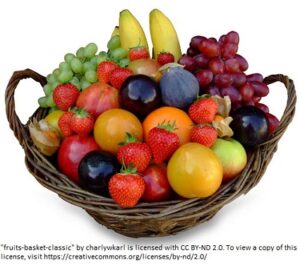
Attend to diet, lifestyle & emotional state:

Nutrition  

Exercise

 Water

Sun

Thoughts  

     Air

Rest

Trust

Sex

Leaf logo

Health Happening    

‘No-brainers’ 💡 for Physical / Mental Health: Magnesium, Omega-3 , C, D, Iodine in “Make-it-Happen” smoothie
Red apple clipart

Fructose - Too much associated with INSULIN resistance /T2D/obesity, fatty liver and CVD

About fructose

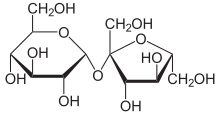
Fructose (C6H12O6) (fructus is Latin for fruit) is one of only 3 monosaccharides (single sugar molecules; the others being glucose and galactose). All 3 are comprised of carbon, hydrogen and oxygen atoms.    Fructose is present as both a single molecule or bonded to another monosaccharide. E.g. It makes up half of the sucrose (table sugar) molecule. In this diagram, that’s a glucose molecule on the left, covalently linked (in the case of sugar molecules, called a disaccharide bond) to a fructose molecule (on the right).

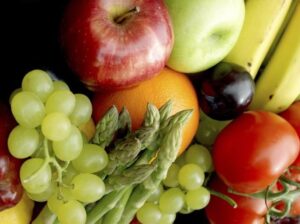
Fructose is naturally present in honey, sugar cane, sugar beet, fruits, flowers, berries and most root vegetables (especially sugar beets).  A cup of strawberries contains ~4g of fructose, a teaspoon of honey ~3.5g .

The main sources of oral fructose in the U.S. are:

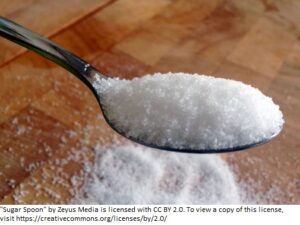
  • Sucrose (table sugar) is 50% fructose. 1 glucose molecule attached to a fructose molecule via a disaccharide bond;
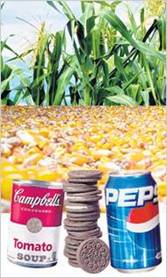
  • High fructose  corn syrup (HFCS) is either 42% or 55% fructose.  The inclusion of this cheap sweetener source in commercial food products and ready-made drinks has escalated since its introduction in the early 1970’s.

High fructose corn syrup (HFCS)

Fructose ranks high on the sweetness scale.  Rated from 1.2 to 1.8 times sweeter than sucrose.

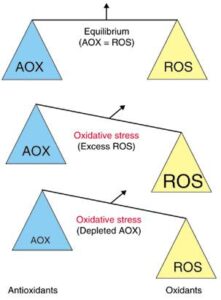
Fructose ranks low on the glycemic index at 19 (doesn’t much raise blood glucose), but it does raise blood fructose levels – which is worse.   Fructose binds to cellular proteins 7 times faster than glucose. This creates 100 times more reactive oxygen species (ROS) than glucose, which can cause significant cellular damage. E.g. to arterial or pancreatic cells.

Fructose digestion / metabolism

The monsaccharides are directly absorbed into the bloodstream during digestion.   If fructose is consumed in sugar (i.e. attached to a glucose molecule), the enzyme sucrase cleaves them apart in the small intestines, ready for individual absorption. Once in the blood, fructose enters the hepatic portal vein en route to the liver to be metabolized.

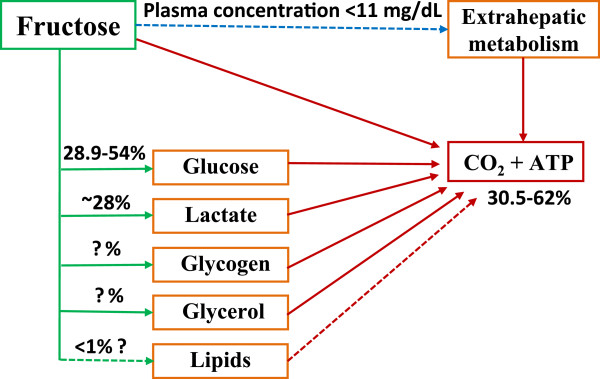
Fructose metabolism occurs mostly in the liver – where it can be converted into glucose or stored as glycogen, or 25% is converted into lactate and sent to the bloodstream, where it can supply energy to muscles. Unlike glucose, fructose does not stimulate insulin release or raise blood sugar and its conversion to glucose is not regulated by a feedback mechanism, and if glycogen stores are full, excess fructose is used for both lactate and fat production in the liver, setting the stage for non-alcoholic fatty liver disease (NAFLD) and high triglycerides. Additionally, lactate production has uric acid as a by-product, which in excess can trigger inflammation.

  • Excess fructose consumption leads to metabolic syndrome.  It increases your insulin levels (hyperinsulinemia), not by direct stimulation of the pancreas, but as a consequence of insulin resistance (IR). As the body’s cells become insensitive to insulin, the pancreas is forced to produce more insulin, which leads to chronic hyperinsulinemia, type 2 diabetes and communication breakdown between the hunger hormone leptin and your brain’s hypothalamus, preventing you from feeling satisfied after eating, and prompting you to eat more – which translates to weight gain and blood sugar issues.
  • High levels of fructose are consumed in sweeteners such as high fructose corn syrup added to many beverages and products.

The use of mixed sugars are more metabolically predictive of dietary consequences than that from single monosaccharides studied individually. Studies show the greatest absorption rate occurs when glucose and fructose are administered in equal quantities  When fructose and glucose are ingested together (e.g. as in sucrose / table sugar), the oxidation rates of the mixed sugars are faster than that of either one of them ingested alone at the same dosage.  Wikipedia

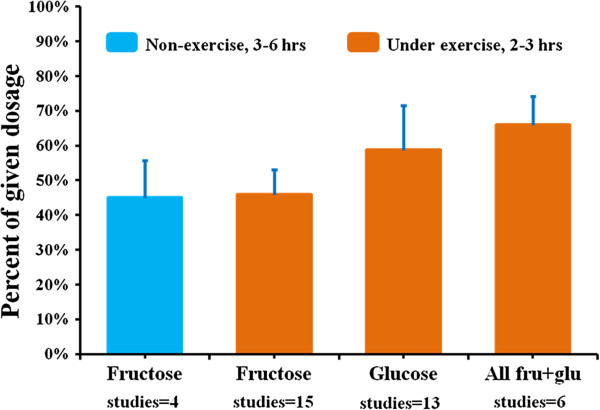
Interestingly, a meta-analysis of various studies showed that exercise speeds up metabolism of fructose to glucose:

  • Non-exercise subjects: The oxidation rate from fructose to glucose had a mean average of 45% (mean conversion rate 41%)  within a period of 3-6 hours after ingestion.
  • With exercise:  The mean average oxidation rate of fructose was about 45.8% within 2-3 hours. Ingesting fructose with glucose, the oxidation rate increased to ~66%
Oxidation rates (represents conversion) of fructose & glucose Sun, 2012

The data of obese or diabetic subjects were not included in this figure.

Metabolic fate of dietary fructose carbons.

The data obtained within study periods <= 6 hours after 50-150 gm fructose ingestion by non-diabetic or obese persons. Sun, 2012

Some people are unable to fully metabolize / absorb fructose, which causes digestive gas / discomfort.    In these cases fructose is considered a FODMAP (fermentable oligo-, di-, mono-saccharides and polyols) – – – short-chain carbs, which resist digestion. 

Ways that fructose studies can skew data

Some studies attempt to skew the data,  for example, showing that consumed fructose generates liver fat at a slow rate of <5%.  This is likely the case for someone who is thin, not INSULIN-resistant, has not consumed anything in the last few hours (i.e. has depleted glycogen / glucose storage in liver), and then consumes only fructose. However, it would be a very different outcome for someone well-fed, INSULIN-resistant, overweight and consuming a more natural combination of fructose together with glucose, which reveals fructose converting to fat at a rate closer to 30%.

Fructose administered on its own (as often the case in studies) is poorly absorbed.  It will therefore have little effect, other than causing GI pain, bloating or diarrhea. Dietary fructose is usually present with other sugars and fiber.

The dose matters.  E.g. Studies supplying fructose as a high percentage of dietary calories do show increased blood TGs and LDL cholesterol, INSULIN resistance and weight gain

How much fructose are we consuming?

Foods containing the highest amount of fructose per serving include: foods containing sucrose (table sugar), high fructose corn syrup (HFCS), agave nectar, honey, molasses, maple syrup, fruit and their juices

 Fructose consumption over 50g / day is considered excessive.

Some “food for thought”

 2008 Study analyzed data from NHANES III collected from 1988 to 1994

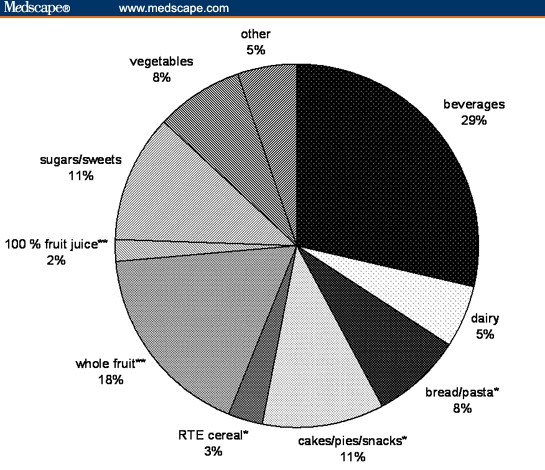
  • Sugar-sweetened beverages (SSBs) were the source of 30% of fructose for all age groups and almost 50% of fructose for adolescents. Grains (including breads, cereal, cakes, pies, and snacks) were the second-largest source (11-12%).
  • 74% of fructose came from foods and beverages other than whole fruits and vegetables.
  • Fruits / 100% fruit juice was the largest source of fructose for over 51 year olds

Chart: How much fructose in fruit

  • If all fructose sources except whole fruit and vegetables were removed:  children would eliminate 82% dietary fructose, and adults 75%.
  • Underreporting of total calorie intake is known to increase as BMI increases.  Neuhouser, 2008
  • Adults ate ~ 50% higher percentage of whole fruit  and 33% less percentage of sweetened beverages than teens
Pie chart of fructose-source consumed by adults (2008)

Dietary Fructose Consumption Among US Children and Adults: National Health and Nutrition Examination Survey III (n=21,483)

RTE=Ready to eat        Beverages= sugar-sweetened beverages

So - is consuming fructose harmful or not?

Excessive fructose intake elevates plasma triglycerides (TGs) and LDL cholesterol, and lowers HDL cholesterol

“Our study shows for the first time the surprising speed with which humans make body fat from fructose. Once you start the process of fat synthesis from fructose, it’s hard to slow it down. The bottom line of this study is that fructose very quickly gets made into fat in the body.”

– Dr. Elizabeth Parks, associate professor of clinical nutrition,UT Southwestern Medical Center

Author of a fructose study reported in the Journal of Nutrition (2008).

Several short-term studies show  association between fructose intake and dyslipidemia
Consumed?Study participantsEffectsReference
Sucrose1669 children 6-19 yearsTGs ▲ HDL
Morrison, 1980
Increased sugar12 year old Finnish children  HDL
Kouvalainen, 1982
Varied dietSwiss children. Tot. fructose was only significant dietary factor as predictor; LDL size ▼ Aeberli, 2007
FructoseAdults. Effect significant with fructose compared to glucose; persisted for 12 hoursTGs ▲  Teff, 2004
25% cals as fructose / 6 daysHealthy menMean fasting TGs ▲ x2  Faeh, 2005
17% cals as fructose / 6 wks TGs
32% ▲
  Bantle, 2000
12% cals as fructose / 12 wksAdultsTGs unchanged  Osei, 1987
25% cals as fructose / 10 wks TGs ▲  Havel, 2003
7.5% & 15% cals as fructose / 8 wks  LDL & total chol. ▲ Hallfrisch, 1983

Observation: Increased TGs may only occur when fructose reaches a threshold percentage of total calorie intake

High fructose intake short-circuits appetite control

High fructose consumption fails to stimulate the normal production of the long-term energy-balancing hormone LEPTIN.   This hormone goes up when we have sufficient calories / energy and down when we don’t, indicating whether to stop or start eating. Insufficient LEPTIN can have adverse effects on regulating food intake and lead to extra body fat.

Excessive fructose  consumption can create fats in the liver 

In short, consuming excessive amounts of fructose -containing sweeteners can lead to some serious health issues

  • Metabolic syndrome, type 2 diabetes and weight gain / obesity
  • Non-alcoholic fatty liver disease
  • Cardiovascular disease (CVD)
  • Dental caries.  The case with all caloric sweeteners

References

Aeberli I, Zimmermann M, Molinari L, et al. (2007) Fructose intake is a predictor of LDL particle size in overweight schoolchildren. Am J Clin Nutr.86:1174-1178. Pubmed

Bantle JP, Raatz SK, Thomas W, Georgopoulos A. (2000) Effects of dietary fructose on plasma lipids in healthy subjects. Am J Clin Nutr. 2000;72:1128-1134. Pubmed

Faeh D, Minehira K, Schwarz J-M, Periasami R, Seongsu P, Tappy L. (2005) Effect of fructose overfeeding and fish oil administration on hepatic de novo lipogenesis and insulin sensitivity in healthy men. Diabetes. 54:1907-1913. Pubmed

Hallfrisch J, Reiser S, Prather E. (1983) Blood lipid distribution of hyperinsulinemic men consuming three levels of fructose. Am J Clin Nutr:740-748. Pubmed

Havel PJ, Elliott S, Keim NL, Krauss RM, Teff K. (2003) Short-term and long-term consumption of high fructose, but not high glucose, diets increases postprandial triglycerides and apo-lipoprotein-B in women. J Invest Med.;52(suppl):S163. Google scholar

Kouvalainen K, Uhari M, Akerblom H, et al. (1982) Nutrient intake and blood lipids in children. Klin Padiatr. 194:307-309 Pubmed

Morrison J, Larsen R, Glatfelter L, et al. (1980) Interrelationships between nutrient intake and plasma lipids and lipoproteins in schoolchildren aged 6 to 19: The Princeton School District study. Pediatrics. 65:727-734  PubMed

Neuhouser ML, Tinker L, Shaw PA, et al. (2008) Use of recovery biomarkers to calibrate nutrient consumption self-reports in the Women’s Health Initiative. Am J Epidemiol. 167:1247-1259.  PubMed

Osei K, Falko J, Bossetti B, Holland G. (1987) Metabolic effects of fructose as a natural sweetener in the physiologic meals of ambulatory obese patients with type II diabetes. Am J Med.;83:249-255. Pubmed

Park YK, Yetley EA, (Nov 1993) Review intakes and food sources of fructose in the United States. Am J Clin Nutr. 58(5 Suppl):737S-747S. PubMed

Sun, S. Z., & Empie, M. W. (2012). Fructose metabolism in humans – what isotopic tracer studies tell us. Nutrition & metabolism, 9(1), 89. PubMed

Teff KL, Elliott SS, Tschop MH, et al. (2004) Dietary fructose reduces circulating insulin and leptin, attenuates postprandial suppression of ghrelin, and increases triglycerides in women. J Clin Endocrinol Metab. 89:2963-2972. Pubmed

  • Detoxifies
  • Boosts immune system / cellular energy
  • Anti-inflammatory / Pain-relief
  • Aids sleep / Reduces stress
  • Accelerates healing of tissue, bone, muscles, scars
  • Improves circulation +++

Successful electrotherapies

Amino acid-related: