Attend to diet, lifestyle & emotional state:

Nutrition  

Exercise

 Water

Sun

Thoughts  

     Air

Rest

Trust

Sex

Leaf logo

Health Happening    

‘No-brainers’ 💡 for Physical / Mental Health: Magnesium, Omega-3 , C, D, Iodine in “Make-it-Happen” smoothie
Red apple clipart

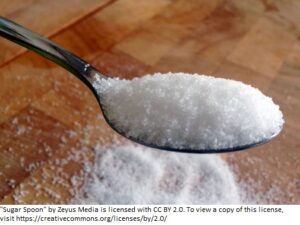
Non-Nutritive Sweeteners (NNS)

What are NNS?

NNS are low calorie sweetener alternatives added to many drinks and food products

In the U.S., the FDA permits food labelling as follows:

  • “Zero-calorie, “no calories”, “without calories” (you get the idea).   Means the food contains < 5 calories / serving.
  • “Sugar-free”.  Means food contains < 0.5g (2 calories) of sugar / serving, it does not mean it contains NO sugar / calories.

There are 3 types of NNS

  • Plant-derived  E.g. stevia, allulose (created artificially from fructose)
  • Sugar alcohols E.g. erythritol, xylitol
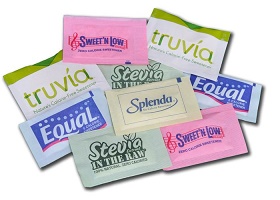
  • Non-nutritive ARTIFICIAL sweeteners (NAS) E.g. aspartame, sucralose, saccharin; High-intensity sweeteners

NNS use is growing rapidly

The 2009-2012 National Health and Nutrition Examination Survey (NHANES) suggests that 2009-2012 NNS adult consumption has doubled and child consumption has increased 54% since 1999-2000. (Sylvetsky et al, 2017; NHANES 2009-2012).

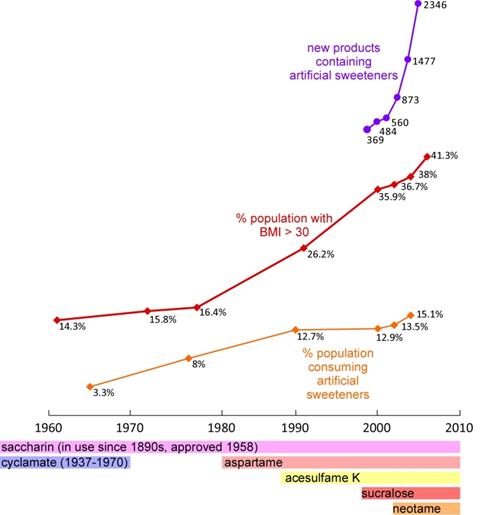
As NNS usage has increased – so has the average BMI in the U.S.

NNS were introduced with the intention of reducing caloric intake and controlling blood glucose levels without compromising the human desire for the taste of sweet.   However, as consumption of non-nutritive artificial sweeteners (NAS) has increased, the percentage of the population with a high BMI has continued to rise:

Am J Clin Nutr. 2009 January; 89(1): 1-14.
Chart of Non-Nutritive Sweeteners (NNS) G.I. = Glycemic Index    S.I. = Sweetness index (table sugar is 1)    H.S. = Heat stable There are 4.2 grams in 1 LEVEL teaspoon of sugar, nutrition facts generally round this down to 4 g / tsp.

Natural (Plant) NNS

Chemical name G.I. Cals. /tsp. S.I. Plant or Trade name Heat Stable Notes
Allulose a.k.a. D-psicose (monosaccharide with same formiula as fructose) 0 1 0.70 Dolcia Prima;  Used like sugar 1/10 calories of sugar. Net carbs of zero calories after metabolism; FDA-approved April 2019. Yes “Rare sugar” found in trace amounts in a few foods (incl. figs, raisins, kiwi, wheat); negligibly raises blood sugar or INSULIN
Stevia leaf 0 0 200-300 Various foods and beverages Yes Distinctive aftertaste;
Steviol glycosides: 0 0 Stevia; Equal naturals®; Truvia® (by Coca Cola); Stevia in the Raw®; SweetLeaf®; SweetDrops®; Sun Crystals®; and PureVia®(by Pepsi) FDA-approved 2008; Yes Leaf  extracts; Licorice aftertaste
Stevioside 300
Rebaudioside A 450
Mogroside V 0 0 150 -400 200 Luo Han Guo (“Monk fruit”); Purefruit®; Nectresse®* Available as powder (mixed with bulking agents, such as  dextrose or erythritol), granules, or liquid; FDA-approved 2010; Yes Fruit extract; Chinese fruit; Fruity / licorice aftertaste
Glycyrrhizin 0 0 50 Licorice. Licorice root extract; licorice flavor; inhibits enzyme that deactivates CORTISOL

Sugar Alcohol NNS

Chemical name G.I. Cals. /tsp S.I. Plant or Trade name Heat Stable Notes
Erythritol (0.2 cals/g) ‎E968 1 1 0.7 Equal naturals® Yes Produced by fermenting glucose in cornstarch
Xylitol    (2.4 cals/g) 7-12 10 .95 -1
Glycerol (glycerin) 3 40 0.4-0.8
Sorbitol (2.6 cals/g) 4 19 0.5-0.6
Mannitol (1.6 cal/g) 2 13 0.5

Artificial Sweetener NNS

Chemical name G.I. Cals. /tsp S.I. Plant or Trade name Heat Stable Notes
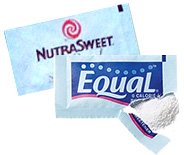
Aspartame – “Neurotoxin” “Blue packet” 0 0 100-220 180 coke canEqual ;original® Canderel®; Nutrasweet®; Spoonful®; Natrtaste blue®; beverages, cereals, yogurt, frozen and gelatin desserts, candy, sugar-free gum, juices, diet sodas, vitamin supplements,  laxatives. ? Toxic to gut bacteria; Fully metabolized (50% phenylalanine, 10% methanol, 40% aspartic acid); Bitter aftertaste;
Sucralose – “Organochlorine” “Yellow packet” 0 0 500- 755 600 splenda packetSplenda®; Equal sucralose®; Zerocal®; Sukrana®; SucraPlus®; Candys®; Cukren®; Nevella®; Yes Toxic to gut bacteria; sourced from sucrose;
SaccharinPink packet 0 0 200-400 sweet n low packetsSweet ‘N Low®, Sweet Twin®, Sugar Twin®, Necta Sweet® Yes Toxic to gut bacteria; Oldest artificial sweetener (1879) Familiar saccharin taste.
Acesulfame K (Ace K) C4H4KNO4S E950 0 0 200 Sunett® and Sweet One®, ACE®, ACE K®, Sweet ‘N Safe®, Equal original® Often in sugar-free sodas; Yes Toxic to  gut bacteria; Potassium salt of 6-methyl-1,2,3-oxathiazine-4(3H)-one 2,2-dioxide. Bitter
Neotame 0 0 10,000 7-13,000 Newtame®  In low-calorie foods / beverages. Approved 2002; Yes Toxic to gut bacteria; Made by Nutrasweet; Degrades in some liquids depends on pH
Cyclamate 0 0 40 Discovered 1937; US banned it in 1969 after reports of tumors in rats ;  popular approved sweetener in other countries.
Advantame 0 0 20,000 Yes
  • *Nectress is manufactured by McNeil Nutritionals, the makers of Splenda®. It is mainly monk fruit extract with a small amount of erythritol (a sugar alcohol), sugar and molasses.
  • Equal original: Dextrose with Maltodextrin, Aspartame, Acesulfame K
  • Equal sucralose: Dextrose with maltodextrin, sucralose
  • Equal naturals: Erythritol, Stevia Leaf Extract, Natural Flavors
  • Nutrasweet:  dextrose with maltodextrin, aspartame
  • Purevia and Truvia: Reb A and erythritol as granules

Non-Nutritive Sweeteners (NNS) - May not be so sweet for your health!

Your body is not “fooled” by sweetness with 0 calories!

NNS without accompanying glucose / carbs may stress the adrenal glands and/or lead to hypoglycemic effect

When our taste buds register a sweet taste from a food that does NOT also provide glucoseour sugar-handling mechanism may go awry and appetite regulating systems are disrupted.

On sensing sweet, the body prepares itself for receiving sugar.   Glucose is typically cleared from the blood causing blood sugar to drop, but since no “refill” glucose arrives, the body is forced to induce a stress response to restore blood sugar levels. This requires an adrenal surge in ADRENALINE and CORTISOL output to mobilize sugar from other sources (liver, muscle glycogen, protein or body tissue). This fight-or-flight response is meant to be reserved for stressful times of need, not merely for eating. The consequences of over-producing stress hormones includes:

  • Suppressed immune system
  •  Increased inflammation
  • Reduced thyroid function
  • Adrenal fatigue

To find out if consuming an NNS is having a hypoglycemic effect (with inherent stress reaction), you will need to test your blood sugar before and after NNS consumption.    There should not be a problem if consuming another sugar or carbohydrate at the same time

NNS induce carb cravings / appetite stimulation / hunger pangs / sugar dependence

How ironic is this!

Eating something sweet causes your brain to release DOPAMINE, activating your brain’s reward center.   Normally, after registering the anticipated incoming calories, the hormone LEPTIN is released to inform the brain that the expected reward has been received. When the expected calories do not arrive, the need for glucose persists and so your body continues to signal for the missing carbohydrates.  You feel this as a carb craving and in satisfying this need you put on weight. (J. of Phys, 2013; Scientific Amer, 2013)

It turns out that any food without calories, not just NNS, stimulates the appetite

Earlier studies indicated that consuming non-caloric artificial sweeteners induce hunger by causing us to lose control of normal appetite mechanisms:

  1. Stimulating your appetite
  2. Increasing carbohydrate cravings – with a tendency to choose sweet foods over nutritious foods
  3. Stimulating fat storage and weight gain.

This phenomenon was later found to be more general, in that any orally palatable substance WITHOUT calories stimulates the appetite.     However, this phenomenon does not occur without orosensory stimulation (E.g. via capsules) Mattes, 1994 However, more recent studies indicate that when NNS are added to caloric products, the augmented hunger does not take placeMattes & Popkin, 2009)


Non-nutritive Artificial sweeteners (NAS) have been linked to several health issues

MIscellaneous issues

  • Bloating, diarrhea and flatulence when consumed to excess  (sugar alcohols also have thes issues)
  • Metabolic disorders
  • Migraines
  • Type-2 diabetes
  • Vascular events
  • Kidney function disorders /  hepatotoxicity
  • Immune system disruptions

The irony of ironies –  Non-nutritive artifical sweetners (NAS) may increase weight gain!

People who consumed high amounts of artificial sweeteners were found to have higher blood sugar levels

A 2014 study (Nature, 2014revealed a direct cause and effect relationship between consuming Non-nutritive Artificial Sweeteners (NAS) and developing elevated levels of HbA1C ( a long-term measure of blood sugar) compared to non-users or occasional users of NAS.   This eye-opening study with both mice and humans found that NAS directly modulate the microbiota to induce glucose intolerance (i.e. prediabetes).

Artificial non-nutritive sweeteners (NAS) are toxic to gut bacteria, increasing risk of prediabetes 

Artificial sweetener use correlates with an increase in obesity 

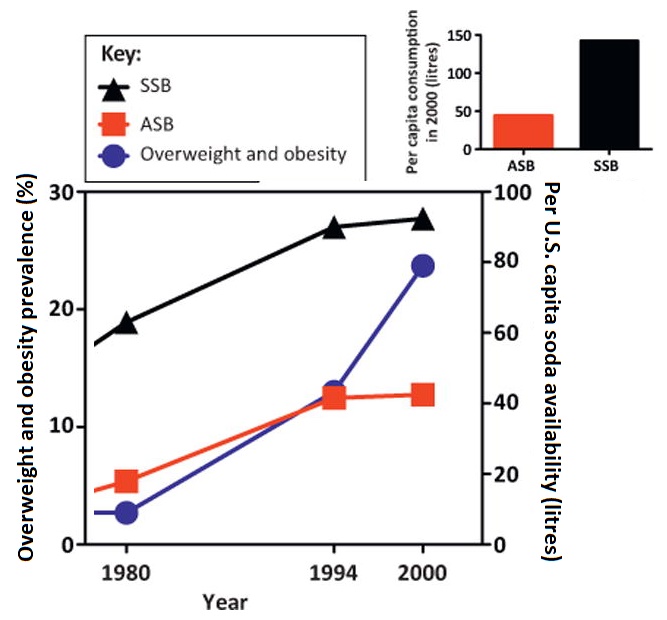
ASB and SSB beverage consumption associated with percentage of obesity / being overweight in U.S. population

Graph from 1980 to 2000 indicates changes in per capita consumption of artificially sweetened beverages (ASB; red squares), sugar-sweetened beverages (SSB; black triangles), and the rise in percentage of population being overweight. Obesity data adapted from National Center for Health Statistics Health. Beverage data adapted from Beverages Worksheet. USDA Economic Research ServiceAlthough rate of increase in both artificial and sugar sweetened beverage consumption has much declined since the mid-90’s, obesity rates continue to rise sharply, indicating additional factors are involved. 

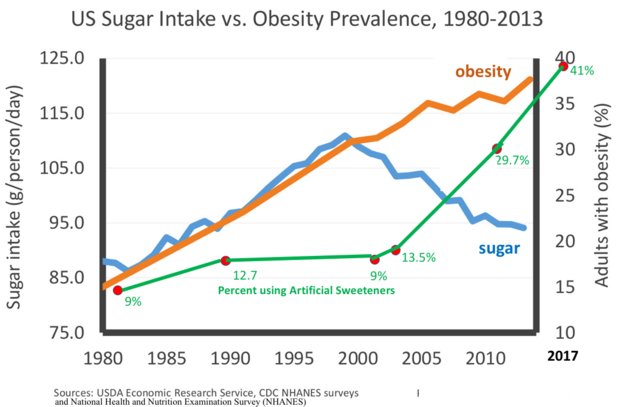
However – post-2000 the percentage of people consuming artificial sweeteners steeply increased while sugar intake declined and the obesity rate continued to climb.  

Percentage of U.S. population using artificial sweeteners rising with adult obesity rate whilst sugar intake per capita on the decline since the late 90's

Studies showing how artificial sweeteners (NAS) affect body weight

Many people find it easier to lose weight by cutting out nutritive sugars instead of replacing them with artificial sweeteners

Several large scale prospective cohort studies found a positive correlation between artificial sweetener use and weight gain (Qing Yang, 2010)

  • The San Antonio Heart Study:
    • 3,682 adults over 7-8 yrs during 1980’s had consistently higher BMIs at the follow-up.   Average BMI gain was +1.01 kg/m2 for control and 1.78 kg/m2 for people in the third quartile for artificially sweetened beverage consumption.
    • Participants who drank more than 21 diet drinks per week were almost twice as likely to become overweight or obese as people who didn’t drink diet soda.(Fowler et al, 2008)
  • The American Cancer Society study
    • 78,694 women in early 80’s
    • At one-year follow-up, 2.7 – 7.1 % more regular artificial sweetener users gained weight (although <2#) compared to non-users matched by initial weight. (Stellman & Garfinkel, 1986)
  • Another American Cancer Society study. 
    • Saccharin use was also associated with eight-year weight gain in 31,940 women from the Nurses’ Health Study conducted in the 1970s
  • Increased diet soda consumption in children associated with increased weight gain (Colditz et al, 1990)
    • 166 school children over 2 years
    • Higher BMI Z-scores (indicating weight gain) found at follow-up  (Blum et al, 2005)
  • “Growing Up Today” study  (Berkey et al, 2004) reported diet soda consumption by boys (but not girls) associated with weight gain:
    • 11,654 children aged 9 to 14
    • Each daily serving of diet beverage increased BMI by 0.16 kg/m2
  • A cross-sectional study of young people (Forshee & Storey, 2003) found diet soda drinkers had significantly elevated BMI
    • 3,111 children and youth
    •  Interventional studies suggests that artificial sweeteners do not help reduce weight when used alone (Mattes & Popkin, 2009; Brown et al, 2006)
    • BMI did not decrease after 25 weeks of substituting diet beverages for sugar-sweetened beverages in 103 adolescents in a randomized controlled trial, except among the heaviest participants(Ebbeling et al, 2006)

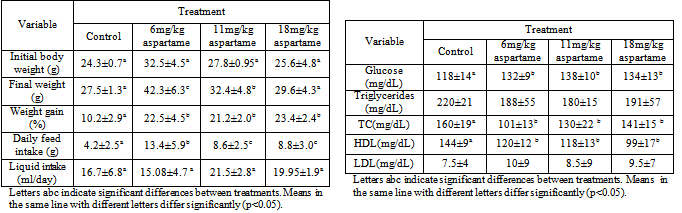
Aspartame causes weight gain in hamsters

Low Intake of Aspartame Induced Weight Gain and Damage of Brain & Liver Cells in Weanling Syrian Hamsters

Artificial NNS cause weight gain in rats

  • One study fed rats yogurt sweetened with saccharin, aspartame or sucrose for 12 weeks + normal rat food.     Rats fed zero calorie artifical sweeteners had increased weight gain compared to sucrose (table sugar) fed rats.   The no-cal sweeteners caused them to increase their appetites for normal food (Fernanda et al, 2012)
  • Rat feeding study found that breaking the link between the sweet taste of saccharin and the anticipated high calorie food changed the body’s ability to control food intake.
    • Rats were fed either saccharin or glucose sweetened yogurt.    The rats that ate the saccharin-sweetened yogurt consumed more calories, put on more weight, gained more body fat, and did not cut back on their calorie consumption in the longer term  (Swithers & Davidson, 2008)
  • At the end of a 24 week study, rats consuming sucralose gained weight compared to the ones that didn’t. (Qing, 2010)
  • Substitution of artificial sweeteners for sugars in drink prevents weight gain and promotes weight loss in rats eating food without restriction.   This 16 week study seemingly supports the use of artifical sweeteners for weight loss. However, here are the details:
    • 81 rats eating food at will gained the same weight as controls when also drinking saccharin solution, but gained significant weight when  drinking 11% sucrose solution instead of saccharin solution. When the sweetened solutions were switched, obese sucrose-drinking rats lost weight during the next 8 weeks while rats previously on saccharin gained weight rapidly. It is fairly obvious that weight gain (weight loss) would occur if adding (or removing) extra sucrose calories. (Porikos & Koopmans, 1988)

Non-nutritive artificial sweeteners (NAS) are toxic to gut bacteria increasing risk of prediabetes

Ironically again, NAS may actually be contributing to the obesity and type 2 diabetes epidemic

All 6 FDA-approved NAS shown to adversely affect activity of gut bacteria

There are currently 6 NAS  (Non-nutritive means non-caloric) approved for use in the U.S.:

NASBrand names
AspartameNutraSweet, Spoonful, Equal, NatraTase blue, Canderel
SucraloseSplenda, Zerocal
SaccharinSweet ‘N Low, Sugar twin, Sweet Twin, Necta Sweet
Advantame(None)
NeotameNewtame
Acesulfame potassium-KSunnette, Sweet One, ACE, ACE K

Most NAS pass through the human GI tract without being digested by the host. Roberts, 2000;  Byard, 1973  Thus directly encountering GI microbiota.

Gut flora help regulate multiple physiological processes  

Dominant gut phyla include: Bacteroidetes, Firmicutes, Actinobacteria and Proteobacteria.   Clemente, 2012

Studies have indicated that the composition Claesson, 2012 and function Muegge, 2011 of gut flora are modulated by diet whether a person is healthy and lean, obese Turnbaugh, 2006  Ley, 2006 or has diabetes Qin, 2012 Dietary-modulated alterations have been associated with an increased risk of developing metabolic syndrome.  Henao, 2012

NAS consumption enhances risk of glucose intolerance / metabolic syndrome by altering GI flora

 Suez et al study results suggest that NAS consumption in both mice and humans (following moderate consumption over several weeks) enhances the risk of glucose intolerance.   Also,  that these adverse metabolic effects are mediated by modulation of the composition and function of the microbiota. They also noted that “several of the bacterial taxa that changed following NAS consumption were previously associated with type 2 diabetes in humans Qin, 2012;  Karlsson, 2013, including over-representation of Bacteroides and under-representation of Clostridiales” Suez, 2014

Researchers concluded that a couple of artificially sweetened sodas or coffees a day could be enough to influence gut health.   Researcher Arial Kushmaro, professor of microbial biotechnology at Ben-Gurion University,  headed up an Israeli / SIngapore collaborative study published in “Molecules”.   Beneficial GI tract bacteria (a strain of E. Coli) were dosed with all six FDA-approved artificial sweeteners, having a toxic effect on them, which made it difficult for them to grow and reproduce.  Molecules, 2018

NAS emerging as environmental pollutants

Concerning concentration levels of ace-k and sucralose have been measured in receiving waters (i.e., surface waters, groundwater aquifers and drinking waters). Such concentrations are among the highest known trace pollutants from human activity.  NAS are resistant to wastewater treatment processes and so accumulate through water treatment cycles.  Molecules, 2018

References

The Journal of Physiology 2013 Nov 15;591(22):5727-44

Scientific American September 5, 2013

NHANES 2009-2012. The National Health and Nutrition Examination Survey

Sylvetsky, A.C.; Jin, Y.; Clark, E.J.; Welsh, J.A.; Rother, K.I.; Talegawkar (2017) S.A. Consumption of Low-Calorie Sweeteners among Children and Adults in the United States. J. Acad. Nutr. Diet. 117, 441-448. PubMed

NAS may increase weight gain

Berkey CS, Rockett HRH, Field AE, Gillman MW, Colditz GA. Sugar-added beverages and adolescent weight change. Obes Res. 2004;12:778-788. PubMed

Blum JW, Jacobsen DJ, Donnelly JE. (2005) Beverage consumption patterns in elementary school aged children across a two-year period. J Am Coll Nutr. 24:93-98. PubMed

Brown RJ, de Banate MA, Rother KI. (2010) Artificial Sweeteners: A systematic review of metabolic effects in youth. [Epub 18 Jan 2010];Int J Pediatr Obes.

Colditz GA, Willett WC, Stampfer MJ, London SJ, Segal MR, (1990) Speizer FE. Patterns of weight change and their relation to diet in a cohort of healthy women. Am J Clin Nutr. 51:1100-1105. PubMed

Ebbeling CB, Feldman HA, Osganian SK, Chomitz VR, Ellenbogen SJ, Ludwig DS. (2006) Effects of decreasing sugar-sweetened beverage consumption on body weight in adolescents: a randomized, controlled pilot study. Pediatrics.117:673-680. PubMed

Fernanda de Matos Feijó et al, (January 1, 2012) Saccharin and aspartame, compared with sucrose, induce greater weight gain in adult Wistar rats, at similar total caloric intake levels Appetite, Volume 60, Pages 203-207 Abstract

Forshee RA, Storey ML. (2003) Total beverage consumption and beverage choices among children and adolescents. Int J Food Sci Nutr. 54:297-307.PubMed

Fowler SP, Williams K, Resendez RG, Hunt KJ, Hazuda HP, Stern MP. (2008) Fueling the obesity epidemic? Artificially sweetened beverage use and long-term weight gain. Obesity (Silver Spring, Md.) 16:1894-1900. . PubMed

Mattes RD. (1994) Interaction between the energy content and sensory properties of foods. Birch G, Campbell-Platt G, editors. , eds Synergy. Hampshire, United Kingdom: Intercept, Ltd, 39-51.

Mattes RD, Popkin BM. (2009) Nonnutritive sweetener consumption in humans: effects on appetite and food intake and their putative mechanisms. Am J Clin Nutr. 89:1-14. PMC free article PubMed

Nature (Oct. 2014) 514: 181-186    Article

Porikos KP, Koopmans HS. (1988) The effect of non-nutritive sweeteners on body weight in rats.Appetite.11 Suppl 1:12-5. PubMed

Stellman SD, Garfinkel L. (1986) Artificial sweetener use and one-year weight change among women. Prev Med. 15:195-202. PubMed

Swithers SE, Davidson TL. (2008) A role for sweet taste: calorie predictive relations in energy regulation by rats. Behav Neurosci. 122:161-173. PubMed

Qing Yang. (2010 June) Gain weight by “going diet?”Artificial sweeteners and the neurobiology of sugar cravings. Neuroscience 2010.Yale J Biol Med. 83(2): 101-108. PubMed


NAS toxic to gut bacteria

Byard, J. L. & Goldberg, L. (1973) The metabolism of saccharin in laboratory animals. Food Cosmet. Toxicol. 11, 391-402 (1973).

Claesson, M. J. et al. (2012) Gut microbiota composition correlates with diet and health in the elderly. Nature 488, 178-184

Clemente, J. C., Ursell, L. K., Parfrey, L. W. & Knight, R. (2012) The impact of the gut microbiota on human health: an integrative view. Cell 148, 1258-1270

Henao-Mejia, J. et al. (2012) Inflammasome-mediated dysbiosis regulates progression of NAFLD and obesity. Nature 482, 179-185

Karlsson, F. H. et al. (2013) Gut metagenome in European women with normal, impaired and diabetic glucose control. Nature 498, 99-103. PubMed

Ley, R. E., Turnbaugh, P. J., Klein, S. & Gordon, J. I. (2006) Microbial ecology: human gut microbes associated with obesity. Nature 444, 1022-1023

Molecules 2018; 23(10): 2454  Link

Muegge, B. D. et al. (2011) Diet drives convergence in gut microbiome functions across mammalian phylogeny and within humans. Science 332, 970-974.

Qin, J. et al. (2012) A metagenome-wide association study of gut microbiota in type 2 diabetes.  Nature 490, 55-60

Roberts, A., Renwick, A. G., Sims, J. & Snodin, D. J. (2000) Sucralose metabolism and pharmacokinetics in man. Food Chem. Toxicol. 38 (Suppl. 2), 31-41

Suez,J et al (2014 Oct) Artificial sweeteners induce glucose intolerance by altering the gut microbiota. Nature 514(7521):181-6.

Turnbaugh, P. J. et al. (2006) An obesity-associated gut microbiome with increased capacity for energy harvest. Nature 444, 1027-1031


  • Detoxifies
  • Boosts immune system / cellular energy
  • Anti-inflammatory / Pain-relief
  • Aids sleep / Reduces stress
  • Accelerates healing of tissue, bone, muscles, scars
  • Improves circulation +++

Successful electrotherapies

Amino acid-related: