Splenda® (Sucralose) - Toxic organochlorine
Although, using natural sugar to excess has its own set of health problems, natural sugar used in moderation is still a healthier sweetener choice than sucralose
"Made from sugar so it tastes like sugar"
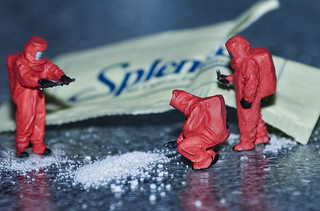
Sucralose is NOT a sugar, despite its sugar-like name and deceptive marketing slogan – it is, in fact, a chlorinated artificial sweetener with detrimental health effects to match aspartame.
Sucralose® (trade name Splenda or E.U. additive code E955) is the #1 artificial sweetener in the U.S. – generally used as a sugar substitute
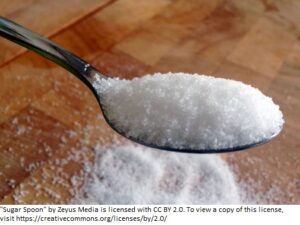
- Sucralose is a non-nutritive artificial sweetener (NAS) – a white crystalline powder, this supposedly no-calorie sweetener is made from a patented process that begins with sucrose
- ~ 600 times sweeter than table sugar -~twice as sweet as saccharin and four times sweeter than aspartame
- Found in > 4,500 food and beverage products – such as baked goods (stable to 450â°F), non-alcoholic beverages, chewing gum, frozen dairy desserts, fruit juices, and gelatins
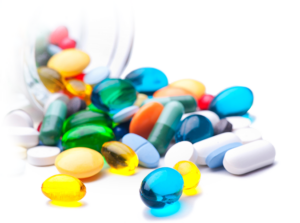
- Found in medications – nearly 10%of all sucralose is sold to drug companies, and many times not listed on the label.
- Splenda® also contains 95% dextrose and maltodextrin as fillers
Sucralose was actually discovered by accident by Tate and Lyle scientists working with researchers at Queen Elizabeth College, trying to create new insecticides! it was discovered by Leslie Hough and a young Indian chemist, Shashikant Phadnis as the duo was trying to test chlorinated sugars as chemical intermediates. Phadnis was told to test the powder, but thought that Hough had asked him to taste it. He found the compound to be exceptionally sweet. After this revelation, they worked with Tate & Lyle for a year before settling on the final formula.
Chlorocarbons - "One lump or two?"
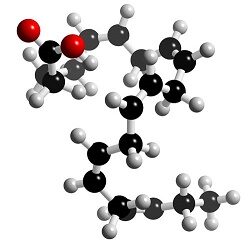
“Sucralose” is a cute short name for:
1,6-dichloro-1,6-dideoxy-BETA-D-fructofuranosyl-4-chloro-4-deoxy-alpha-D-galactopyranoside
In 1989, sucralose was approved for use in the United States and Diet R.C. Cola was the first product to contain it
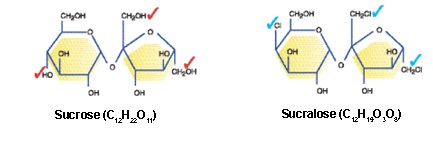
Sucralose is a synthetic chemical made by a patented process by McNeil Nutritionals that does indeed begin with sugar (sucrose, a disaccharide molecule about 50/50 glucose and fructose). Three hydroxyl (OH) groups are replaced with 3 chlorine molecules, producing a fructose + galactose molecule not seen in nature.
Here is the “Recipe” for making sucralose:
- Sucrose is tritylated with trityl chloride in the presence of dimethylformamide and 4-methylmorpholine, and the tritylated sucrose is then acetylated with acetic anhydride.
- The resulting sucrose molecule TRISPA is chlorinated with hydrogen chlorine in the presence of toluene.
- The resulting 4-PAS is heated in the presence of methyl isobutyl ketone and acetic acid.
- The resulting 6-PAS is chlorinated with thionyl chloride in the presence of toluene and benzyltriethylammonium chloride.
- The resulting TOSPA is treated with methanol in the presence of sodium methoxide to produce sucralose.
Ahhhh. . . just the way grandma used to make it!
http://roarofwolverine.com/archives/185
The end product is a chlorinated hydrocarbon molecule (a.k.a. an organochlorine or chlorocarbon) – i.e. NOT a sugar molecule.
Chlorine in sucralose is not the same safe form as covalent chloride bonds in food. Actually, nature contains NO covalent chloride-to-organic compound bonds.
Examples of other synthetic organochlorines (long known for causing organ, genetic and reproductive damage) include:
- DDT
- PCB’s
- Agent orange
Is sucralose absorbed and metabolized by the body or not?
In 1980 the rights of sucralose were sold to Johnson and Johnson who then created McNeil Nutritionals to be solely responsible for the marketing of Splenda®. Later in 2004, McNeil Nutritionals and Tate & Lyle restructured their alliance so that McNeil was responsible for marketing and Tate & Lyle for manufacturing the product.
J & J maintain that sucralose chlorocarbons are not a problem and McNeil claims that Splenda® has zero calories since sucralose is not absorbed by the body. Their explanation was that the body has no enzymes to break down / digest this unnatural, glucose-free molecule . . .- however, the final rule of the FDA was that a significant percentage actually is absorbed in the body.
| The FDA’s “Final Rule” reported 11% to 27% of sucralose is absorbed in humans: |
|---|
Michael A. Friedman, Lead Deputy Commissioner for the FDA, Food Additives Permitted for Direct Addition to Food for Human Consumption; Sucralose Federal Register: 21 CFR Part 172, Docket No. 87F-0086, April 3, 1998 The FDA allowed sucralose absorption / metabolism findings of just ONE 8 man study to be generalized to the entire population – women, children, the elderly, and those with any chronic illness were never examined. Roberts A, Renwick AG, Sims J, Snodin DJ., Sucralose metabolism and pharmacokinetics in man. Food Chem Toxicol. 2000;38 Suppl 2:S31-41. PubMed The Japanese Food Sanitation Council reports that up to 40% of ingested sucralose is absorbed – and can concentrate in the liver, kidney, and GI tract |
Organochlorines don’t breakdown easily in fatty tissue and can build up over time – in his book “Sweet Deception”, Dr. Joseph Mercola details how researchers found evidence that Splenda is in fact absorbed by your fat and tends to accumulate in high-fat organ tissues (E.g. your brain) over time.
Researcher / biochemist Dr. James Bowen states that ingested chlorocarbon damage continues with the formation of other toxins:“Any chlorocarbons not directly excreted from the body intact can cause immense damage to the processes of human metabolism and, eventually, our internal organs. The liver is a detoxification organ which deals with ingested poisons. Chlorocarbons damage the hepatocytes, the liver’s metabolic cells, and destroy them. In test animals, Splenda®produced swollen livers, as do all chlorocarbon poisons, and also calcified the kidneys of test animals in toxicity studies. The brain and nervous system are highly subject to metabolic toxicities and solvency damage by these chemicals. Their high solvency attacks the human nervous system and many other body systems including genetics and the immune function. Thus, chlorocarbon poisoning can cause cancer, birth defects, and immune system destruction. These are well known effects of Dioxin and PCBs which are known deadly chlorocarbons.”
Dr. James Bowen, Article:”The Lethal Science Of Splenda – A Poisonous Chlorocarbon”
Ingested sucralose breaks down into products (1,6 dichloro, 1,6-dideoxyfructose,4-chloro-4-deoxygalactose and potentially highly toxic chlorosugar 6-GC) and has been proven in tests to to be able to have the following adverse effects:
- Liver toxicity, Enlarged livers
- Reduced ability for body to detoxify
- Mutagenic activity
- Binding to DNA in your liver and small intestine
- Low birth and placental weights, maternal and fetal toxicity (aborted pregnancy)
- Shrunken thymus glands (up to 40% shrinkage)
- Enlarged kidneys.
- Abnormal histopathological changes in spleen and thymus
- Increased cecal weight
- Reduced growth rate
- Adverse changes to GI bacteria
- Abnormal Pelvic Mineralization / Hyperplasia of the pelvis
- Decreased red blood cell count
- Bowel inflammation/Crohn’s Disease
- Migraine triggers
- Increased glycosylation of hemoglobin (HbA1c) for diabetics
It's been tested, right?
Splenda has NEVER been proven safe for HUMAN consumption!
|

The marketing pitch for Spenda emphasizes that it has undergone rigorous testing, but fail to mention that nearly all tests were on animals (initial studies showing health detrimental results) and only 2 small (almost laughable) studies lasting less than 4 days on humans prior to FDA approval. |

- They had a total of only 36 subjects -of which only 23 took sucralose!
- The longest study lasted only 4 days! -and was focussed on sucralose in relation to tooth decay, not human tolerance
- Decreased red blood cells at levels above 1,500 mg/kg/day
- Increased male infertility by interfering with sperm production and vitality – as well as brain lesions at higher doses
- Enlarged and calcified kidneys – The FDA ruled that these are findings that are common in aged female rats and are not significant
- Spontaneous abortions in nearly half the rabbit population given sucralose – compared to zero aborted pregnancies in the control group
- A 23 percent death rate in rabbits – compared to a 6 percent death rate in the control group
- REDUCES the amount of good bacteria in your intestines by 50% — a disturbing finding since these bacteria help maintain your body’s overall balance of friendly versus unfriendly microorganisms and support your general health.
- INCREASES the pH level in your intestines
- Can prevent absorption of prescription drugs -by affecting a glycoprotein (P-gp) in your body
Abou-Donia MB, El-Masry EM, Abdel-Rahman AA, McLendon RE, Schiffman SS. Splenda alters gut microflora and increases intestinal p-glycoprotein and cytochrome p-450 in male rats. J Toxicol Environ Health A. 2008;71(21):1415-29. Researchgate
“Increasing evidence suggests that artificial sweeteners do not activate the food reward pathways in the same fashion as natural sweeteners – Lack of caloric contribution generally eliminates the postingestive component. Functional magnetic imaging in normal weight men showed that glucose ingestion resulted in a prolonged signal depression in the hypothalamus. This response was not observed with sucralose ingestion.”Smeets PAM, de Graaf C, Stafleu A, van Osch MJP, van der Grond J. Functional magnetic resonance imaging of human hypothalamic responses to sweet taste and calories. Am J Clin Nutr. 2005;82:1011-1016. PubMed
Common symptoms of consuming Splenda products
Usually noticed within a 24-hour period following consumption:
- Skin– Redness, itching, swelling, blistering, weeping, crusting, rash, eruptions, or hives (itchy bumps or welts).
- Lungs– Wheezing, tightness, cough, or shortness of breath.
- Head– Swelling of the face, eyelids, lips, tongue, or throat; headaches and migraines
- Nose– Stuffy nose, runny nose, sneezing.
- Eyes– bloodshot, itchy, swollen, or watery.
- Stomach– Bloating, gas, pain, nausea, vomiting, diarrhea, or bloody diarrhea.
- Heart– Palpitations or fluttering.
- Joints – Joint pains or aches.
- Neurological– Anxiety, dizziness, spaced-out sensation, depression.