Sweeteners - Our daily "fix"
What are sweeteners?
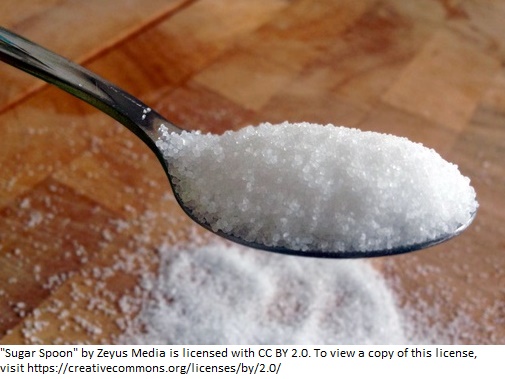
Sweeteners are substances added to food /drink to enhance their taste and enjoyment of them
Sweeteners are composed of some combination of the following:
- Sugars ending in -ose: e.g. disaccharides: sucrose, maltose, and monosaccharides: glucose, fructose, galactose, ribose, xylose; allulose;
- Sugar alcohols ending in -ol: e.g. erthyritol, xylitol. sorbitol;
- Other carbs: e.g. inulin, maltodextrin, fructooligosaccharides (FOS);
- Chemicals / complex processes: e.g. Saccharin (oxidized o-toluenesulfonamide or phthalic anhydride); sucralose (organochlorine molecule); aspartame (combination of phenylalanine and aspartic acid);
Sweeteners can be natural or artificial
- Natural sweeteners: (Extracted from plants). E.g. sucrose (sugar cane or beet), stevia (stevia leaf), honey (nectar);
- Semi-artificial sweeteners: (Extracted from plants and chemically modified). E.g. erythritol is produced by fermenting glucose in cornstarch extracted from corn; xylitol is produced from xylose extracted from birch wood;
- Artificial sweeteners (Chemically produced).
Sweeteners may or may not contain calories
- Nutritive sweeteners (NS) contain calories (also called carbohydrate sweeteners. e.g table sugar, honey, molasses, agave syrup, and high-fructose corn syrup (HFCS); Carbohydrate sweeteners provide energy(they also supply a source of carbon for synthesis of other chemicals). Primarily containing sugars, they provide few to insignificant amounts of vitamins and minerals.
- Non-nutritive sweeteners (NNS) contain no or low calories: e.g. artificial NNS: such as aspartame, sucralose and saccharin, natural NNS: such as monk fruit extract and stevia, and the sugar alcohols: such as erythritol and zylitol.
History of use
Refined sugar use has dramatically increased over the last 100 years. However, more recently, sugar is being replaced with other carbohydrate sweeteners, especially high fructose corn syrup (HFCS), and non-carbohydrate natural and artificial sweeteners, such as stevia, aspartame, saccharin and sucralose.
Health effects of sweeteners
Most sweeteners affect blood sugar levels to some degree. The effect of a sweetener on blood sugar and INSULIN levels depends on:
- Whether its carbohydrate content (sugar and starch) is fully digested / absorbed. Some sweeteners are only partially absorbed into the blood stream, some fraction passing straight through and out of the intestines.
- How quickly the absorbed carbohydrate is metabolized. The glycemic index / glycemic load of a sweetener enables us to compare the affect on blood sugar of that sweetener compared to glucose.
A slower rise in blood sugar and INSULIN enables us to burn fat and avoid weight gain long-term
Unfortunately, even though artifical sweeteners have a 0 glycemic rating, they may still raise blood sugar due to other indirect effects. E.g. being toxic to gut bacteria;
Artifical non-nutritive sweeteners cause weight gain
Some sweeteners linked to diabetes, obesity and tooth decay
- Excessive consumption of either NUTRITIVE SWEETENERS or artificial NON NUTRITIVE SWEETENERS can lead to weight gain. The FDA recommendation is to consume no more that 10 teaspoons of added sugar / day, but the average American consumes 4 times that amount. e.g. a 12oz can of coke contains almost 10 tsps.
- It is wise to be “ball-park” aware of your intake of carbohydrate grams (which includes sugars) to avoid blood sugar roller coaster rides and eventual INSULIN resistance. For example: A cup of Swiss Miss® hot chocolate cocoa gives you 34g of carbs! (includes 28 g of sugar – i.e. 7 teaspoons of sugar)
- Tooth decay occurs with ALL nutritive sweeteners, but not so much due to quantity consumed, but more related to how long the sugar lingers on the teeth. E.g. sucking on a few hard sugar-filled candies or slowly chewing caramels is more detrimental than quickly downing a sugary drink.
Sweeteners are nutritive or non-nutritive
Nutritive sweeteners
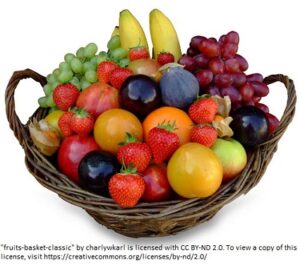
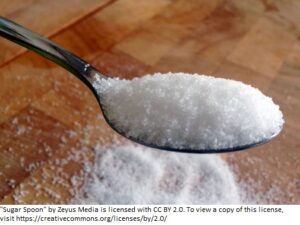
Also known as caloric or carbohydrate sweeteners, they include plain old “sugar”. Nutritive sweeteners provide energy-supplying carbohydrates. Some sugars are naturally contained in foods, such as fruit (which, unlike refined table sugar, also supply vitamins and minerals; fruit with highest sugar content are (highest first) figs, grapes, mangos, cherries and bananas), however, most of our dietary sugar carbohydrate comes from nutritive sweeteners added to commercial products and home-made foods to enhance flavor and texture, and increase shelf-life.
Non-nutritive sweeteners (NNS)
The newcomers to the sweetener market are those with low or no calories, but not necessarily low-glycemic. Non-nutritive sweeteners (NNS) have zero / low calories, however, this does not necessarily mean they are low-glycemic sweeteners (LGS), having a low-glycemic effect on blood sugar when digested/metabolized by the body. Some do, some don’t.
- There are 3 types of NNS:
- Natural / plant NNS
- Sugar alcohol NNS
- Non-nutritive artificial sweeteners (NAS).
- ALL FDA-approved artificial sweeteners are toxic to gut bacteria. This significantly affects the gut microbiome, which has serious consequences for our health.
Artificial sweeteners actually cause weight gain
Non-nutritive artificial sweeteners (NAS) toxic to gut bacteria increasing risk of prediabetes
References
The National Health and Nutrition Examination Survey (NHANES 2009-2012)
Sylvetsky, A.C.; Jin, Y.; Clark, E.J.; Welsh, J.A.; Rother, K.I.; Talegawkar (2017) S.A. Consumption of Low-Calorie Sweeteners among Children and Adults in the United States. J. Acad. Nutr. Diet. 117, 441-448. PubMed
Malik, V.S.; Li, Y.; Pan, A.; De Koning, L.; Schernhammer, E.; Willett, W.C.; Hu, F.B. Long-Term Consumption of Sugar-Sweetened and Artificially Sweetened Beverages and Risk of Mortality in US Adults. Circulation 2019, 139, 2113-2125. PubMed
http://www.nutrientsreview.com/articles/sweeteners.html
Pereira, M.A. Diet beverages and the risk of obesity, diabetes, and cardiovascular disease: A review of evidence. Nutr. Rev. 2013, 71, 433-440. PubMed
Vyas, A.; Rubenstein, L.; Robinson, J.; Seguin, R.A.; Vitolins, M.Z.; Kazlauskaite, R.; Shikany, J.M.; Johnson, K.C.; Snetselaar, L.; Wallace, R. Diet drink consumption and the risk of cardiovascular events: A report from the Women’sHealth Initiative. J. Gen. Intern. Med. 2015, 30, 462-468. PubMed
http://www.sugar-and-sweetener-guide.com/sweetener-values.html