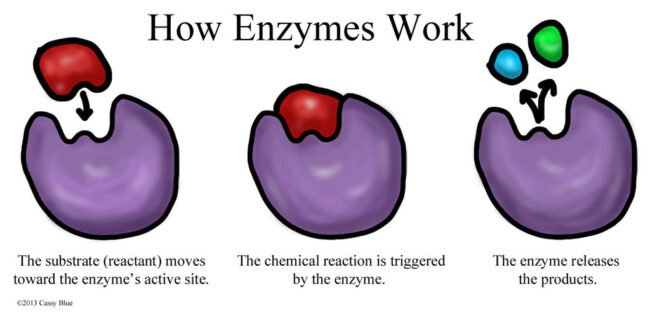
Cooking to preserve nutrients Aim for at least 1/3 raw. Raw food contains enzymes, which are destroyed by heat. Some nutrients are made more bioavailable by heating, some are destroyed.
Systemic proteolytic enzyme therapy can "Decloak" cancer cells
Tumor cells have a protective mucus / fibrin coating acting as a "Cloaking" device
This proteinous mucus / fibrin coat is designed to protect tumor cells from the body’s immune system
The mucus / fibrin coat acts as a “Cloaking device”. Preventing cancer cells from being recognized by the immune system’s white blood cells (WBCs: macrophages, neutrophils), and thus making them immune to attack by natural killer (NK) cells. Mucus is a glycoprotein (sugar+protein), fibrin is a a protein in the blood, which enables blood to clot.
The sticky fibrin coat is ~15 times thicker than the fibrin which surrounds healthy cells. This is revealed by histochemical and microscopic examination. Egyud &Lipinski, 1991; Massimo et al, 1990
Systemic (not digestive) proteolytic enzymes break down the fibrin “shield”. This effectively “De-cloaks” the cancer cell!
WBC’s use mainly elastase and cathepsin G enzymes in fibrinolysis Plow, 1980
Systemic cancer therapy uses high dose proteolytic enzymes
A cancer therapy requires high dose proteolytic enzymes to reach the bloodstream for a systemic effect
To make it clear – we are not talking about digestive enzymes, which breakdown food.in our GI tract. However, if supplemented in high amounts on an empty stomach (i.e. between meals), proteolytic enzymes can be absorbed into the bloodstream to have anti-cancer effects.
Systemic proteolytic enzymes boost immune function
John Beard believed pancreatic enzyme deficiency impairing immune function was the root cause of cancer Beard, 1911
Enzymes boost immune system by increasingcancer cell-killing cytokines – particularly interferon and tumor necrosis factor-α (TNF-α). TNF-αmade by macrophages triggers death of cancer cells by locking on to and activatinga receptor site (called the “Death Domain”) on a cancer cell, which:
Forces the cancer cell to send out chemicals that help the immune system to locate it
Triggers apoptosis (“cellular suicide”)
Causes the immune system to send out signals to I.S. neutrophils ,which travel through mucus, lymph or the linings of healthy organs to join the attack
Inhibits tumorigenesis and viral replication
Induces cachexia
Systemic proteolytic enzymes remove the cancer cell debris to give immune system cells a clear line-of-fire. Eventually the macrophage (“Big Eater”) engulfs and “eats” the cancer cell. A cluster of just a few thousand cancer cells are easily dealt with by the above process. However, if the numbers become overwhelming, there are so many “dying” cancerous cells that the I.S. can’t find the tumor. This is when the I.S. needs some help from enzymes to clear away the debris so it can focus on the “not dead” cancer cells. Proteolytic enzmes break down protein. A 1920’s physician Dr. Max Wolfe found that cancer patients tend to lack proteolytic enzymes in their GI tract, not necessarily because they were not consuming or producing enough enzymes, but also because the enzymes had “gone off to war” fighting cancer cells . German studies demonstrate a 12-fold increase in the potency of macrophages and killer cells by increasing systemic enzymes.
Proteolytic enzymes help prevent metasases
Systemic proteolytic enzymes help prevent metasases by these mechanisms:
By boosting immune function to eliminate cancer cells
Also, by hindering their ability to adhere to endothelial cells (vessel wall lining)
How to supplement protease enzymes for a systemic therapy













































 for Physical / Mental Health: Magnesium,
Omega-3 ,
C,
D,
Iodine in
“Make-it-Happen” smoothie
for Physical / Mental Health: Magnesium,
Omega-3 ,
C,
D,
Iodine in
“Make-it-Happen” smoothie