Sugar alcohols - Are these healthy sweeteners?
SWEETENERS:
- SWEETENERS: Our Daily "Fix"
- Nutritive Sweeteners (NS)
-
-
-
Nutritive Sweeteners (NS)
The “old fashioned” nutritive sweeteners – Overview
- Metabolic Fate of the “3” monosaccharides
- CHART of the Nutritive Sweeteners
- Sugar Sugar 🎵 And you got me wanting you 🎶
- Too much added sugar involved in several adverse health consequences
- How to reduce sugar intake
- Too much fructose wreaks havoc with your health
Nutritive sweeteners / Minimally refined
- Raw Honey
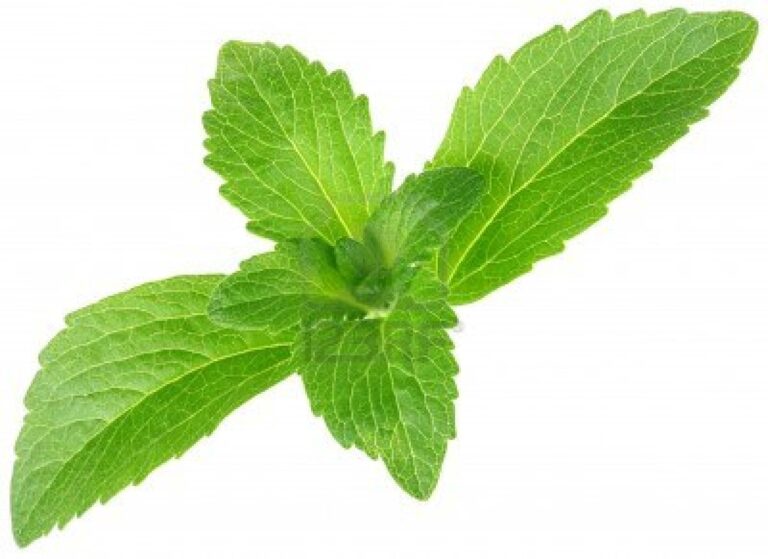
- Stevia
- Maple syrup
- Blackstrap molasses
- Barley malt syrup
- Date sugar / syrup
- Dehydrated / Evaporated natural sugar cane juice ( Rapidura®; Sucanat®)
- Muscovado, Turbinado sugars
- Coconut sugar
Nutritive sweeteners / Highly refined
- Sugar Sugar – – – 🎵 And you got me wanting you – 🎶
- Brown, demerara cane, beet sugar
- Corn syrup (glucose syrup made from cornstarch)
- High fructose corn syrup (HFCS) – Try and avoid it for your health’s sake
- Invert sugar
- Golden syrup
- Rice syrup
- Dextrose
- Maltodextrin
-
-
-
- Non-nutritive Sweeteners (NNS)
-
-
-
Non-Nutritive Sweeteners (NNS)
Natural Non-nutritive Sweeteners (NNS)
Sugar Alcohols
Sugar alcohols – Are these healthy sweeteners?
- Erythritol
- Xylitol
- Maltitol, mannitol, sorbitol, lactitol, isomalt
Non-nutritive Artificial Sweeteners (NAS)
Non-nutritive Artificial Sweeteners (NAS) have been linked to several health issues – including altering gut flora and weight gain!
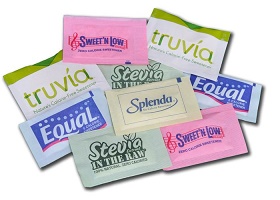
- Sucralose – Organochlorine – “Yellow packet”
- Aspartame – Neurotoxin – “Blue packet”
- Saccharin – “Pink packet”
- Acesulfame K (Ace K)
- Neotame
- Cyclamate
- Advantame
-
-
-
- Too much sugar
- Too much fructose
-
-
-
Fructose – Too much associated with INSULIN resistance / T2D / obesity, fatty liver and CVD
- Fructose – Overview
- Fructose digestion / metabolism
- How much fructose are we consuming
- Excess consumption leads to health problems
-
-
-
What are sugar alcohols?
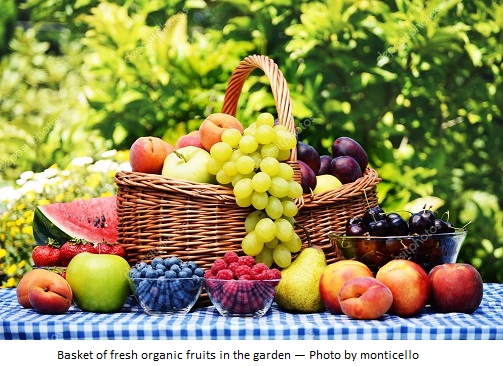
Sugar alcohols (aka polyols) occur naturally in plant products, such as fruits and berries
They are used as non-nutritive sweeteners (NNS) and bulking agents
- As a sugar substitute, they usually provide about 1/2 – 1/3 less calories than table sugar (0.24 – 3 calories / gram, compared to sugar’s ~4 calories / gram).
- Sugar alcohols prevent browning of heated foods
- Artificial sweeteners contain 0 calories vs. sugar alcohols contain a few calories
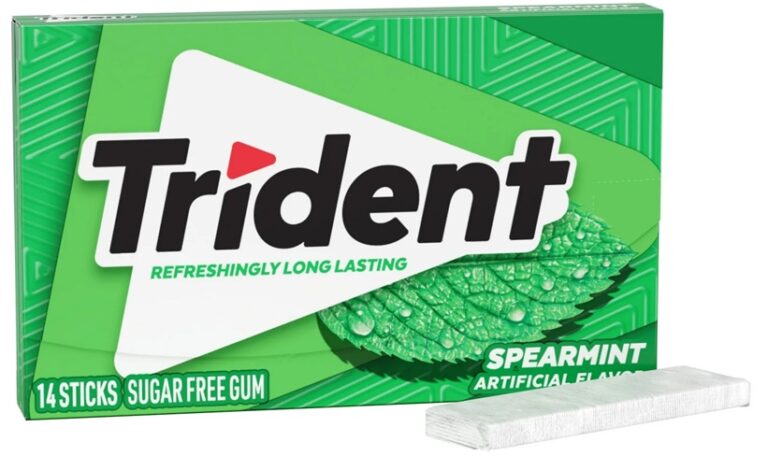
Which products typically use sugar alcohols? Often labeled “sugar-free”, products containing sugar alcohols include: toothpaste, mouthwash, chewing gum (E.g. Trident® and Extra®), hard candies, cookies, soft drinks, throat lozenges
| The more common sugar alcohols | ||||
|---|---|---|---|---|
| Sugar Alcohol | Where found | Sweetness vs. Sugar | Carbs / g* | Info |
| *Sugar contains ~4 calories / g | ||||
| Erythritol | Naturally in pears, melons, grapes, mushrooms and fermentation-derived foods E.g. wine; soy sauce; cheese | 70% | 0.24 | Almost 0 calories; Similar texture / bulk to sugar; Less likely than other SA’s to cause diarrhea; |
| Xylitol “Wood sugar” | Naturally in straw, corn cobs, fruit, vegetables, cereals, mushrooms and some grains. Used in chewing gums. | 100% (same) | 2.4 | |
| Maltitol | Sugar-free hard candies, chewing gum, chocolate-flavored desserts, baked goods, ice cream | 75% | Adds creamy texture | |
| Mannitol | Naturally in pineapples, olives, asparagus, sweet potatoes and carrots. Used in food manufacture | 50-70% | Extracted from seaweed; Often causes bloating / diarrhea (>20g/day) | |
| Sorbitol | Naturally in fruits and vegetables. Used in sugar-free: gums; candies. | 50% | Made from corn syrup; less likely SA to cause diarrhea (>50g/day may cause diarrhea) | |
| Lactitol | Sugar-free: ice cream; chocolate; hard and soft candies; baked goods; sugar-reduced preserves;chewing gums | 30-40% | Taste/solubility like sugar | |
| Hydrogenated starch hydrolysates (HSH) | Used in confections; baked goods; mouthwashes | 40-90% | Made by partial hydrolysis of corn; does not crystalize | |
| Isomalt | Used in hard candies; toffee; cough drops; lollipops | 45-65% | Heat stable; absorbs little water | |
Metabolism / health effects of sugar alcohols
- SA’s are slowly and incompletely absorbed from the small intestine into the blood. SInce SA’s are slowly converted to glucose, they have a lower glycemic impact and do not cause blood sugar spikes. However, eaten to excess they can still affect blood sugar levels and cause weight gain since they still contain some calories;
- Possible bloating and diarrhea when eaten in excessive amounts. Since any non-absorbed SA continues on to the colon, where it is fermented by gut bacteria;
- Once absorbed, sugar alcohols require little or no insulin to be metabolized.
- Unlike sugar, sugar alcohols do not cause tooth decay

Xylitol - a low-calorie / low-glycemic sugar substitute
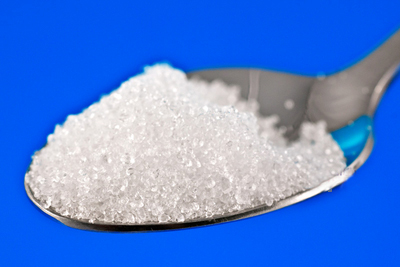
Xylitol – “sugar” without the blood sugar swings
- Xylitol has 33% fewer calories than table sugar. 1 tsp. of xylitol has 10 calories (sugar has 16 cals.), 4g carbohydrate, and 4 g sugar alcohols (sugar alcohols don’t have much impact on blood sugar levels)
- Looks and tastes a lot like sugar. Adds bulk to baked goods like sugar, and can be used measure for measure as a sugar substitute in recipes
- Occurs naturally in fibers of some fruits and vegetables E.g. raspberries, strawberries, yellow plums, lettuce, cauliflower and corn. However, commercial xylitol is usually extracted from birch tree bark. Ensure xylitol is made from a non-GMO source- such as birch or beets. Avoid xylitol derived from cheap genetically modified corn.
- Contains only trace amounts of vitamins and minerals but aids body’s absorption of calcium and B vitamins.
Xylitol health benefits
Low glycemic sweetener helpful for diabetics. Also a low carb sweetener for anyone
Deters Candida overgrowth. Does not provide sugar for the welfare of Candida and other yeast. A 2005 study found that xylitol significantly reduced Candida‘s effect on oral tissue. Published in Microbial Ecology in Health and Disease, 2005 HOWEVER, Xylitol, like other sugar alcohols passes unmetabolized through the stomach to arrive intact in the intestines. There the xylitol is partially metabolized by drawing water into the bowel. However, the non-metabolized portion ferments and can create an environment promoting bacterial growth, exacerbate Candida yeast problems, which results in gas and possible cramping / diarrhea. To avoid these problems, it is suggested to limit xylitol intake to no more than 3 teaspoons / day.
Xylitol is teeth-friendly – actively beneficial for dental health when taking at least 6g /day Remacle, Claude; Reusens, Brigitte, ed. (2004).Functional foods, ageing and degenerative disease. Cambridge, England: Woodhead Publishing. p.202.ISBN 978-1-85573-725-9. Link
- Has antibacterial qualities. Birkhed D., Cariologic aspects of xylitol and its use in chewing gum: a review. Acta Odontol Scand 1994; 52:116-127. Edgar WM., Sugar substitutes, chewing gum and dental caries -a review. Br Dent J 1998; 184:29-3
- Helpful in remineralization of teeth. Steinberg, LM; Odusola, F; Mandel, ID (Sep-Oct 1992).”Remineralizing potential, antiplaque and antigingivitis effects of xylitol and sorbitol sweetened chewing gum.”.Clinical preventive dentistry114(5): 31-4.PMID1291185. Retrieved 13 November 2013. PubMed
- Effective in inducing remineralization of deeper layers of demineralized enamel. http://www.ncbi.nlm.nih.gov/pubmed/14700079 http://www.drellie.com/pdfs/The-Remineralization-effects-of-XYLITOL.pdf
Xylitol toxicity
Xylitol has no known toxicity or carcinogenicity in humans – and is considered safe by the U.S. FDA
Xylitol can be toxic to dogs – dogs consuming >100mg xylitol / kilogram body weight can present with low blood sugar (hypoglycemia), which can be life threatening.
Erythritol is an almost 0 calorie / low-glycemic sugar substitute
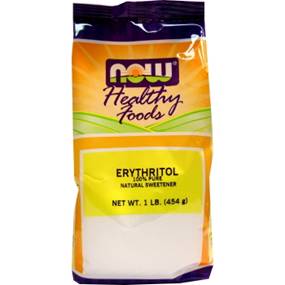
What is erythritol?
Erythritol is a fermented sugar alcohol (aka polyol). Occurs naturally in, for example, pears,melons, grapes, mushrooms and fermentation-derived foods such as wine, soy sauce and cheese. Commercial erythritol is derived from corn. Other sugar alcohols include xylitol, maltitol, sorbitol and lactitol.
Used as a bulk sweetener in low calorie foods. Typical retail cost of erythritol is ~ $5-9 per pound – considerably more expensive than table sugar.
Looks and tastes like table sugar (sucrose). This white crystalline powder can be used measure for measure as a direct substitute for sugar in recipes. Available in both granulated and powdered forms. Erythritol is about 70% as sweet as sugar and is reported to have no aftertaste.
Almost zero calories – 0.24 calories per gram. i.e. <1 calorie / teaspoon (compared to sugar’s 16 calories / tsp. or honey’s 22 calories / tsp.) E.g. 1 tsp. (4.18 g) crystalline powder erythritol has ~ 1 calorie.
Does not cause tooth decay – erythritol resists metabolization by oral bacteria, which can break down sugars and starches to produce acids which may lead to tooth enamel loss and cavities. Kawanabe, J.; Hirasawa, M.; Takeuchi, T.; Oda, T.; Ikeda, T. (1992). “Noncariogenicity of erythritol as a substrate”.Caries Research26(5): 358-62.PMID 1468100 PubMed
Safe dosage – study shows spread out daily consumption of 1 gram / kilogram body weight of erythritol in various foods and beveragesis well tolerated by adults as compared to sucrose containing foods.
And yet – Erythritol is associated with weight gain
A 2015 study of 172 healthy freshman, led by Cornell University researchers in the Division of Nutritional Sciences and researchers at Braunschweig University of Technology, Germany, and the University of Luxembourg, has identified the sugar alcohol erythritol as a biomarker for increasing fat mass and can be metabolized by (and even produced in) the human body. Erythritol (which this study found could be synthesized by the body from glucose) was elevated at the beginning of the year in freshmen who went on to gain weight, fat, and abdominal fat compared with freshmen with stable weight.
“Erythritol is not consumed and released from the body unchanged; it has an impact on the metabolism of our body. This finding is in contrast to all previous assumptions.”
— Senior co-author Karsten Hiller, professor of bioinformatics and biochemistry at TU Braunschweig and a leading scientist in cellular metabolism
Researchers found that students who gained weight and abdominal fat over the course of the year had 15 times higher blood erythritol at the start of the year compared with their counterparts who were stable or lost weight and fat mass over the academic year.
Side Effects of using erythritol
In moderation, erythritol doesn’t cause digestive upset / diarrhea like some of the other sugar alcohols. Being a smaller molecule than xylitol, maltitol and sorbitol,for example, allows it to be 90% absorbed in the small intestine and then excreted mostly unchanged in the urine. It is not fermented by intestinal bacteria. Arrigoni, E.; Brouns, F.; Amadò, R. (November 2005).”Human gut microbiota does not ferment erythritol”(pdf).British Journal of Nutrition94(5): 643-6..PMID 16277764 PubMed
Erythritol should not cause digestive upset in most people unless consumed in large quantities over 50 grams (~2 ounces). Although some people can have digestive issues even with small amounts.