





Clodronate - Adjuvant treatment to prevent bone metasases
CANCER: A Wake-up call
- Cancer: Far from a death sentence!
- INDEX
- CAUSES
- Types
-
-
Types of Cancer
Brain cancer
Breast cancer
Breast cancer – Overview of this all too prolific cancer
- Are mammograms beneficial?
- What are the causes / risk factors of breast cancer?
- Almost half of women have dense breast tissue affecting ability to see abnormal tissue on mammogram
- What measures can I take to prevent breast cancer?
- How to treat breast cancer
- Bras and breast cancer
- Iron / Aluminum toxicity in breast cancer
- Say “No!” to mammograms
Lung cancer
Skin cancer
Skin cancer (Squamous cell carcinoma, Basal cell carcinoma, melanoma)
-
-
- 1-2-3 TREATMENT PLAN:
- ✚ Core
-
-
Cancer Core Treatments

Cancer treatment core – Cancer Not Allowed!
CHART of core treatments
Suggested daily scheduleDetoxification
- Detoxification
- Boost immune system
- Beck Protocol Cancer Treatment
- Clean the cleaning organs
- Coffee Enema
- Heavy Metal Detox
- Bio-oxidative Therapy
Cancer Diet
- The Cancer Diet – Make every bite and gulp count
- Vitamin D Cancer Treatment
- The “O3-FIX” /BUDWIG PROTOCOL
- Magnesium – Cancer Treatment
- Baking Soda + Maple Syrup
- Antioxidant Therapy
- Vitamin C Therapy
- Alkalizing Therapy
- Sulforaphane (Eat your broccoli)
- Anticancer essential oils
Prevent Metastasis
- Prevent metastasis
- Clodronate – Prevent bone metastasis
- Rath Cellular Solution
- Iodine against Cancer
Other Considerations
-
-
- ❌Eliminate
-
-
Eliminate Cancer Cells
ELIMINATE THE CANCER CELLS
CHOOSE TREATMENTS
Treatment incompatabilitiesAre You at Stage IV of cancer?
Insulation potentiation therapy (IPT) (reduces amount of needed chemo drugs)

Non-Stage IV / Add-On Treatment
- Asparagus Protocol
Baking Soda and Maple Syrup
Beck Protocol Cancer Treatment
Bill Henderson Protocol
Graviola or PawPaw Protocol
I3C in broccoli sprouts (hormone sensitive cancers)
Laetrile (B17)
Low Dose Naltrexone (LDN) – Cancer Treatment
Ozone Therapy
Reduce ESTROGEN (Especially with lung and reproductive organ cancers)
Rath Cellular Solution – Prevent metastases
Sulforaphane (Eat your broccoli)

STAGE IV (ADVANCED):
Stage IV (NOT Fast-growing) treatment choices:
- RIFE RESONANCE CANCER PROTOCOL
The “O3-Fix” / BUDWIG PROTOCOL
BRANDT GRAPE PROTOCOL
INSULIN Potentiation TherapyTONY ISAAC’S OLEANDER PROTOCOL
– Oleander Soup
OZONE RHP
Stage IV (Fast-growing) treatment choices:


- Asparagus Protocol
-
-

- Close Door
What is Clodronate and what does it do?
Clodronate is a member of a class of drugs called bisphosphonates, which are used to treat the bone-thinning disease osteoporosis – It has been around for 20 years, and is a drug that actually heals, rather than just treats symptoms.
Studies from Europe show it can:
- Reverse bone loss;
- Significantly increases lumbar bone density. Especially when mixed with calcium;
But most importantly:
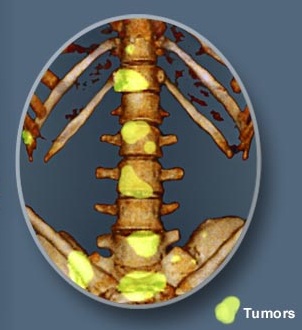
Clodronate is an effective adjunct to any therapy you are using for the purpose of preventing bone metastases. A major benefit for those with breast cancer, where the majority of deaths occur after the cancer has metastasized to the bones.
- It has minimal side effects and does not kill cancer cells
- FDA issued an approvability letter in 2005 for clodronate as a breast cancer adjuvant treatment – although, despite its approvability letter, it is not officially FDA-approved.
Some studies using clodronate
Clodronate ought to be seriously considered as an adjuvant treatment for Stage II and III breast patients. Given some of the favorable trial results below, its safe nature and relatively inexpensive cost (under $200 per month from Canada), in addition to its benefit in reducing bone loss in breast cancer patients simultaneously receiving anti-estrogen therapy.Newer/future generation bisphosphonates may have even more potent anti-cancer potential than Clodronate.
- 2009 – Adjuvant therapy with oral sodium clodronate in locally advanced and metastatic prostate cancer: long-term overall survival results from the MRC PR04 and PR05 randomised controlled trials. Improves overall survival in men with metastatic prostate cancer who are starting hormone therapy, but there is no evidence of an effect in men with non-metastatic prostate cancer.
- 2006 – a large randomized double-blinded placebo controlled multi-center study of over one thousand patients over 5 years confirmed reduced skeletal metastasis as well as possibly favorable survival in breast cancer patients (esp those with Stage II or III disease rather than Stage I) receiving clodronate as adjuvant over the initial 2 years.
- 2001 – Adjuvant clodronate treatment does not reduce the frequency of skeletal metastases in node-positive breast cancer patients: 5-year results of a randomized controlled trial. This Finnish study showed a decrease in survival in clodronate treated breast cancer patients,
- 1998 – Reduction in New Metastases in Breast Cancer with Adjuvant Clodronate Treatment. Study concluded that Clodronate can reduce the incidence and number of new bony and visceral metastases in women with breast cancer who are at high risk for distant metastases.
- 1993 –Paterson et al. Noted reduced bone-related morbidity in treated patients and recommended that Clodronate be further investigated for potentially reducing bone metastasis as an adjuvant treatment for those who are at risk.
- 1988 – breast cancer patients with multiple bone metastasis treated with clodronate experienced fewer fractures and less hypercalcemia, with a higher survival rate and no side effects. [Biomed. Pharmacother. (France), 42/2 (111-1160];
- 1987 – two studies showed that oral clodronate successfully reduced a mean serum calcium concentration in 22 our of 25 patients with various types of malignant tumors, and that clodronate is a valuable clinical tool in the management of patients with malignancy-associated hypercalcemia. [Acta. med. Scand. (Sweden), 221/5 (489-494)];
- 1985 – clodronate given to patients with episodes of hypercalcemia and osteolysis due to carcinoma reduced serum calcium in 14 of 17 episodes and bone resorption in all patients. [Br. J. Cancer (England), 51/5 (665-669)];
- 1984 – published in both France and the US, this study concluded that “Clodronate is very effective against osteoclasts,” and “Clodronate may be a useful adjuvant in managing metastatic bone disease.” [Presse Med. 13/8, 479-482); New England Journal of Medicine, 308/25 (1499-1501)];
- 1998 – Reduction in New Metastases in Breast Cancer with Adjuvant Clodronate Treatment
- Article – Clodronate does not improve breast cancer survival
Contraindications for taking clodronate
You should not use clodronate with any of the following conditions:
- If you suffer from severe renal insufficiency (a kidney disorder requiring dialysis);
- If you are pregnant or breast-feeding
- Hypersensitivity to Clodronate or to other bisphosphonates.
- Severe inflammation of the gastrointestinal tract.
More information at: https://www.ndrugs.com/?s=clodronate
How to take clodronate
Standard Dosage for treating cancer is 800 mg of clodronate taken orally twice daily. According to the Life Extension Foundation, although twice this dosage has been used safely.
Take on empty stomach, preferably an hour before eating – otherwise reduces dose into bloodstream.
Breast cancer patients might want to consider a 3 – 5 year regimen on clodronate therapy
Monitor calcium levels and kidney function. Blood tests to measure serum calcium levels and kidney function should be done 10 days after initiating clodronate therapy and every one to two months thereafter. In a small minority of patients. Clodronate will cause too much calcium to be pulled from the blood to the bone.
Where to obtain clodronate?
2025 update: Finding where to buy it may be a challenge
Clodronate is available with a doctor’s prescription. Brand names include Bonefos®, Ostac®, Clasteon®
ben@uniserve.com
PO Box 550 – Abbotsford, B.C. V2S 5Z5 Canada.
Ph: (604) 856-0171
Other related links:
Clodronic acid (oral route, injection route) – Side effects & dosage – Mayo Clinic