


Breast Screening - Say "No" to Mammograms
CANCER: A Wake-up call
- Cancer: Far from a death sentence!
- INDEX
- CAUSES
- Types
-
-
Types of Cancer
Brain cancer
Breast cancer
Breast cancer – Overview of this all too prolific cancer
- Are mammograms beneficial?
- What are the causes / risk factors of breast cancer?
- Almost half of women have dense breast tissue affecting ability to see abnormal tissue on mammogram
- What measures can I take to prevent breast cancer?
- How to treat breast cancer
- Bras and breast cancer
- Iron / Aluminum toxicity in breast cancer
- Say “No!” to mammograms
Lung cancer
Skin cancer
Skin cancer (Squamous cell carcinoma, Basal cell carcinoma, melanoma)
-
-
- 1-2-3 TREATMENT PLAN:
- ✚ Core
-
-
Cancer Core Treatments

Cancer treatment core – Cancer Not Allowed!
CHART of core treatments
Suggested daily scheduleDetoxification
- Detoxification
- Boost immune system
- Beck Protocol Cancer Treatment
- Clean the cleaning organs
- Coffee Enema
- Heavy Metal Detox
- Bio-oxidative Therapy
Cancer Diet
- The Cancer Diet – Make every bite and gulp count
- Vitamin D Cancer Treatment
- The “O3-FIX” /BUDWIG PROTOCOL
- Magnesium – Cancer Treatment
- Baking Soda + Maple Syrup
- Antioxidant Therapy
- Vitamin C Therapy
- Alkalizing Therapy
- Sulforaphane (Eat your broccoli)
- Anticancer essential oils
Prevent Metastasis
- Prevent metastasis
- Clodronate – Prevent bone metastasis
- Rath Cellular Solution
- Iodine against Cancer
Other Considerations
-
-
- ❌Eliminate
-
-
Eliminate Cancer Cells
ELIMINATE THE CANCER CELLS
CHOOSE TREATMENTS
Treatment incompatabilitiesAre You at Stage IV of cancer?
Insulation potentiation therapy (IPT) (reduces amount of needed chemo drugs)

Non-Stage IV / Add-On Treatment
- Asparagus Protocol
Baking Soda and Maple Syrup
Beck Protocol Cancer Treatment
Bill Henderson Protocol
Graviola or PawPaw Protocol
I3C in broccoli sprouts (hormone sensitive cancers)
Laetrile (B17)
Low Dose Naltrexone (LDN) – Cancer Treatment
Ozone Therapy
Reduce ESTROGEN (Especially with lung and reproductive organ cancers)
Rath Cellular Solution – Prevent metastases
Sulforaphane (Eat your broccoli)

STAGE IV (ADVANCED):
Stage IV (NOT Fast-growing) treatment choices:
- RIFE RESONANCE CANCER PROTOCOL
The “O3-Fix” / BUDWIG PROTOCOL
BRANDT GRAPE PROTOCOL
INSULIN Potentiation TherapyTONY ISAAC’S OLEANDER PROTOCOL
– Oleander Soup
OZONE RHP
Stage IV (Fast-growing) treatment choices:


- Asparagus Protocol
-
-

- Close Door
Analytical research confirms routine mammograms do NOT save lives ...
Adding a mammogram screening to a routine of careful breast examination does NOT improve breast cancer survival rates. This was determined by analyses of large population studies from several countries:
- Over 4166 women screened for 10 years would save one breast cancer death! A 9 year Norwegian 2010 study of 40,074 women with breast cancer published in the New England Journal of Medicine calculated that mammograms reduced breast cancer mortality by 2.4 deaths per 100,000 person-years (this statistic accounts for the number of years each woman is screened). i.e. pretty worthless! Mette Kalager, M.D et al, 2010
- Very little or no reduction in the incidence of advanced cancers with screening. Concluded “Cochrane Database of Systematic Review.” Gøtzsche PC, Jørgensen KJ., 2013
- Mammograms have little to no influence in the reduction of the number of women who ultimately die of breast cancer. Concluded a U.S. study published 2012 in the New England Journal of Medicine “Effect of Three Decades of Screening Mammography on Breast-Cancer Incidence.” by Dr Archie Bleyer, MD from The Oregon Health Sciences Center, and his co-author, Dr H. Gilbert Welch, M.D., M.P.H., from Dartmouth. Their findings challenged the validity of mammogram screenings. Bleyer A, Welch HG, 2012
- Annual mammograms do not result in a reduction in breast cancer specific mortality for women aged 40-59 beyond that of physical examination alone or usual care in the community. Concluded a “Twenty five year follow-up for breast cancer incidence and mortality of the Canadian National Breast Screening Study.” Miller Anthony B et al, 2014
Dense breast tissue affects mammogram findings
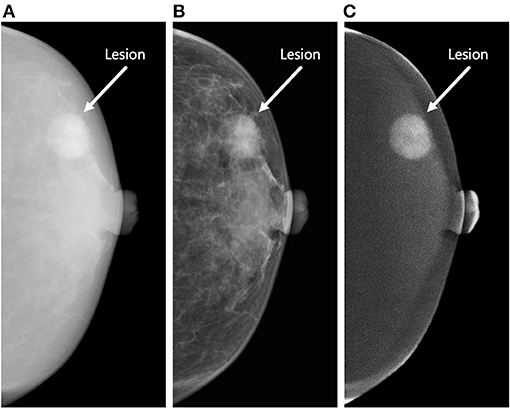
Almost half of women have dense breast tissue which shows white on a mammogram – – – as do tumors and calcifications! For younger women age 40-49, routine mammograms miss approximately 40% of breast cancer due to dense breast tissue, which can obscure tumors.
Many states in the U.S. now require mammogram providers to inform women if they have dense breast tissue. For more details on dense breast tissue, see: What are the causes / risk factors of breast cancer
Mammograms may cause harm
Dr. Johnnie Ham, MD, former Lieutenant Colonel of the US Army Medical Corps, is the Medical Director of Coastal Prestige Medical Services, Pismo Beach, CA. :
Health hazards of mammography have been well established.
Annual breast mammogram (4 x-ray films / breast) results in 0.4 mSv (0.04 rad) of radiation. This is 4 times the amount of a chest x-ray (0.1 mSv); although excessive radiation to the chest is a medium risk factor for breast cancer, we should consider that we are naturally exposed to about 3 mSv of radiation / year. American Society of Breast Surgeons: Radiation safety and physics
The new “improved” 3-D mammograpthy or Digital Breast Tomosynthesis (DBT). Takes x-rays from various angles to build a 3-D image of the breast, but is still adding the 2-D version, resulting in a double dose of radiation amongst other concerning issues. Performance of Digital Breast Tomosynthesis, Synthetic Mammography, and Digital Mammography in Breast Cancer Screening: A Systematic Review and Meta-Analysis
Amercian Cancer Society (ACS) in cahoots with makers of mammography equipment?
In his book “Criminal Indifference of the FDA to Cancer Prevention”, Dr. Samuel S. Epstein, chairman of the Cancer Prevention Coalition warns that the American Cancer Society has close financial ties to the makers of mammography equipment and their multibillion dollar mammogram screening industry. Dr. Epstein and Dr. Rosalie Bertel also emphasize that mammograms are an avoidable cause of breast cancer itself.
“Routine mammography delivers an unrecognized high dose of radiation, warn Drs. Epstein and Bertell. If a woman follows the current guidelines for premenopausal screening, over a 10 year period she would receive a total dosage of about 5 rads. This approximates the level of exposure to radiation of a Japanese woman one mile from the epicenter of atom bombs dropped on Hiroshima or Nagasaki.”
- ACS commonly promotes the interests of mammogram machine and film manufacturers, including Siemens, DuPont, General Electric, Eastman Kodak and Piker
Dr. Epstein and Rosalie Bertell, Ph.D (a scientist known for her work in ionizing radiation) of the International Physicians for Humanitarian Medicine stated:
“The mammography industry conducts research for the ACS and its grantees, serves on its advisory boards, and donates considerable funds. DuPont also is a substantial backer of the ACS Breast Health Awareness Program; sponsors television shows and other media productions touting ACS literature for hospitals, clinics, medical organization, and doctors; produces educational films; and aggressively lobbies Congress for legislation promoting the nationwide availability of mammography services.”
Thermography provides a better method for breast screening
Thermography involves using an infrared heat-sensing scanner/camera to graphically depict temperature variations of breast tissue using different colors. Available since the 1960’s, the technology has now much improved.
- Painless
- Risk-free. No mechanical compression of tissue, non-invasive, no ionizing radiation.
- Early detection. Enables earlier healing protocols; detection as much as 10 years earlier than mammogram or physical exam;
- Detects physiological / metabolic changes. As opposed to anatomical changes
References
Bleyer A, Welch HG. (Nov 2012) Effect of Three Decades of Screening Mammography on Breast-Cancer Incidence. N Engl J Med 2012; 367:1998-2005. LLink
Gøtzsche PC, Jørgensen KJ. Screening for breast cancer with mammography. Cochrane Database of Systematic Reviews 2013, Issue 6. Art. No.: CD001877. DOI: 10.1002/14651858.CD001877.pub5. Link;
Mette Kalager, M.D., Marvin Zelen, Ph.D., Frøydis Langmark, M.D., and Hans-Olov Adami, M.D., Ph.D. . Effect of Screening Mammography on Breast-Cancer Mortality in Norway.N Engl J Med 2010; 363:1203-1210. September 23, 2010. NEJM
Miller Anthony B, Wall Claus, Baines Cornelia J, SunPing, To Teresa, Narod Steven A et al (2014) Twenty five year follow-up for breast cancer incidence and mortality of the Canadian National Breast Screening Study: randomised screening trial BMJ; 348 :g366 Link